

Magazine of #Computational Sciences • Engineering • Fluid Dynamics • #cfd | est. 2013 by @thepostdoctoral
California, USA
Joined June 2013
- Tweets14.8K
- Following4.5K
- Followers7.1K
- Likes977




Computational Sciences & Engineering retweeted

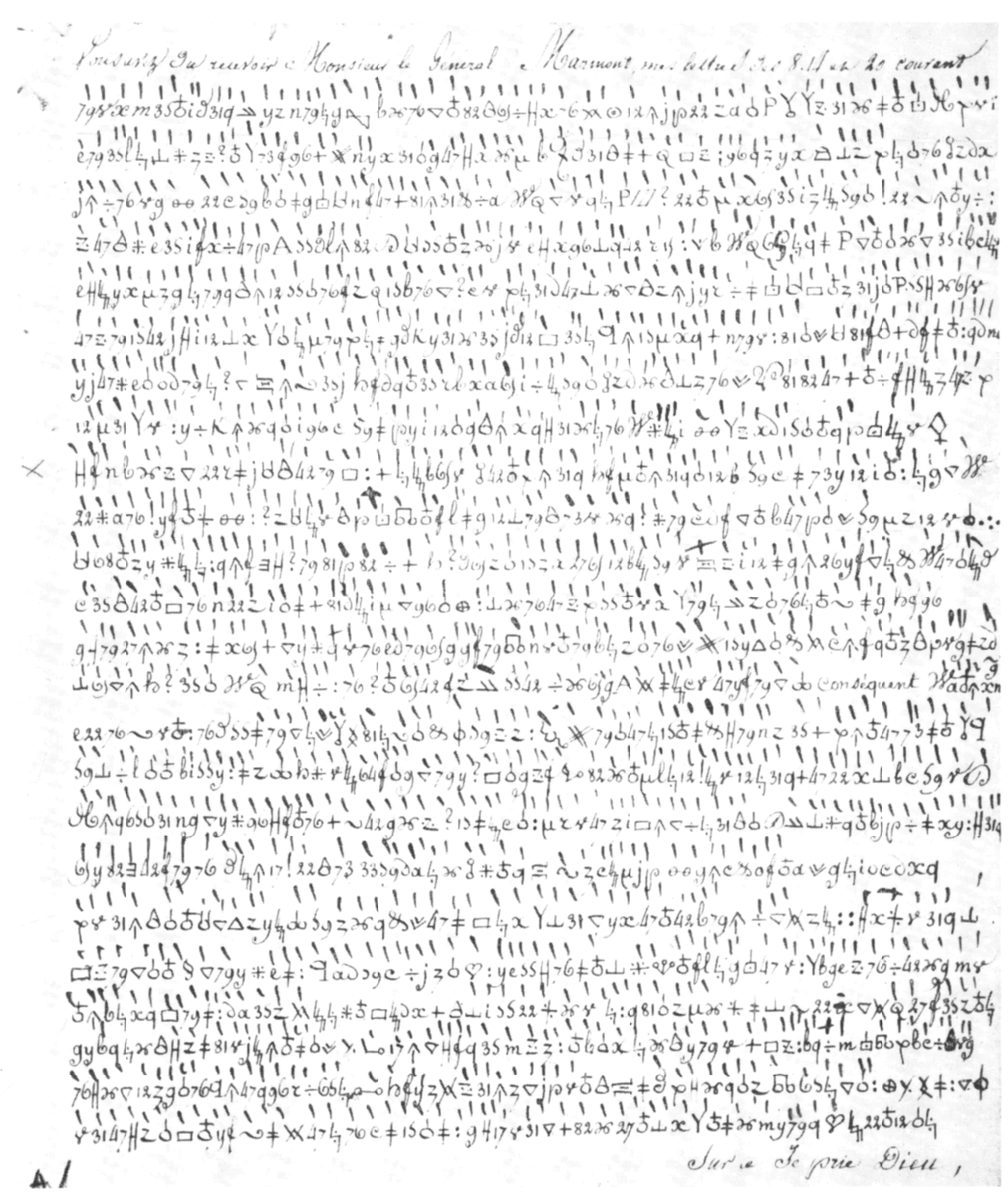
I used GPT-6 Astra to break an unsolved cipher to one of Napoleon's generals that had gone unread for 217 years.
What makes this impressive isn't actually the codebreaking, but that Astra completed the entire multi-modal workflow in ~6 hours from a single image and goal.
1/6🧵
Computational Sciences & Engineering retweeted

📚Jin Q, Wan N, Leaman R, Tian S, Wang Z, Yang Y, et al. Tutorial: guidance on the use of large language models for medical research. 2026.
@NatureProtocols
🔗nature.com/articles/s41596-0…
#InteligenciaArtificial #InvestigaciónMédica

Computational Sciences & Engineering retweeted

耶鲁一位计算机博士生,把自己发论文用的画图脚本全开源了,项目叫 figures4papers。
支持柱状、雷达、折线趋势、三维球体示意、概念等类型图,8 个论文项目各一个文件夹,脚本、数据、成图放在一起,照着改数据就能出自己的图。
他还把这套画图风格整理成了一个 Skill,接进 Cursor、Claude Code 或 Codex,让 Agent 按这套规范帮我们写画图脚本。
GitHub:github.com/ChenLiu-1996/figu…
规范写得挺细,去掉上边和右边的坐标轴线,柱子加黑边,配色固定一套语义,蓝色给自己的方法,绿色系给改进项,红色系给对比基线,默认 300 DPI 导出。
不装也能用,把仓库在 Agent 里打开,提示词里让它照 SKILL.md 和设计原则文件来写就行,README 里给了现成的提示词模板。
前几天分享的 vivid-figures-skill 是让 AI 选图画图,这个更像拿一位常年投顶会的作者的审美当模板,写论文要出图的可以两个都看看。


Computational Sciences & Engineering retweeted

Two manuscripts back to back accepted! Watch this space for more.
I have a JOB opening for fresh Master's graduates who are passionate about computational biology broadly. Our research is highly interdisciplinary, combining lots of simulations, AI/ML and experimental biology going all hand and hand to address opens questions in biology.
If you're excited about these subjects, we'd love to hear from you! Please submit your info using the form here by TODAY: pme.igib.res.in/bdmg/Project…
Feel free to share it with anyone who is interested.

Computational Sciences & Engineering retweeted

Applied Computational Genomics Course at UU: Spring 2024
github.com/quinlan-lab/appli… by the almighty Aaron Quinlan, author of bedtools and many other great tools for genomics analysis.

Computational Sciences & Engineering retweeted
A nice python package for creating Publication-Ready Scientific Plots github.com/faridrashidi/cnsp…
if you use R, take a look at rpkgs.datanovia.com/ggpubr/

Computational Sciences & Engineering retweeted

AI is making every scientist more productive. It is also making all of science less creative.
A paper in Nature just proved both are true at the same time.
Researchers at Tsinghua University and the University of Chicago studied 41.3 million scientific papers.
They tracked what happened to research before and after AI entered each field.
The individual numbers are impressive.
Scientists who use AI publish 3 times more papers. They get nearly 5 times more citations. They become team leaders a year and a half earlier than scientists who do not use AI. By every personal measure, AI makes a scientist more successful.
Then the researchers looked at the bigger picture.
The total number of different research topics being studied is shrinking. Not growing. Shrinking. By 4.63%. More than 70% of the 200 fields they examined are getting narrower. Scientists are reading each other's work 22% less. The top 20% of papers are collecting 80% of all citations. Everyone is producing more. But they are all producing the same things.
The researchers gave this a name. "Lonely crowds." Hundreds of scientists working on the same problem. Nobody reading what the others are doing. The field looks busy from the outside. Inside, it is an echo chamber.
The reason is not complicated. AI works best where there is a lot of existing data to learn from. So scientists go where the data is. Because that is where AI gives them the biggest advantage. The fields with less data, where the questions are harder and the answers might actually change everything, get ignored. Not because they are unimportant. Because they are inconvenient.
This creates a trap that nobody talks about.
Every scientist using AI is making the rational choice. More papers. More citations. Faster career. But if everyone makes the same rational choice, they all end up in the same place. The edges of knowledge, where the real breakthroughs live, go unexplored.
AI is helping scientists find better answers. It is also helping them avoid the hardest questions. And the hardest questions are usually the ones that matter most.

Computational Sciences & Engineering retweeted

After over 10 years at Stanford, it's time to leave :)
I will be joining UT Austin's CS department as an assistant professor in fall 2027! If you're excited to envision the future of interaction with AI, I'm recruiting PhD students this cycle. Come join me!


Computational Sciences & Engineering retweeted

Fungi never cease to amaze me!
Scientists are now exploring how mushrooms can form the foundation of new computing systems, literally growing their own memory. The mycelial networks that have sustained ecosystems for hundreds of millions of years may soon inspire sustainable, living technologies.
Nature is the ultimate innovator. The more we listen and learn from the fungal kingdom, the more we realize how much wisdom it holds!
Read more: earth.com/news/future-comput…

Computational Sciences & Engineering retweeted

Survival analysis is a statistical approach used to predict the time until an event of interest occurs, such as the failure of a machine or the recovery of a patient.
Properly applied, it can provide deep insights and guide crucial decisions in healthcare, engineering, and various other fields.
Challenges:
❌ Misinterpretation Risk: Without proper handling, survival analysis can lead to incorrect conclusions, affecting decisions and outcomes.
❌ Complexity: Survival data can be complicated by censored observations (when the event hasn’t occurred by the study's end), requiring sophisticated methods and expertise.
❌ Data Quality Dependence: The accuracy of survival analysis heavily relies on the quality of the data. Incomplete or biased data can skew results, leading to unreliable predictions and potentially harmful decisions.
Benefits:
✔️ Improved Decision-Making: By analyzing time-to-event data, survival analysis helps organizations make informed decisions, whether predicting patient outcomes or optimizing maintenance schedules.
✔️ Cost Efficiency: Early identification of risks or failure times can save significant resources, especially in healthcare and industry, where preemptive actions can prevent costly failures.
✔️ Targeted Interventions: Understanding survival probabilities allows for the customization of interventions, ensuring that resources are directed where they are needed most.
The following visualization, based on a survival tree image from Wikipedia (link: en.wikipedia.org/wiki/Surviv…), illustrates how survival analysis can categorize patients based on their risk of survival, guiding treatment strategies. A survival tree is a decision-tree-like model used in survival analysis that splits data into groups based on factors affecting the time to an event, such as patient survival. This visual aids in understanding how different factors impact patient survival times, emphasizing the importance of nuanced analysis.
Implementation in practice:
🔹 R: Use the survival and rpart packages for conducting survival analysis and creating survival trees.
🔹 Python: Leverage the lifelines and scikit-survival libraries for survival modeling and tree-based analysis.
To explain this topic in further detail, I collaborated with Micha Gengenbach to create a comprehensive tutorial.
More information: statisticsglobe.com/survival…
#Rpackage #Statistical #DataScientist #Data #RStats

Computational Sciences & Engineering retweeted

Terrific release from @nvidia and my former PhD student @rohansawhney1:
A GPU physics solver for fundamental problems like electrostatics and heat transfer, which handles extremely complex geometry without any mesh generation or basis approximation.
Based on Monte Carlo walk on spheres methods developed by our group and others. See this page for lots of background info/tutorials: rohan-sawhney.github.io/mcgp…


Releasing Walk on Spheres Extensions (WoSX): a GPU-accelerated C++/Python library for Monte Carlo physics simulation on complex geometry
Think path tracing but for physics beyond light transport: heat, electrostatics, potential flow, deformation & more!
github.com/nv-tlabs/wosx

Computational Sciences & Engineering retweeted
You have noticed it. ChatGPT feels dumber than it used to. Your prompts that worked six months ago produce worse results now. The writing sounds flatter. The ideas sound safer. The internet itself feels like it is shrinking. Every article reads the same. Every email sounds the same. Every answer sounds like it was written by the same voice.
You thought it was you. It is not you.
Researchers at Oxford and Cambridge published a paper in Nature proving what is happening. They call it Model Collapse.
Here is the mechanism in one sentence. AI trained on AI-generated data gets dumber every generation until it forgets what real human data looked like.
The internet is filling with AI-generated content. Blog posts. Articles. Reviews. Comments. Social media. AI companies scrape the internet to train the next generation of models. Which means the next generation of AI is being trained on the output of the current generation.
Each cycle loses information. Not randomly. It loses the rarest, most unusual, most creative parts first. The researchers call these the "tails of the distribution." The weird ideas. The unexpected perspectives. The things that made the internet feel human. Those disappear first.
What remains is the average. The safe. The expected. The bland.
Then the next generation trains on that. And loses more. And the next generation trains on that. And loses more. The researchers proved this is not a slow decline. Major degradation happens within just a few iterations. Even when some of the original human data is preserved.
They tested it on large language models. On image generators. On statistical models. The pattern was the same every time. The output converges toward a narrow, flattened version of reality that looks nothing like the original data.
The lead researcher put it plainly. "Large language models are like fire. A useful tool. But one that pollutes the environment."
The pollution is invisible. You cannot see which sentence on the internet was written by a human and which was written by AI. Neither can the AI that is about to train on it. And once the tails are gone, they do not come back. The damage is irreversible.
This is not a prediction anymore. It is a diagnosis.
The internet you grew up on was built by humans writing things no algorithm would have written. Strange, personal, imperfect, alive. That internet is being diluted. One generation of AI at a time. And the models trained on what remains are learning a smaller and smaller version of the world.
Model Collapse is not a technical problem. It is a cultural one. The thing that made the internet worth reading is the thing that disappears first.

Computational Sciences & Engineering retweeted

New paper
@JingeG60878
@WaqasKamal16
@ChaoHe_0407
: Low-cost, inkjet-printed, compact LC sensor to measure light intensity, phase, and polarization in a single shot. Wide range of applications such as microscopy, metrology, astronomy, optical comms, etc. advanced.onlinelibrary.wiley…

Computational Sciences & Engineering retweeted

AI research is already falling into a death cycle.
If you do not get an internship at a top lab/company, you cannot access the core techniques or gain real frontier engineering experience. But without those experiences, it becomes almost impossible to pass the resume screening and multiple interview rounds for those same internships.
People joke about using Macs for AI, but in reality they are often just better SSH terminals into remote GPU clusters.
In frontier labs, the most important thing about an internship is not the payout. What really matters is which team (foundations/data/infra/ToC/...) you are on and how much GPU cluster (have you tried training on 64 GPUs?) access you get. That determines the actual value of the internship for your future research and career.
The most advanced models, datasets, and compute resources are increasingly concentrated inside a handful of companies. That concentration is quietly reshaping the entire field.

Computational Sciences & Engineering retweeted

Modern deep networks are often trained at the #EdgeOfStability, a regime where dynamics are locally unstable, nearing chaos. Yet generalization improves, defying the wisdom of classical optimization. We now theoretically explain this central puzzle: arxiv.org/abs/2604.19740. 👇

Computational Sciences & Engineering retweeted

Understanding regression models is essential in data science.
In 4 minutes, I'll demolish your confusion. Let's go:


VideoManip

Enabling a robot to learn from human videos is hard; learning from a SINGLE human video is even harder, especially if you want to perform dexterous tasks. @chen_hongyi_ has a way -- learn more in our new episode on VideoManip ->

