

Put your phone to work with Unetwork. 55% of shareable rewards for you. Licence access and setup help. Follow for task demos and earning updates.
- Tweets693
- Following797
- Followers149
- Likes2.5K






ALT Yellow doorway and white path on a dark background, with plain token-like discs off the path. Text: No crypto purchase to get started. Commonweave licence access. White Commonweave name.

ALT Commonweave conceptual illustration: Link holds a phone and points at a Carrier Charge card beside a separate Server Confirmation card with an empty status circle. Link looks thoughtful and concerned. Headline: A charge is not a confirmed result. No real bill, call record, approved reward or payment is shown.

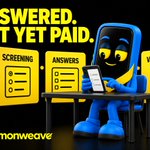
ALT Commonweave illustration: Blu actively fills in a schematic survey on an ordinary phone. Large cards distinguish screening, answers and validation. Headline: Answered. Not yet paid. This explains separate stages, without showing a real app screen, approved reward, cash payment or a promise that an answer will be paid.

ALT Commonweave conceptual illustration: Link places a finite stack of schematic call-outcome sheets into a Scout Review inbox. Blu watches beside an idle Runner phone. Headline: Test a route. Build the evidence. Review decides the next step. No approval, live call, reward or automatic continuation is shown.

ALT Commonweave conceptual illustration of two alternative phone jobs. Blu holds a conduit carrying client traffic. Link examines a network-query signal from a phone with a magnifying glass. A large OR separates the examples. Headline: Measure it. Or share it. No simultaneous rewards, live task availability or earnings are shown.

ALT Commonweave illustration: Blu, the blue woven smartphone character, attentively examines a schematic call-plan sheet through a magnifying glass. The sheet has headings for price and destinations, with no invented tariff or real provider information. A closed SIM envelope remains untouched. Headline: The plan. As published.

ALT Commonweave illustration: Link, the yellow woven smartphone character, carefully holds an ordinary phone and a separate task SIM beside its open tray. A daily SIM rests separately in a dish. Headline: A second phone? Not always. Illustrates using a compatible main phone with a dedicated Scout and Runner SIM; not an app screenshot or task approval.

ALT Link alone stands on the right, facing left with focused uneven brows and a serious mouth. One hand holds a receiver while the other points at a schematic call-plan sheet beside a phone. RUNNER: MATCH THE CALL PLAN. The destination changes the cost. Commonweave. Conceptual illustration of checking destination coverage, not a real carrier plan, live task, approved call, reward or payout.


ALT Blu, the blue Commonweave phone character, holds a simple map card and a licence card with matching country outlines. Labels read Phone location and ULO country. Headline: Location must match. Conceptual Extended Telemetry eligibility illustration, not a real app screen, account result, reward or proof of eligibility.

ALT Blu alone sits on the right, one blue eyebrow raised and mouth thoughtfully downturned, looking down-left at three schematic SIMs with separate yellow CALL COST papers. One hand rests on the table; the other holds a blank-screen calculator. MORE RUNNER SIMS. MORE CALL COSTS. Rewards need confirmed calls. Commonweave. Conceptual cost comparison, not actual calls, simultaneous task availability, measured rewards, payout or a live interface.

ALT Link alone stands on the left facing right, attentive raised eyebrow and level mouth, looking at a SIM held between his fingers. A schematic sequence strip shows five call symbols associated with one registered SIM and plan. SCOUT: KEEP THE SAME SIM. One sequence. One registered SIM and plan. Commonweave. Illustration of the documented sequence requirement, not simultaneous calls, real tests, submitted reports or validation.

ALT Link alone kneels on the right facing left, concentrated inward brows and pursed mouth, looking down at a CARRIER PLAN sheet held in one hand while holding a magnifier with the other. An unopened schematic SIM packet rests behind him. MAPQUEST: RESEARCH BEFORE YOU SPEND. Find prepaid international call plans. No SIM purchase at the research stage. Commonweave. Conceptual documented research workflow, not a real carrier plan, task offer, approved submission or reward.

ALT Link alone sits on a black bench on the right, turned left, with an attentive raised brow and small sideways smile. Both hands hold a schematic query card labelled DEVICE, NETWORK and LOCATION. Three small-town buildings appear on the left. SMALL TOWN. MATCHING QUERY. Commonweave. Conceptual Extended Telemetry query matching, not a real request, interface, measured activity, reward or guarantee of demand.

ALT Blu alone stands on the left, serious uneven blue brows and a small straight mouth, looking right at a yellow calculation sheet held in one hand while his other hand points to the remaining amount. RUNNER COST SCENARIO. 180 confirmed minutes; reward 18 UP; call costs US$12.60; US$5.40 before other costs. Hypothetical rates. Not a live offer. Commonweave. Schematic arithmetic example, not a real call, validated task result, payout receipt or app interface.

ALT Blu alone stands on the left leaning right, uneven questioning brows and a small surprised round mouth. One hand touches an ANDROID APK 1.2.4 package carrying a UGRID sharing symbol; the other points toward the comparison. APP STORES 1.2.4 package has no uGrid symbol. SAME VERSION. DIFFERENT TASKS. UGRID: ANDROID APK ONLY. Commonweave. Schematic release-build illustration, not a download screen, available paid task, traffic, reward or result.

ALT Link alone stands on the left facing right, looking thoughtfully at a registered SIM in one hand and holding a plain UP BALANCE note with the other. A schematic arrow leads to SIM CREDIT beside an ordinary phone. RUNNER GUIDE: UP → SIM CREDIT. Completed top-ups are final. Commonweave. Illustration of the documented Runner guide, not a real balance, top-up, bank card, payment, cash payout or current task offer.

ALT Blu alone crouches on the right facing left, focused eyes and a small intent smile. One hand holds a receiver connected to an ordinary phone; the other touches a conceptual 48 HOURS hourglass. Eight number cards read UP TO 8 NUMBERS. SCOUT: THE FIRST CALL STARTS THE CYCLE. Explore the workflow with Commonweave. Illustration of the documented Scout cycle, not a real timer, task offer, calls, submitted reports, validation or rewards.

ALT Blu alone kneels on the right, focused furrowed blue brows and a serious mouth, looking down-left. One hand holds a receiver connected by an intact cord to a phone; the other writes NO CONNECTION on a conceptual ROUTE REPORT. RUNNER: REPORT THE FAILED ROUTE. Commonweave. Illustration of documenting a failed remote route, not broken local hardware, a real test, submitted report, validated result, app interface or reward.

ALT Link alone stands on the right, facing left with one raised brow and a small thoughtful open mouth. One hand holds a receiver; the other grips a CALL TIME stopwatch. A separate TASK WINDOW hourglass stands on the left. RUNNER: DEADLINE ≠ CALL TIME. Commonweave. Conceptual Runner workflow illustration: completion window and confirmed call duration are different; not a real timer, call result, task interface, paid duration or reward.

ALT Blu alone stands left at a desk, holding a receiver to his side and looking right with wide attentive eyes, one raised brow and a slightly open mouth. Other hand touches the desk. A conceptual envelope marked SIGNED TRANSACTION follows a telephone wire toward blockchain blocks. LOCAL CALLS. NEW TASK AHEAD. TELRPC service: beta. Unetwork answering task: coming. Commonweave. Illustration of an announced task, not an available Commonweave task, completed transaction, reward or live interface.
