

New Research Training Group "Supracolloidal Structures: From Materials to Optical and Electronic Components" (GRK 2767) at Technische Universität Dresden.
Dresden, Germany
Joined August 2022
- Tweets38
- Following1.1K
- Followers234
- Likes8




Pinned Tweet
We are 13 students from all over the world working in Silicon Saxony (Germany) on a multidisciplinary science project. Join us to explore the unique optical and electronic properties of supracolloidal structures. Stay tuned for new chemistry and device physics! #RTG2767
1/3 🧵
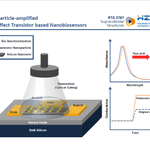
Meet Taufhik, a student in Dr. Larysa Baraban's group at HZDR!
His project explores the utilization of plasmonic nanoparticles in FET-based biosensors, aiming to amplify responses with cutting-edge technology.
Stay tuned for exciting advancements in biosensing! #RTG2767 🚀


Leipzig University hosted @BareaBorja and @alyna_ong for their lab rotation this week!
They learned about DNA origami molds assembly, PEG purification, Au NPs functionalization, gel electrophoresis, and TEM. 🧪🔬
Big thanks to @zinnoberblau for being an amazing host!🙌

Exciting times at Chemnitz for the RTG Summer School last week! 🌞💡🎓
We got the chance to dive into the fascinating world of optoelectronic technologies and engage in thoughtful discussions.
The location was absolutely stunning🏞️✨ #RTGSummerSchool #TUdresden #Chemnitz


Conference update!
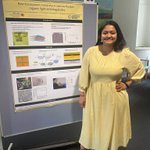
Delighted to share that @TaufhikHossain and Nirbhika presented their exceptional work at the poster session during #DresdenPolymerDiscussion.
A well-deserved opportunity to present their research and connect with fellow researchers! 🎉 – at Meißen, Deutschland


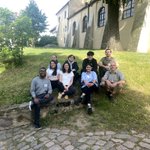
We are excited to participate in the 18th Dresden Polymer Discussion at Meissen!
We are exploring the fascinating world of functional soft matter assemblies starting from basic building blocks.
Big thanks to @IPFDD for organizing such a wonderful event! #polymerchemistry – at Meißen, Deutschland


By combining biomolecules with conductive materials, new possibilities emerge, like growing high aspect ratio gold nanowires in microtubules!
Why is this needed? Why are they using biomolecules? And How do they do it?
doi.org/10.1021/acs.nanolett…
1/6🧵
Once the AuNPs are inside, they add a gold precursor and a reducing agent i.e. they add gold ions that will grow particles. Since all is happening inside the MTs, the spherical particles will become a wire.
5/6🧵
Intrigued?
Check the full paper doi.org/10.1021/acs.nanolett… This work was performed by Foram @forammj, from the @StefanDiezLab, and collaborators. It was supported by the DFG through GRK 2767.
6/6🧵

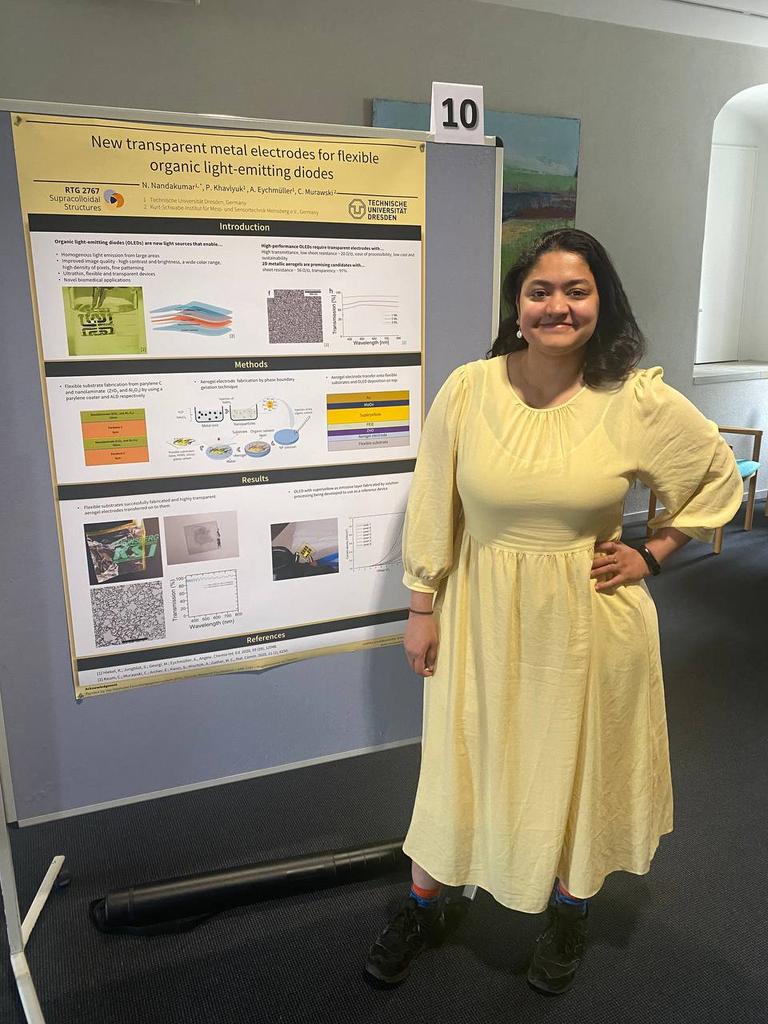
Please let us introduce Nirbhika!
She is working in the group of Dr. Caroline Murawski at KSI-Meinsberg.
Her project uses transparent metal electrodes based on 2D metallic aerogels to make flexible organic LEDs.
Please find out more here ⬇️


Fabrication on flexible plastic films makes them highly attractive for soft tissue electronics.
For stretchable OLEDs, a new approach is the recently synthesized 2D metal aerogels in Prof. Alexander Eychmüller’s group at TU Dresden.


Welcome @alyna_ong
She is working at the Dresden Center for nanoanalysis (DCN) with Dr. Bernd Rellinghaus.
Her project studies in-situ and in-operando characterisation of functional self-assembled nanostructures using Liquid Phase Transmission Electron Microscopy (LP-TEM).
⬇️


Today we introduce our fellow Ronja Thümmler!
She works at the IPF Dresden with Prof. Brigitte Voit and Dr. Franziska Lissel.
Her project aims at synthesizing flexible and self-healing semiconductors based on hydrogen-bonded organic building blocks.
Find out more here:

