

be a reply guy
Joined August 2022
- Tweets18.7K
- Following3.9K
- Followers3.4K
- Likes95.9K

Pinned Tweet
GM & Happy Monday! ☕
5th day of the year, what's your special goal today, besides replying to my GM post?

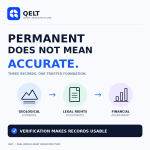
Blockchain can make an asset record permanent. It cannot automatically make that record accurate.
That's a distinction the RWA industry needs to take seriously.
Imagine a mineral asset with three different records:
A geological report describing its resources.
Legal documentation defining the rights attached to it.
A financial assessment determining how institutions might evaluate it.
Putting those records on-chain doesn't automatically resolve inconsistencies between them.
Immutability protects records from alteration. Verification establishes whether those records deserve trust.
This is why Qeltblockchain's approach to asset infrastructure is worth following.
Its focus on strategic asset onboarding, reserve verification, treasury synchronization, and institutional integration addresses a critical challenge in bringing real-world assets into programmable finance.
The objective isn't to replace professional due diligence with smart contracts.
It's to develop infrastructure capable of connecting verified asset information with institutional financial systems.
And as the broader QXMP ecosystem advances its tokenisation initiatives through QELTOKENIZE, the importance of credible underlying asset information becomes even greater.
The next generation of RWA infrastructure needs more than transparent transactions.
It needs trustworthy information, clearly defined responsibilities, and systems that institutions can evaluate with confidence.
Because putting information on-chain is relatively straightforward.
Making that information institutionally reliable is the real challenge.
#QELT #QXMP #Stablecoins
The interesting part isn’t just minting stablecoins from a phone. It’s connecting real assets to everyday finance. That’s the bigger story behind @QXMP_Labs.

🚨 HOLY F*CK… WHAT IS QXMP LABS ACTUALLY BUILDING?! 🤯
There's talk of a QXMP Labs iOS app that could let everyday people and businesses MINT stablecoins directly from their phones.
Yes. You read that correctly.
Not just crypto traders. Not just institutions. EVERYONE. 🌍
💸 Mint stablecoins from your phone.
🏠 Pay your rent.
🔑 Buy a house.
💼 Run business payroll.
🌎 Send money internationally.
🏢 Settle enterprise transactions.
💳 Spend digital dollars in the real world.
All potentially from ONE app.
But here's where things get REALLY interesting…
QXMP Labs already has a reported $1.166 TRILLION in assessed real-world assets verified on-chain, its own Layer-1 blockchain, and stablecoin infrastructure developed .
So why would a company building institutional financial infrastructure suddenly want to put stablecoin minting in EVERYONE'S pocket?
🤔 Is this really just another stablecoin app?
🤔 Or are they quietly building an entirely new financial ecosystem?
🤔 What happens when property purchases, rent, salaries, business payments and asset-backed financial products all start connecting through one digital currency?
And the biggest question nobody seems to be asking…
If this is what they're preparing for everyday users… WHAT ON EARTH ARE THEY BUILDING FOR INSTITUTIONS?! 👀
Something tells us the app might only be the front door.
What's their bigger play here?
WHAT HAVE QXMP LABS GOT UP THEIR SLEEVES?! 🚀
#QXMP #QXMPLabs #Stablecoin #Fintech #RWA #Tokenization #Blockchain #iOS #FutureOfFinance #BitGo
Coin Viewer 😉 retweeted

🚨 HOLY F*CK… WHAT IS QXMP LABS ACTUALLY BUILDING?! 🤯
There's talk of a QXMP Labs iOS app that could let everyday people and businesses MINT stablecoins directly from their phones.
Yes. You read that correctly.
Not just crypto traders. Not just institutions. EVERYONE. 🌍
💸 Mint stablecoins from your phone.
🏠 Pay your rent.
🔑 Buy a house.
💼 Run business payroll.
🌎 Send money internationally.
🏢 Settle enterprise transactions.
💳 Spend digital dollars in the real world.
All potentially from ONE app.
But here's where things get REALLY interesting…
QXMP Labs already has a reported $1.166 TRILLION in assessed real-world assets verified on-chain, its own Layer-1 blockchain, and stablecoin infrastructure developed .
So why would a company building institutional financial infrastructure suddenly want to put stablecoin minting in EVERYONE'S pocket?
🤔 Is this really just another stablecoin app?
🤔 Or are they quietly building an entirely new financial ecosystem?
🤔 What happens when property purchases, rent, salaries, business payments and asset-backed financial products all start connecting through one digital currency?
And the biggest question nobody seems to be asking…
If this is what they're preparing for everyday users… WHAT ON EARTH ARE THEY BUILDING FOR INSTITUTIONS?! 👀
Something tells us the app might only be the front door.
What's their bigger play here?
WHAT HAVE QXMP LABS GOT UP THEIR SLEEVES?! 🚀
#QXMP #QXMPLabs #Stablecoin #Fintech #RWA #Tokenization #Blockchain #iOS #FutureOfFinance #BitGo
Blockchains don't close on weekends. Corporate finance still operates around banking hours, approval cycles, and settlement cutoffs.
That creates an interesting challenge for enterprise stablecoin adoption.
Moving $1 million on-chain at 2 AM might be technically straightforward.
But who authorizes the transfer?
Who manages the liquidity?
Who handles an exception if something goes wrong?
24/7 settlement changes more than transaction speed. It changes the operational demands on treasury teams.
And this is where @QXMP_Labs has an interesting infrastructure thesis.
Its focus on enterprise stablecoin settlement and treasury movement addresses a market where programmable money must coexist with financial controls, compliance obligations, and institutional accountability.
The opportunity is significant, but the requirements are equally serious.
Businesses don't just need money that can move at any hour.
They need financial systems capable of managing that movement responsibly.
The next evolution of stablecoins isn't simply making money available 24/7.
It's making round-the-clock financial operations practical for the institutions that depend on them.
That's a much bigger infrastructure challenge and one worth watching.

A token can be transparent on-chain and still be opaque as an investment.
You can verify every transaction and still not know enough about the asset, the legal rights, or the risks behind it.
That's a challenge institutional RWA platforms need to solve.
And it's why the development of QELTOKENIZE deserves attention.
With summaries of its first two tokenisation projects and a framework involving Regulation D and Regulation S, the QXMP/QELT ecosystem is moving toward a more structured approach to presenting investment opportunities.
For qeltblockchain, whose infrastructure focus includes strategic asset onboarding and reserve verification, this is a relevant next step in the broader ecosystem.
Because serious tokenisation needs more than assets and smart contracts.
It needs clear disclosures, defined financial rights, investor eligibility checks, and credible supporting information.
The real measure of RWA progress isn't how much asset value gets announced.
It's how much of that value can be translated into understandable, legally structured financial instruments.
Transparency on-chain matters. Transparency about what investors actually own matters even more.
Explore: invest.qelt.ai/
@QXMP_Labs

Global trade operates on two different timelines.
Goods move through supply chains.
Money moves through financial systems.
And those two timelines don't always align.
A supplier can fulfill an order while the payment is still navigating banking intermediaries, currency conversion, settlement windows, and reconciliation.
For international businesses, that gap affects more than payment speed.
It affects working capital, supplier relationships, and treasury planning.
This is where enterprise stablecoin infrastructure becomes a serious conversation.
@QXMP_Labs is positioning itself around cross-border payments, treasury movement, operational liquidity, and real-world settlement.
The opportunity isn't simply transferring digital dollars between wallets.
It's developing financial infrastructure that can help businesses coordinate settlement across borders more effectively.
Of course, blockchain alone doesn't eliminate compliance requirements, currency risks, or local banking dependencies.
But programmable settlement rails create opportunities to improve how those processes connect.
The next major opportunity in stablecoins may be found in the financial friction that global businesses have learned to accept as normal.
Because moving money internationally shouldn't have to be the most complicated part of doing business internationally.

A mining company, a bank, and a blockchain developer can look at the same asset and see three completely different things.
The mining company sees geological resources, extraction rights, and technical reports.
The bank sees valuation assumptions, legal exposure, and financing requirements.
The blockchain developer sees data structures and digital instruments.
Connecting these worlds is one of the biggest challenges in real-world asset tokenisation.
And it's a challenge that doesn't disappear when a token is minted.
This is what makes Qeltblockchain's infrastructure approach worth studying.
QELT is positioned around strategic asset onboarding, reserve verification, treasury synchronization, and institutional integration.
These are the layers needed to help translate real-world asset information into a form that programmable financial systems can work with.
With QELTOKENIZE expanding the ecosystem's focus into structured tokenisation initiatives, that connection becomes increasingly relevant.
The opportunity isn't simply to put trillions in estimated asset value on-chain.
It's to build credible infrastructure connecting physical assets, financial institutions, and digital markets.
Because the future of RWAs won't be determined by how easily we can create tokens.
It will be determined by how effectively we can connect the real economy to programmable finance.
Explore: invest.qelt.ai/
@QXMP_Labs

A security token isn't automatically a better financial product.
The real test is what sits behind it.
QXMP Labs' proposed Senior Secured Convertible Token is an interesting example.
Unlike a conventional utility token, a convertible security is built around a financing agreement.
That means investors need to understand the actual terms:
• Who is legally obligated to repay?
• What assets, if any, secure the obligation?
• What triggers conversion into equity?
• What happens at maturity?
• Which investors are legally eligible to participate?
These questions matter far more than the token standard.
With QELTOKENIZE introducing a dedicated portal and Regulation D / Regulation S offering pathways, QXMP is moving the conversation toward structured financial instruments and regulated investor participation.
And this is where I think tokenisation gets genuinely interesting.
Blockchain can modernize how securities are represented and transferred. But the underlying financial agreement still determines their substance.
The projects that understand both sides — financial structuring and blockchain infrastructure — will be the ones worth studying.
Explore: invest.qelt.ai/
@QXMP_Labs

Coin Viewer 😉 retweeted

Saudi Arabia has asked Yemen's Ansarallah to meet in Oman for negotiations after suffering significant damage from Ansarallah's missile attacks, but Ansarallah has rejected the request – AFP
Ansarallah is currently gaining more territory in Yemen, with its forces pushing back Saudi-backed forces on several fronts. Ansarallah has continued to expand its control while Saudi-backed forces have struggled to stop its advances.
With Ansarallah currently making gains on the battlefield, it appears the Ansarallah does not see negotiations with Saudi Arabia as being in its favor right now.

Coin Viewer 😉 retweeted

The real fear of some Arab regimes is not that Iran will drag them into war.
It is that Iran will drag their populations back into memory.
Back into the forgotten idea that Muslim lands should not be military real estate for foreign empires.
Back into the dangerous belief that Palestine is not an inconvenience but a test.
Back into the suspicion that the rulers are not weak by necessity, but by design.
This is why Iran’s posture terrifies them.
Because resistance is contagious.
And cowardice becomes much harder to market when someone nearby is still willing to absorb the cost of saying no.
Coin Viewer 😉 retweeted

İran'ın şia olması dert değil..! Yoksa Azerbaycan da şia...
İran'da nükleer silah olması dert değil.! Pakistan'da da var nükleer silah.
İran'da molla rejiminin olması dert değil.! Başta Suud olmak üzere, tüm Körfez Ülkeleri şeyhler tarafından yönetilir Üstelik onların aksine İran'da serbest seçimler yapılır.
Sorun; İran'ın ABD, İsrail ve Siyonizm'in karşısında olmasıdır.! (Sahip olursa eğer) Nükleer silahlarının müslüman ülkelere değil, ABD ve İsrail'e yönelmiş olmasıdır.!
Bu durum, hem Siyonist Batı'yı, hem de onların işbirlikçileri sözde müslüman yönetici ve STK'ları rahatsız eder.!!
A security token isn't automatically a better financial product.
The real test is what sits behind it.
QXMP Labs' proposed Senior Secured Convertible Token is an interesting example.
Unlike a conventional utility token, a convertible security is built around a financing agreement.
That means investors need to understand the actual terms:
• Who is legally obligated to repay?
• What assets, if any, secure the obligation?
• What triggers conversion into equity?
• What happens at maturity?
• Which investors are legally eligible to participate?
These questions matter far more than the token standard.
With QELTOKENIZE introducing a dedicated portal and Regulation D / Regulation S offering pathways, QXMP is moving the conversation toward structured financial instruments and regulated investor participation.
And this is where I think tokenisation gets genuinely interesting.
Blockchain can modernize how securities are represented and transferred. But the underlying financial agreement still determines their substance.
The projects that understand both sides — financial structuring and blockchain infrastructure — will be the ones worth studying.
Explore: invest.qelt.ai/
@QXMP_Labs
