

The most interesting moments from humanity
DM for promos + clipping
Joined May 2020
- Tweets6.4K
- Following28
- Followers144K
- Likes18.5K


Pinned Tweet
Never stop developing as a person.
Never stop prioritising yourself.
Never stop loving your friends.
Never stop loving your family.
Never stop loving yourself.
Never stop being kind.
Never stop learning.
Never stop giving.
Never stop.
Cleared Improve retweeted

A lab just open-sourced a 27B model built for one job: acting on unclear input without making things up. 🧠
Think about what an agent actually does. It gets a vague instruction, fills the gaps with a guess, and then acts on that guess. When it’s wrong and confident, you don’t get a bad answer. You get an action you never asked for.
That explains the metric they went after.
→ Hallucination rate 15.1%, vs 30.4% for its own base and 85.3% for GPT-6 Luna
→ Terminal-Bench 2.1: 76.0, best in their comparison set
→ τ³-bench: 259/278, next best 220
→ MCPMark: 48/55, next best 42
→ 29.3K median output tokens per task, vs the base model’s 65.3K
Half the hallucinations and half the token spend of the model it came from.
GPT-6 Luna still wins DeepSWE and the omniscience index, and general-knowledge scores sit level with the base.
So this was targeted work, not just a scaling run.
Cleared Improve retweeted

Pavel Durov says he once told Jack Dorsey that Twitter could be run with 20 people. Dorsey's response, as Durov tells it:
"I agree with you. But if we start firing so many people, it will make the Wall Street scared. They will think something's very wrong with the company, and we don't want to do that, and that's why we keep all these employees around."
Cleared Improve retweeted

"Why did Sundar become the CEO of Google? Because he focused on the Chrome project... that ended up being one of the biggest weapons for them in this battle against Microsoft... The browser is the front end to experiencing the internet."
— Aravind Srinivas
Cleared Improve retweeted

A small team just took a 27B open model and cut its hallucinations in half.
Built on Qwen, trained only on open-source environments, and it beats GPT-6 Luna on Terminal-Bench.
It also writes half the words to get the job done.
Their second version runs 7 long agent sessions at once on a single gaming card.
Free. Apache 2.0. Yours to run.
This is how local AI wins. I have been saying it for years, but I am a nerd.
Cleared Improve retweeted

Some of the most interesting agent results this year are coming out of post-trains of small open models.
A new RL post-train Qwen3.8-27B model trained with an open-source environments cuts the hallucination rate on AA-Omniscience from 30.4% to 15.1%.
the compressed copy of the mla version fits on my single 24 GB RTX 4090 and holds about 3.5x more context than base Qwen.
It beats GPT 6 Luna-medium on DeepSWE, placing in between Luna 6 medium and high.
scores higher on Terminal-Bench 2.1 while writing a median 23.8K output tokens per solved task, where base Qwen writes 54.9K.
Tried an unreleased version of this model, and really felt the comparative intelligent density, that it writes a lot less.
tops Muse Glimmer 30B and OpenAI’s GPT-6 Luna (high) on Terminal-Bench, τ³-bench, ClawEval and BFCL v4 (Berkeley Function Calling Leaderboard), though Luna still wins DeepSWE at 53.1%.
They also released an MLA version, which is the same model with its 16 full-attention layers converted to multi-head latent attention, which shrinks the memory each token takes from 64 KiB to 18 KiB so far more or longer sessions fit on one GPU.
Cleared Improve retweeted

Google is now literally showing ecommerce businesses specifically how to get traffic from AI Search.
Yes, directly inside your Google dashboard.
This is probably one of the most useful AI Search updates for retailers in 2026.
Let’s go through it.
If you want to see whether your business is appearing across Google AI, ChatGPT, Claude, Perplexity, Grok and broader AI search, start here. It’s free:
seo-stuff.com/free-audit
Google recently made its new AI Performance Insights report generally available inside Merchant Center for eligible businesses in the United States, Canada, Australia, India and New Zealand.
The current report covers English-language conversational shopping queries across Google AI Mode and AI Overviews.
Google is essentially giving ecommerce companies an AI Search diagnostic report.
You can see whether your products are being surfaced when somebody uses Google’s AI features to research what to buy, and where competitors are getting visibility that you are not.
Let’s start with share of voice.
Google calculates AI share of voice based on how many AI impressions your brand or products receive compared with you and the competitor set Google has defined for related searches.
What exactly does that mean?
Well, when Google AI is helping shoppers research your category, how much of that visibility are YOU getting?
If competitors are appearing constantly while your products barely show up, you finally have first-party Google data showing you the gap.
No manually asking AI Mode the same question 50 times or trying to infer everything from referral traffic - Google itself is telling you.
The report then breaks conversational shopping searches into three stages:
Discovery.
Evaluation.
Ready to buy.
This might be the most useful part of the entire report.
Suppose you have strong visibility during Discovery, but it falls during Evaluation and nearly disappears at Ready to buy.
That tells you your products are being surfaced early in the research journey, but losing visibility as shoppers get closer to making a decision.
The opposite could happen too.
Maybe you perform well for shoppers who already know what they want, but competitors are being introduced much earlier.
That is far more useful than simply knowing you were “mentioned in AI Search.”
And it is why SEO Stuff approaches AI Search Optimization as more than checking whether ChatGPT mentioned your name once:
seo-stuff.com/gold-plan-pack…
Then there are the actual searches.
Traditional ecommerce SEO has historically focused heavily on relatively clean keywords like “running shoes,” “carry-on luggage” or “standing desk.”
AI shopping queries can look more like:
“What’s a good lightweight running shoe under $150 for someone with flat feet who runs mostly on pavement?”
Those searches contain use cases, constraints, features, price ranges and preferences all at once.
Google’s report is built around that reality.
Its Top Terms section shows the concepts shoppers are prioritizing inside conversational queries.
Google gives examples such as “maximum cushioning” and “arch support,” then tells merchants to incorporate relevant high-frequency terms into product titles and descriptions where appropriate.
That is Google directly connecting conversational AI Search behavior to product optimization.
The report also surfaces Popular Attributes.
Think size, color, material and other structured product specifications.
Google can show which attributes shoppers frequently care about and which may be missing from your product data.
If shoppers repeatedly want to know whether something is machine washable, expandable, 100% cotton or supports a certain weight, but your product data does not clearly provide that information, you have an information gap.
Google’s recommendation is straightforward: populate missing attributes and prioritize the ones shoppers are asking about most.
Then there is Top Search Intents.
This goes beyond individual terms and looks at WHY somebody is searching.
A shopper may want an office chair for lower back pain, want to compare two models, stay under $300 or understand whether mesh or leather is better.
Those are very different buying situations, and Google is now giving retailers more information about which conversational shopping intents are actually occurring.
So the optimization loop becomes pretty straightforward:
Look at your AI Search share of voice, identify where competitors are beating you, see where visibility falls across Discovery, Evaluation and Ready to buy, review the terms and attributes shoppers care about, improve your product information and keep monitoring.
Google is explicitly recommending this kind of workflow.
Keep product data accurate.
Add relevant high-frequency terms where appropriate.
Populate missing attributes.
Keep reviewing the report as new opportunities appear.
There is another important detail.
The AI Performance report currently measures organic AI visibility.
Paid Ads traffic is not included.
That makes this particularly relevant for SEO.
But Merchant Center product data is only part of the equation.
People researching expensive or complicated products also ask things like:
“What is the best X for Y?”
“X vs. Y.”
“Is X worth the money?”
“Best X under $500.”
“What should I look for when buying X?”
A product feed alone may not answer those questions, but your website can.
Buying guides, comparison pages, category pages, FAQs, use-case content, product education, original research and expert explanations give Google more context around the buying decision.
Suppose shoppers are researching “best running shoes for plantar fasciitis.”
Your product feed can help Google understand which shoes may be relevant.
Your website can explain which features matter, which products contain those features, how models compare and who each shoe is designed for.
That gives Google considerably more information to work with across the broader research journey.
This is what the SEO Stuff Premium Content Bundle is designed to build:
seo-stuff.com/premium-conten…
Then there is authority.
Your product feed and website are still information coming from YOU.
Search and AI systems also encounter reviews, editorial publications, comparison articles, industry websites, third-party mentions and contextual backlinks discussing your company and products.
That broader authority is why the SEO Stuff done-for-you package combines content with contextual DR50+ placements:
seo-stuff.com/gold-plan-pack…
And Google just gave ecommerce businesses considerably more data to see where those efforts may need to be focused.
There is another development worth paying attention to - Google is also introducing Conversational Attributes in Merchant Center.
These are optional product-data fields designed to help AI systems and conversational agents understand more nuanced information about products.
They can include product questions and answers, supporting documents, related products, variant information and popularity information.
Google recently disclosed a test involving lululemon.
The company submitted conversational product attributes, and Google says those attributes were incorporated into relevant AI Mode product recommendations 50% of the time during testing.
Mind you, that does NOT mean adding conversational attributes gives you a 50% chance of being recommended, it just means the additional information lululemon supplied was incorporated into relevant recommendations half the time within that test.
Google wants more detailed product information because AI shopping queries are becoming more detailed, and it is increasingly giving merchants tools to both supply that information and measure what happens afterward.
If you run an ecommerce company, I would be paying very close attention to this report.
AI shopping is already measurable inside Google, and Google is now giving businesses tools specifically designed to help them understand and improve their presence within it.
And if you want to see where your business stands across Google AI, ChatGPT, Claude, Perplexity, Grok and broader AI search, start here:
seo-stuff.com/free-audit


There is an opportunity for businesses to become one of the sources Google uses inside its AI answers.
Google just announced several changes designed to make those source links easier to find and click.
The big one: MORE inline links inside AI answers - and Google says it is now showing those links HIGHER in the response more frequently.
It is also testing dedicated sections near the TOP of AI answers that prominently surface one or two official websites when Google thinks they are the best places to complete a task.
Let's go through it.
By the way, if you want to see whether your business is appearing across Google AI, ChatGPT, Claude, Perplexity, Grok and broader AI search, start here. It's free:
seo-stuff.com/free-audit
Alright, so Google announced the changes on October 15, and it directly addresses a huge question hanging over AI Search:
Even if Google uses my website to generate an AI answer...
Will anybody actually click?
Google is clearly trying to improve that part of the experience.
First, inline links.
These are links embedded directly into the words and phrases inside an AI response.
Google says it has made "continued and substantial increases" to their presence - and now it is also showing them HIGHER in AI responses more frequently.
There is a big difference between being buried in a source panel and being the clickable source directly beside the answer someone is reading.
Imagine someone searches:
"How much does it cost to replace an HVAC system?"
Google AI explains the price range and links directly from that section to the source providing the information.
Now the source is not simply contributing information - there is a much clearer path from the AI answer to the website.
That creates an interesting opportunity, because increasingly there may be TWO places to win inside the same Google search:
The traditional organic results AND the sources Google chooses to surface inside the AI answer.
Google announced another change that could matter even more for commercial searches.
It is testing a section near the TOP of AI answers that surfaces one or two official pages when those are the best places to complete a task.
So think, "Where do I renew my passport?" or "How do I cancel my subscription?" or "How do I book this service?" or "Where can I buy this specific product?"
There may be dozens of sites discussing the topic, but only one official place where the user can actually finish the task.
Google now wants to make that destination more obvious.
That makes the quality of your actual commercial pages increasingly important.
This is something SEO Stuff's done-for-you package handles for businesses daily:
seo-stuff.com/gold-plan-pack…
Product pages, Service pages, Pricing pages, Booking pages, Tools, Calculators, Comparison pages, etc. - each one should make it obvious what the page does, who it is for and why it is the right destination.
The direction here is pretty clear - Google is putting more emphasis on clickable sources INSIDE the AI experience.
Keep in mind, Google says AI Overviews and AI Mode are rooted in its core Search ranking and quality systems.
So foundational SEO still matters.
Your pages need to be crawlable, indexable, useful, current and easy to understand.
Google also says there is NO special AI Search schema businesses suddenly need to add, but AI answers can use query fan-out.
One complicated question can turn into several related searches before Google generates an answer.
For example:
"What is the best accounting software for a 20-person construction company that uses QuickBooks for payroll but needs better job costing?"
That one question contains several subtopics:
Construction accounting.
Job costing.
QuickBooks compatibility.
Payroll integrations.
Company size.
Pricing.
Google can potentially use different sources for different parts of the answer.
Which means you want strong coverage around the entire decision, not just one broad keyword.
Use cases.
Industries.
Comparisons.
Alternatives.
Costs.
Integrations.
Specifications.
Decision-stage questions.
That is exactly what the SEO Stuff Premium Content Bundle is designed to build:
seo-stuff.com/premium-conten…
Then make those pages easy to understand.
Clear titles.
Direct answers.
Strong internal linking.
Current facts.
Original examples.
Useful tables where appropriate.
Because if Google is going to place one source beside a specific sentence in an AI answer...
You want to be the clearest source for THAT piece of information.
Then there is authority.
Google does not publish some special list of "AI citation factors."
But it does say these generative features rely on its core Search ranking and quality systems.
So broader SEO still matters too.
Build useful content.
Earn legitimate authority.
Keep important pages accurate and easy to discover.
That is why SEO Stuff's done-for-you package combines content with contextual DR50+ authority placements:
seo-stuff.com/gold-plan-pack…
There was one other interesting detail: Google says usage of its Preferred Sources feature has grown more than 7x since the beginning of 2026.
Preferred Sources lets users tell Google which publications and sites they want to see more frequently.
That reinforces a broader trend: the source itself matters.
The brand behind the information matters, and Google is increasingly making those sources more visible inside AI Search.
And remember, if you want to see whether your business is already appearing across Google AI, ChatGPT, Claude, Perplexity, Grok and broader AI search, start here.
It's free:
seo-stuff.com/free-audit


Cleared Improve retweeted
At a 300-year-old brewery in Luxembourg, Jeff Bezos found what he calls "one of the little tiny catalysts" for AWS. In the brewery's museum sat a 100-year-old electric generator, built because there was no power grid when they wanted to electrify.
"This is what computation is like today. Everybody has their own data center and that's not going to last. You're going to buy compute off the grid. That's AWS."
The real origin he teed up and left on the table: "We were doing it internally at Amazon for ourselves and the APIs were created. That's a very interesting story in its own right."
Cleared Improve retweeted
There is an opportunity for businesses to become one of the sources Google uses inside its AI answers.
Google just announced several changes designed to make those source links easier to find and click.
The big one: MORE inline links inside AI answers - and Google says it is now showing those links HIGHER in the response more frequently.
It is also testing dedicated sections near the TOP of AI answers that prominently surface one or two official websites when Google thinks they are the best places to complete a task.
Let's go through it.
By the way, if you want to see whether your business is appearing across Google AI, ChatGPT, Claude, Perplexity, Grok and broader AI search, start here. It's free:
seo-stuff.com/free-audit
Alright, so Google announced the changes on October 15, and it directly addresses a huge question hanging over AI Search:
Even if Google uses my website to generate an AI answer...
Will anybody actually click?
Google is clearly trying to improve that part of the experience.
First, inline links.
These are links embedded directly into the words and phrases inside an AI response.
Google says it has made "continued and substantial increases" to their presence - and now it is also showing them HIGHER in AI responses more frequently.
There is a big difference between being buried in a source panel and being the clickable source directly beside the answer someone is reading.
Imagine someone searches:
"How much does it cost to replace an HVAC system?"
Google AI explains the price range and links directly from that section to the source providing the information.
Now the source is not simply contributing information - there is a much clearer path from the AI answer to the website.
That creates an interesting opportunity, because increasingly there may be TWO places to win inside the same Google search:
The traditional organic results AND the sources Google chooses to surface inside the AI answer.
Google announced another change that could matter even more for commercial searches.
It is testing a section near the TOP of AI answers that surfaces one or two official pages when those are the best places to complete a task.
So think, "Where do I renew my passport?" or "How do I cancel my subscription?" or "How do I book this service?" or "Where can I buy this specific product?"
There may be dozens of sites discussing the topic, but only one official place where the user can actually finish the task.
Google now wants to make that destination more obvious.
That makes the quality of your actual commercial pages increasingly important.
This is something SEO Stuff's done-for-you package handles for businesses daily:
seo-stuff.com/gold-plan-pack…
Product pages, Service pages, Pricing pages, Booking pages, Tools, Calculators, Comparison pages, etc. - each one should make it obvious what the page does, who it is for and why it is the right destination.
The direction here is pretty clear - Google is putting more emphasis on clickable sources INSIDE the AI experience.
Keep in mind, Google says AI Overviews and AI Mode are rooted in its core Search ranking and quality systems.
So foundational SEO still matters.
Your pages need to be crawlable, indexable, useful, current and easy to understand.
Google also says there is NO special AI Search schema businesses suddenly need to add, but AI answers can use query fan-out.
One complicated question can turn into several related searches before Google generates an answer.
For example:
"What is the best accounting software for a 20-person construction company that uses QuickBooks for payroll but needs better job costing?"
That one question contains several subtopics:
Construction accounting.
Job costing.
QuickBooks compatibility.
Payroll integrations.
Company size.
Pricing.
Google can potentially use different sources for different parts of the answer.
Which means you want strong coverage around the entire decision, not just one broad keyword.
Use cases.
Industries.
Comparisons.
Alternatives.
Costs.
Integrations.
Specifications.
Decision-stage questions.
That is exactly what the SEO Stuff Premium Content Bundle is designed to build:
seo-stuff.com/premium-conten…
Then make those pages easy to understand.
Clear titles.
Direct answers.
Strong internal linking.
Current facts.
Original examples.
Useful tables where appropriate.
Because if Google is going to place one source beside a specific sentence in an AI answer...
You want to be the clearest source for THAT piece of information.
Then there is authority.
Google does not publish some special list of "AI citation factors."
But it does say these generative features rely on its core Search ranking and quality systems.
So broader SEO still matters too.
Build useful content.
Earn legitimate authority.
Keep important pages accurate and easy to discover.
That is why SEO Stuff's done-for-you package combines content with contextual DR50+ authority placements:
seo-stuff.com/gold-plan-pack…
There was one other interesting detail: Google says usage of its Preferred Sources feature has grown more than 7x since the beginning of 2026.
Preferred Sources lets users tell Google which publications and sites they want to see more frequently.
That reinforces a broader trend: the source itself matters.
The brand behind the information matters, and Google is increasingly making those sources more visible inside AI Search.
And remember, if you want to see whether your business is already appearing across Google AI, ChatGPT, Claude, Perplexity, Grok and broader AI search, start here.
It's free:
seo-stuff.com/free-audit
A brand followed the recommendations in this article and generated more than $50,000 from ChatGPT, Google and broader AI search.

Cleared Improve retweeted
"People forget that what happens in a highly competitive economy like ours if AI lets companies run their businesses more efficiently or for that matter if technology lets their companies run their business more efficiently... higher productivity is the path to prosperity."
— Ken Griffin
Cleared Improve retweeted
Daniela Amodei on why she left Stripe for OpenAI: "There's this nonprofit, and they have all these really great people with these really good intentions, but it seems like they're a little bit of a mess. And that felt really exciting to me."
Said with Dario sitting right there. She's the operator who shows up when a room of brilliant people can't run itself.
Cleared Improve retweeted
"You do a lot of research, but never make an individual decision of consequence for yourself. And over time, you don't experience what it's like to own a decision."
— Kevin O'Leary


Cleared Improve retweeted

An app has the cost structure of a factory. Most of the spend is fixed: design, build, QA, then maintenance forever as the OS changes underneath it.
That fixed cost is identical whether ten people use it or ten million. So the only apps worth building are ones where the problem is common enough to spread that cost across a huge base. Everything below the line never gets made.
Which is why the software you can download is a map of what’s profitable, not what’s useful. The tracker for your weird habit, the tool for one recurring argument in one group chat...
Wabi generates the app when you ask for it. Fixed cost drops toward zero, and an audience of four becomes viable.
The long tail was never a demand problem. It was a breakeven problem.
🤝 Paid partnership

Wabi 2.0 is live!
personal agents are one person, one chat. but the parts of life that matter run on more than one person
Wabi is an agent you use together. you talk to it, it does stuff, builds the apps you need, and anyone can join the thread - your partner, your best friend, the preschool moms groupchat
school changes pickup time → Wabi updates the family calendar, everyone sees it.
a show you’d both love → Wabi finds a night that works, gets the tickets.
the trip everyone keeps talking about → Wabi picks the dates, builds the itinerary, books it
go start a thread with your people 👇
Cleared Improve retweeted

The app store was one of the great business models ever built. Apple and Google own discovery, take a cut of the transaction, and never build the product.
The whole thing rests on scarcity. Apps are expensive to make, so there are a limited number of them, so people need somewhere to find the right one. Discovery is the product and the 30% is the rent on it.
Generated software removes the scarcity. If the app gets made the moment you describe it, there’s nothing to search for, nothing to install, and no shelf to be ranked on.
Wabi is early on that side of the line. Apps generated inside a messenger, built around your group chat rather than downloaded into it.
Every marketplace eventually faces the same question: what happens when the thing it was organizing stops being scarce.
🤝 Paid partnership
Wabi 2.0 is live!
personal agents are one person, one chat. but the parts of life that matter run on more than one person
Wabi is an agent you use together. you talk to it, it does stuff, builds the apps you need, and anyone can join the thread - your partner, your best friend, the preschool moms groupchat
school changes pickup time → Wabi updates the family calendar, everyone sees it.
a show you’d both love → Wabi finds a night that works, gets the tickets.
the trip everyone keeps talking about → Wabi picks the dates, builds the itinerary, books it
go start a thread with your people 👇
Cleared Improve retweeted

The app store assumes what you need already exists, built by someone else, for a problem close enough to yours.
Most of what people actually want fails that test. A tracker for one odd habit. A way to settle one recurring argument in one group chat. Too specific for anyone to build, so it never gets built.
When software can be generated on demand, that constraint goes away. The question stops being whether an app exists and becomes whether you can describe it.
Wabi puts that in a messenger… Personal agents, group chats, and apps made for whatever you’re working on.
The app store was always a workaround for software being too expensive to make for one person.
🤝 Paid partnership

Wabi 2.0 is live!
personal agents are one person, one chat. but the parts of life that matter run on more than one person
Wabi is an agent you use together. you talk to it, it does stuff, builds the apps you need, and anyone can join the thread - your partner, your best friend, the preschool moms groupchat
school changes pickup time → Wabi updates the family calendar, everyone sees it.
a show you’d both love → Wabi finds a night that works, gets the tickets.
the trip everyone keeps talking about → Wabi picks the dates, builds the itinerary, books it
go start a thread with your people 👇
Cleared Improve retweeted
If you're a founder launching soon, we're easy to find:
calendly.com/d/dtj2-w7z-3fy/…

Cleared Improve retweeted
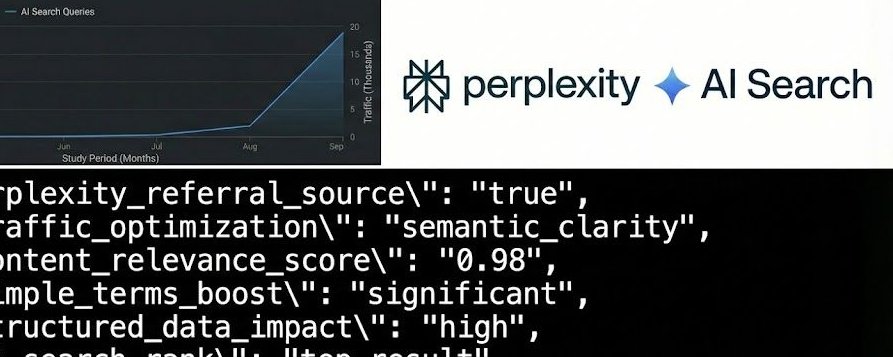
A brand followed the recommendations in this article and generated more than $50,000 from ChatGPT, Google and broader AI search.
Cleared Improve retweeted
"According to physics, the end of the universe is a long boring thin gray soup of gradual cooling... So if the heat death of the universe is the outcome for our reality, then it really is all about the journey because the destination is terrible." — @elonmusk
Simplified, he says stop worrying about hitting a stop button on AI that doesn't exist. Look on the bright side, build for abundance, and enjoy the ride.
Cleared Improve retweeted
"At the beginning of starting SpaceX, I thought that the most likely outcome was failure." — @elonmusk
Before Tesla and SpaceX became industry giants, Elon Musk pursued them as his "best guess at what would most likely affect the future in the biggest way."
You don't need a 100% guarantee to start, you just need a mission big enough to justify the risk
Cleared Improve retweeted
"Systemically or intrinsically, we've had to basically build ahead of the waves of AI... You have to get there on the trend before the trend can even happen." — Alexandr Wang
How Scale AI became an essential pillar of modern tech: by building infrastructure long before the rest of the market caught on.