

The local benefits partner helping small/mid-sized businesses control costs, understand their options and protect the benefits their employees value.
🇺🇸
Joined September 2017
- Tweets260
- Following40
- Followers25
- Likes38





$28,303 a year for a family plan, and the employee still gets a bill after the ER.
If your plan costs more than a car and your people are afraid to use it, the budget isn't the problem. How it's built is.

BREAKING: The average cost of a family’s annual health insurance premium in the US is up +$1,303 YoY, or +5%, to a record $28,303.
This marks the 4th consecutive annual increase of at least +$1,300.
Over this period, the average annual premium for family coverage has surged +$5,884, or +26%.
To put this into perspective, CPI inflation has risen +13% over the same period, or half as much.
Since 1999, the average health insurance premium for a family has soared +$22,494, or +387%.
This represents an average annual growth rate of +6.1%, well above CPI inflation at +2.6% over the same period.
Health insurance has never been more expensive.

Good news: a 2026 law makes pharmacy middlemen pass 100% of drug rebates back to employer plans.
Bad news: for most calendar-year plans, that starts Jan 1, 2029.
Worse news: it kicks in at renewal. Lock in a multi-year deal in 2027 and you may not see it until that deal renews.
Read the contract length before you sign.
Sources: Consolidated Appropriations Act, 2026 via HR Director hcamag.com/us/specialization… and Frier Levitt frierlevitt.com/articles/202…

Good news: a 2026 law makes pharmacy middlemen pass 100% of drug rebates back to employer plans.
Bad news: for most calendar-year plans, that starts Jan 1, 2029.
Worse news: it kicks in at renewal. Lock in a multi-year deal in 2027 and you may not see it until that deal renews.
Read the contract length before you sign.
Only 49% of large employers say they get enough info on the drug rebates paid on their own health plan.
Those are the companies with lawyers.
If you run a 30-person shop, ask where your plan's drug rebates go. Before you sign the renewal, not after.
Source: KFF 2026 Employer Health Benefits Survey kff.org/private-insurance/wo…

$12,000 out of pocket for one person on an ACA plan in 2027. $24,000 for a family. That's not a safety net. That's a second mortgage with a member ID card.

$12,000.
That's the most a single person on an ACA plan can be asked to pay out of pocket in 2027 before the plan covers the rest of their in-network care. Family: $24,000. Up 13% from this year's $10,600.
Premiums are slated to rise about 15%, after last year's 26%.
So for most people, most years, that plan is a catastrophe policy. Fine. Buy it like one.
Then put everyday care somewhere you can actually afford to use it: a flat monthly fee, a doctor who answers your text, labs and meds at prices you see before you say yes.
Open enrollment starts Nov. 1. What's your deductible next year, and when did it last stop you from seeing a doctor?
Almost $11,000 for 5 minutes with a doctor and 2 x-rays. Health care is the only place you find out the price after you've already bought the thing.

I went to the emergency room last month. Was there for 5 hours. Without health insurance, I would have owed them almost $11,000 for 5 minutes speaking with a doctor, 2 x rays and the rest of the time sitting in the waiting room. Insane. Health care system in America is broken.

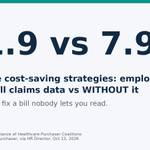
11% of big employers covering weight-loss GLP-1s don't know what it's doing to their drug spend. Not their fault. Nobody in this industry sends the receipt.

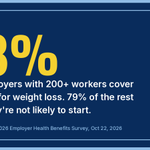
Only 18% of employers with 200+ workers cover GLP-1s for weight loss. 79% of the rest say don't hold your breath. Miracle drug, meet benefits budget.

A raise and a premium hike in the same week. Employers, your benefits package is part of the raise. Price it like one.

MY BOSS: "We’re giving you a 4% raise this year to help with inflation."
ME: "Thank you, I appreciate it."
Then I sat down and did the actual math.
* Base Salary: $65,000
* 4% Raise: +$2,600/year (about $216/month before taxes)
* Take-home increase after federal/state tax, 401(k), and health benefits: ~$140/month
The same week:
* My landlord increased rent by $125/month.
* My auto insurance renewed at +$30/month (no accidents, no tickets).
* My health insurance premiums went up by $20/month.
My "raise" left me -$35 behind where I was last year.
Companies call a 4% bump a "cost of living adjustment" to make you feel rewarded, but when fixed expenses rise faster than gross income, a raise on paper is literally a pay cut in reality.
A higher number on your paystub doesn't mean you're getting ahead if the cost to exist moves faster than your salary.
$6 trillion this year. $9 trillion by 2034. Somebody pays for that, and it shows up in your renewal. Employers: shop the plan, don't just sign it.

U.S. health spending is projected to hit $6 trillion in 2026, with hospitals alone accounting for $1.9 trillion.
By 2034, health spending could reach $9 trillion and make up more than 20% of the economy: on.kff.org/4yX9C2O

ALT The KFF line chart titles "U.S. Health Spending Is Expected to Reach $9 Trillion by 2034." It shows total health spending, by service type, 2019-2024; projected 2025-2034
Employers sign PBM contracts they've never seen the inside of, then wonder why the drug spend keeps going up. Ask for the rebate report. Watch how fast the room gets quiet.

With big PBMs, someone is always getting ripped off. Great article on why PBMs are afraid of @costplusdrugs
healthcarerebelalliance.subs…
The guidance changed. Your health plan's drug rules probably didn't. Employers: find out what your plan says about GLP-1s before your employees find out at the pharmacy.

A leading medical body’s guidelines on GLP-1 use during and after pregnancy have opened the door to using the drug while nursing. on.wsj.com/4BFngcT

Higher premiums. More paperwork. A longer wait for help. The most expensive button in open enrollment is 'keep my current elections.'

Consumers who buy Affordable Care Act health insurance are going to see changes both big and small as open enrollment for 2027 coverage kicks off. These include premium increases, possible additional identity checks, potential delays in working with a broker, and new limits on which immigrants can get subsidies. cbsn.ws/3Wqd7QR

Spent yesterday learning from Alexa Stinnette, Tampa General's Director of Women's Imaging, about the newest breast cancer detection advances.
The takeaway for employers: the best screening in the world doesn't help if your team doesn't know it's covered.


Premiums up 6% a year. Prices up 2.6%. Your paycheck noticed.
That's why we don't let employers just sign the renewal. Shop it, every year.


$28,303 for a family plan. Then a $1,955 deductible on top. Your employees pay for the insurance, then pay again to use it. Have that conversation before open enrollment, not after.


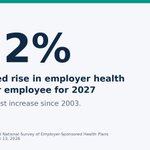
Premiums up for the fourth year in a row. At some point that's not a surprise, it's a subscription. Employers: you can't control the market. You can control what you sign at renewal.

Premiums are expected to skyrocket for the fourth year in a row, and employees will likely pay more when they receive care, too. The increased costs will put an additional squeeze on Americans' already-tight budgets, adding to the nation's affordability crisis. cnn.it/488Apxi
