

Chronoshift | Limited Bitcoin watches for the new financial era. Satoshi Watch. https://xitter.cf/t.co/EyImqGm0yO
Amsterdam
Joined September 2024
- Tweets382
- Following0
- Followers367
- Likes68





Pinned Tweet
Our new limited edition Bitcoin watch is out now! #Bitcoin
Visit Chronoshift.org
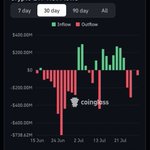
Recent ETF inflow has been positive.🟢 Doesn’t mean we won’t go lower.
But don’t miss the boat 🛥️
#Bitcoin

They won’t stop printing. 👀 #Bitcoin

Bitcoin is 87% correlated to global liquidity. The NASDAQ is 97% correlated.
Which tells you something most people never realise. These assets are not really trading on earnings, or news, or whatever the story of the week is. They’re tracking the amount of money in the system.
Bitcoin just swings harder around that line, because on top of liquidity it is young, volatile, emotional, and still riding a network adoption curve. Sometimes it runs hot. Sometimes it runs cold. Right now it is running cold, so people think something is broken.
Nothing is broken. It’s doing exactly what it always does.
So here is the question. If these assets track liquidity this closely... what if t you could forecast liquidity itself?
Well, actually, you can.
As I lay out in my Everything Code framework, liquidity is driven by the debasement of currency, and debasement can be forecast years ahead, because the interest payments that drive it are already known today and they lead liquidity by around three years.
Bonkers.
Real believers will win

$BTC long-term and short-term holders profit are at the bottom again.
The same trend line since the beginning.
You know what this means...

If your money loses purchasing power every year...
You're forced to become an investor.
That's not capitalism.
That's survival.
There will only ever be 21 million Bitcoin.
There are over 58 million millionaires on Earth.
Even if Bitcoin were distributed perfectly...
Most millionaires couldn't own one whole coin.
Think long term.

Bitcoin has been declared "dead" hundreds of times.
Yet after every cycle...
The network keeps producing a new block roughly every 10 minutes.
Price is emotional.
The protocol isn't.

It took the U.S. over 200 years to accumulate its first $1 trillion of debt.
The most recent trillion took only a matter of months.
Debt is no longer the exception.
It's the strategy.
Every technological revolution creates winners.
Bitcoin's innovation isn't blockchain.
It's digital scarcity.

The gold standard didn't fail because gold stopped working.
It failed because governments wanted to spend more than gold allowed.
The hardest part about Bitcoin isn't buying it.
It's holding it while everyone tells you you're wrong.

Governments tell you diversification reduces risk.
Then they put almost the entire monetary system on a single point of failure.
One currency.
One issuer.
One policy.

Gold is scarce because of physics.
Bitcoin is scarce because of mathematics.
Fiat is scarce...
...until politicians decide otherwise.

Governments don't need to conquer your savings.
They just need inflation to quietly do the job over decades.
Every empire eventually discovered the same trick:
Spend more than you collect.
Debase the currency.
Blame rising prices on someone else.
Rome did it.
Modern governments still do.
Inflation is the only tax that can be increased without a vote.
Nobody asks for permission.
Nobody receives an invoice.
Yet everyone pays.
That's why governments have little incentive to stop printing.
The dollar wasn't always backed by trust.
It used to be backed by gold.
That changed in 1971.
Everything that followed makes a lot more sense once you understand that.
Another bear market.
Another cycle where people lose conviction.
Where noise gets louder than vision.
Where fear replaces belief.
But this is where real conviction is built.
The easy part is believing when everything goes up.
The hard part is staying focused when the market turns against you.
ChronoShift was never about hype.
It’s about time, conviction, and the people who see beyond the current cycle.
Markets move in waves.
Legacy is built in silence.
The Satoshi Watch continues ticking. 🟠
#Bitcoin #crypto
