
Nature and Evolution
Joined May 2021
- Tweets66
- Following171
- Followers132
- Likes111




Christoph Netz retweeted

#MadeAtWiko "Division of labour as key driver of social evolution", theme issue, Philosophical Transactions of the Royal Society B 380, no. 1922 (2025), compiled and edited by Fellow 2022/23 Michael Taborsky, Fellow 2016/17 Jennifer Fewell, Robert Gilles, and Barbara Taborsky royalsocietypublishing.org/t…
Christoph Netz retweeted

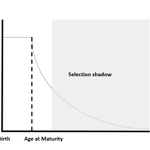
@ChristophNetz shows that if offspring prevent parents from renewed reproduction, Hamilton's force of selection increases before maturity. Sibling replacement thus leads to a reduced force of selection and mutation accumulation at early life stages:
academic.oup.com/jeb/advance…

Christoph Netz retweeted

How genes shape birdsong, even when birds grow up far from home theconversation.com/how-gene…

Christoph Netz retweeted

I’m so excited! My first-first author paper AND the first chapter of my PhD is now out in @CurrentBiology : ‘Translocated wild birds are predisposed to learn songs of their ancestral population’: doi.org/10.1016/j.cub.2024.0…
1/📖 Read on for a short description:

Christoph Netz retweeted

Psychedelic art or a model of the coevolution of predatory-prey movement strategies? This cool work by @ChristophNetz shows that as a result of movement strategy evolution there can be rapid changes and alternative stable states #ASABSpring2024
Christoph Netz retweeted

@jbkinney is a top quality scientist with the rare spine to speak up on SARS-CoV2 origins and the need for better biosafety. I'm disgusted that he's apparently being threatened for this.
And yes, I'm by now also convinced SARS-CoV2 did most likely originate from a lab accident.

I am leaving @BiosafetyNow. I always knew there was some professional risk to me speaking out, but my advocacy has now become a liability that I can no longer ignore. 1/5
Christoph Netz retweeted

Ende 2022 verabschiedete die intern. Staatengemeinschaft in Montreal das #Biodiversitätsabkommen. Aber reicht das? Ab 19 Uhr diskutieren im @KoerberForum (und live): Matthias Glaubrecht @unihh, @m_prys von @GIGA_Insitute, Bernd-Ulrich Netz @fhh_umwelt mit Moderatorin @PPinzler

ALT © Alexander/stock.adobe.com
Christoph Netz retweeted
Thank you @EvolOdonata for a fun and engaging discussion from birdsong to Wittgenstein. Also big thanks to @StelkensLab and Niclas Kolm for being part of my examination committee and your excellent feedback! – at Stockholm, Sweden

Congratulations to @SamyukthaRajan from @wheatcroftlab for passing her licentiate defence titled "Acoustic divergence in the pied flycatcher". Many thanks to the opponent @EvolOdonata for a great discussion and the exam committee Rike Stelkens (@StelkensLab) and Niklas Kolm.


Christoph Netz retweeted

Very happy that my favourite PhD paper is now out in @eLife!
We've got a spatial model of social movement decisions, evolution, and disease all in one - many thanks to great coauthors @JakobGismann @Gfalbery @arsweeny and Franjo - this was a joy to write
elifesciences.org/articles/8…

Christoph Netz retweeted
Taking the opportunity to broadcast @ChristophNetz and my Am Nat paper, now formatted.
journals.uchicago.edu/doi/10…
Agents use neural networks to move, assessing local cues to select next step. Network weights mutate, & spread based on ecological success of agents, this is evolution.


New paper out in Interface on 'smart self-propelled particles', led by @VLecheval, showing the many ways agents embued with adaptable neural networks can evolve to solve spatial exploration tasks in confined environments. royalsocietypublishing.org/d…

Christoph Netz retweeted

"Ideal free distribution of unequal competitors: spatial assortment and evolutionary diversification of competitive ability"
A study by @ChristophNetz et al"
In stable environments, selection removes heritable differences in competitiveness."
sciencedirect.com/science/ar…

ALT [Figure 1 from the featured paper shows Ideal free distribution of unequal competitors over habitat patches differing in resource abundance. 10 000 individuals were initially distributed randomly over 100 patches with resource abundance values running from 0.01 to 1.00 at intervals of 0.01. One of five competitive ability values was randomly assigned to each individual. Then individuals moved sequentially (in random order) to the best-suited patch, until an ideal free distribution (IFD) was reached. The graph shows the distribution of each competitive type at the IFD by combining the results of 100 replicate simulations.
Christoph Netz retweeted

This is one of the strangest articles I have written at @UofTSCC. Is aesthetic taste quantifiable? Do we have universal tastes rooted in our evolutionary history? Are we at risk of losing aesthetic diversity? Art by Supriya Shakya Saha.
bit.ly/3H6xd8a

Christoph Netz retweeted

👇👇👇@EESLMU1 alumni seminar 👇👇👇continues. @Ana_Maria_BU from @TU_Muenchen will talk about: „Global exploration of Island Biogeographic Theory through a trait-based approach“. When? April 26th at 14:00 CET. If you want to join the seminar via zoom, pleas dm.

Christoph Netz retweeted

First paper published as (co-) first author from my PhD together with the brilliant @aparajitha_
including a stickle on the cover 🤓

New paper from the sticklelab ✨✨✨
We show that ecologically relevant setups can be crucial in uncovering differences in movement behaviours between populations!
And one of our stickies even made the cover🤩
royalsocietypublishing.org/d…
1/4

Christoph Netz retweeted
Happy to see that my second PhD paper, together with @ChristophNetz and Franjo Weissing is 'just accepted' at Am Nat.
We looked at a large IBM of the joint evolution of movement and foraging decisions, with lots of individual variation emerging.
journals.uchicago.edu/doi/ab…

Hamilton’s force of selection before maturity: New preprint!
Here I show that, rather than remaining constant, the force of selection generally increases before maturity for as long as offspring depend on their parent!
A brief thread 1/9

This provides a potential evolutionary explanation for a widely observed pattern: That mortality rates generally decrease during ontogeny (termed ‘ontogenescence’ by Levitis 2011). 8/9
Check the preprint below, and let me know what you think! 9/9
biorxiv.org/content/10.1101/…