
PhD candidate in Neuroscience at Johns Hopkins University. Motor learning research in the BLAM Lab with Adrian Haith and John Krakauer.
Joined May 2017
- Tweets22
- Following53
- Followers49
- Likes17



Christopher Yang retweeted

I am recruiting a postdoc to work on motor skill learning, with a focus on how learning scales as skills get more complex.
Please get in touch if interested, or catch me at #NCMDub22 next week!
Christopher Yang retweeted

Our review paper is now available on @PsyArXiv, with @adrianhaith & @blamlab.
"The relationship between habits and skills in humans"
psyarxiv.com/9qrgd/
Christopher Yang retweeted
.@blamlab and I are hiring two Research Assistants. Motor control / motor learning / stroke recovery. One position more technical+basic research, one more patient-oriented but both flexible. Come and work with us @HopkinsMedicine!
1/9: A little belated but very happy to announce that our preprint has been published in @eLife: elifesciences.org/articles/6….
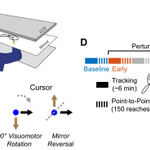
In this study, we sought to understand how people learn to perform continuous movement tasks like riding a bike or juggling.

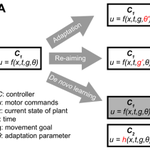
8/9: So neither implicit adaptation nor re-aiming could account for most of the learning we observed. Then what learning process is at play here? We suggest that our subjects engaged de novo learning, a process where the brain builds a new movement controller from scratch.

1
3
9/9: Please check out the paper (linked in the first tweet of the thread) for more details. Many thanks to my co-authors @adrianhaith and @NoahCowan for pushing this out the door.
Feel free to comment or DM me if you have any questions.
2
Christopher Yang retweeted

Announcing a new postdoctoral position in the study of #skill #learning, #expertise, #intelligence, and #games!
Become an SFI Fellow under the supervision of President David Krakauer & John Krakauer of @blamlab and research expert-level performance:
santafe.edu/jobs/Postdoctora…
Christopher Yang retweeted

A team including @_scottalbert @blamlab @MarkChurchland @AlkisMH @jangjihoon Andrew Zimnik, Demetris Soteropoulos & Stuart Baker
tested this idea in monkeys, healthy people, and stroke survivors. Here are the results @eLife
elifesciences.org/articles/5…

1/4: Pleased to announce that a preprint of our work exploring adaptation and de novo learning in a continuous control task is now available on bioRXiv. Thanks to co-authors @adrianhaith and @NoahCowan.

De novo learning versus adaptation of continuous control in a manual tracking task biorxiv.org/cgi/content/shor… #bioRxiv
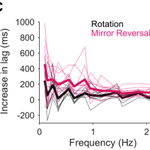
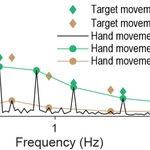
3/4: Dissecting tracking behavior into different frequencies of movement revealed that compensation was frequency-dependent; the rotation group learned to compensate at all frequencies while the mirror-reversal group only compensated at the lowest frequencies.

1
4