

From a world that carried meaning to a self that must—tracing how different traditions locate reality.
London
Joined January 2019
- Tweets5.1K
- Following2.2K
- Followers3.2K
- Likes258K




1/8
For centuries, aristocratic ancestry could determine who reached China’s highest offices.
How did the empire loosen the grip of hereditary elites and build a government staffed by scholar-officials?
The story begins in the Northern and Southern Dynasties.🧵

8/8
The examinations did not erase aristocratic privilege overnight; elite families adapted.
But over time, recruitment shifted from inherited status toward demonstrated learning.
That shaped Chinese government for roughly 1,300 years, until the system was abolished in 1905.

1
12
55
1/6
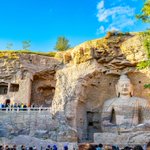
Behind the giant Buddhas of the Northern Wei lies a story that is often overlooked.
It involves a monk from the Western Regions, a Chinese emperor, and a war that kept a great translator waiting for years. 🧵

6/6
What if Former Qin had survived, and Lü Guang had reached Chang’an as originally planned?
Would the history of Chinese Buddhism have taken a different course?
#ChineseHistory #Buddhism #Kumarajiva #SilkRoad
1/6 Can one coin be worth 1,000? 🤔
Left: Daquan Dangqian (大泉当千), decreed to equal 1,000 standard coins.
Right: a tiny Jinghe (景和) coin, issued more than 200 years later.
Two strikingly different coins. One question:
What actually gives money its value? 🧵

5/6 These two coins raise a question ancient Chinese rulers faced for centuries:
What gives money value?
The metal it contains?
The authority that issues it?
Or people’s willingness to accept it?
From Wu to the Southern Dynasties, money reflected political and economic change.🧵