

Assistant Professor in Chemistry at Texas A&M University | RNA chemical biology 🧬| HHMI Hanna Gray Fellow | #BlackinChem 👩🏾🔬#BlackinSTEM | she/her
- Tweets8.4K
- Following1K
- Followers1.2K
- Likes2.3K


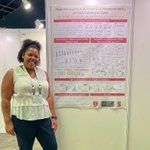






ALT RNA undergoes modification through enzymatic post-transcriptional editing. Adenosine-to-inosine (A-to-I) editing is one of the most widespread and impactful of these modifications and is catalyzed by adenosine deaminases acting on RNA (ADARs). Resulting inosines base pair with cytosine, essentially re-coding adenosine sites to guanine. Editing is essential for a number of processes including embryogenesis, neurological function, and innate cellular immunity. Dysfunctional editing is also linked to auto-immune diseases, neurological disorders, and several types of cancer. Despite this importance, numerous challenges remain for studying A-to-I editing, and our overall understanding of the locations and frequency of inosine sites remains limited. To address this challenge, we have repurposed EndoV from an RNA-cleaving enzyme into an RNA-binding protein and demonstrated its use for mapping of A-to-I editing sites and global profiling of RNA inosine content in cells and tissue samples.

ALT Seminar flyer MON | Oct. 12: RNA’s Evolution from an Eccentric Molecule to a New Class of Medicines TUES | Oct. 13: Sequence-based Design of Small Molecules Targeting RNA – From Chemical Probes to Precision Medicines WED | Oct. 14: Covalent Approaches to Study and Optimize Small Molecule—RNA Interactions RNA has evolved from being viewed primarily as an intermediate between DNA and protein to being recognized as a functional biomolecule that can directly drive human disease and serve as a therapeutic target. RNA folds into complex structures, regulates gene expression, catalyzes chemical reactions, and participates in nearly every major biological process. These properties create opportunities to develop new medicines that act directly on RNA. Across this lecture series, Dr. Disney will describe how discoveries in RNA biology have shaped our understanding of RNA as a drug target and how chemical biology can be used to identify and exploit disease-relevant RNA structures.

ALT Seminar flyer with abstract text: Gene expression is governed by a dense network of heterotypic RNA-protein (RNP) interactions. The intrinsic heterogeneity of these interactions complicates efforts to extract generalizable rules from genome-wide studies. In this seminar, I will introduce mutual allostery as a conceptual framework for understanding how RNA and protein components cooperatively encode regulatory control. The concept of allostery is extended to heterotypic RNPs, where reciprocal coupling between RNA and protein conformational states shapes assembly, specificity, and function. I will illustrate how allosteric communication across RNP interfaces can influence complex formation and regulatory outcomes. Mutual allostery may represent a unifying mechanism by which heterotypic interactions modulate RNA biology. More broadly, this framework suggests new ways to think about, and ultimately manipulate, RNA-centered regulatory systems using chemical principles.




ALT Dynamic and disordered (DD) macromolecular structures are essential for cellular functions, are often drivers of biological dysfunction, and are almost exclusively unligandable and/or undruggable with traditional, non-covalent small molecules. Recently, serendipitous discoveries revealed that covalent small molecules can form selective interactions with DD proteins, leading to a surge in chemical probes. These successes are largely the result of screening campaigns with little understanding of the molecular, biophysical, or structural basis of the observed selectivity. The Morgan lab’s goal is to elucidate molecular recognition principles that describe how these covalent ligands target DD structures. Our lab focuses on two classes of macromolecules with therapeutic importance that have eluded selective targeting: RNAs and RNA-Binding Proteins (RBPs). The talk will describe our multi-disciplinary approach to demystify generalizable rules for covalently targeting DD structures.


ALT In the spirit of all things scientific, occasionally explosive and all-around inspirational, the Department of Chemistry is gearing up to host one of the most popular fall traditions across the Texas A&M University campus at the premier laboratory building in the country! Stop by the welcome tent at the front entrance and get ready for a host of hands-on action, including fascinating experiments, a poster session, guided laboratory tours, three Chemistry Road Show performances and lots of other free fun for the whole family!


