
https://xitter.cf/t.co/d4yc9ck53H
Joined January 2018
- Tweets1.2K
- Following480
- Followers192
- Likes309
2/2: The Constitution also does not allow councils to behave as if the word illegal removes all rights from the homeowner. Section 74 says nobody may have their home demolished without a court order made after considering all relevant circumstances. Our courts have already confirmed this. So even where somebody has built illegally, there is still a legal process to follow.
I also want to say something about these so called sabhuku deals.
Minister Daniel Garwe is correct that communal land can not be sold by village heads as if it is their private property. No argument there. But we must not move from that correct position to a situation where ordinary Zimbabweans are treated as if wanting land on which to live is itself some kind of offence.
Where must people live?
Our children grow up. They marry. They need land. Families expand. Towns expand. Rural settlements also expand. Our own Traditional Leaders Act recognises a role for traditional leaders in settlement, although the formal legal processes involving rural district councils still have to be followed.
So government must make legal access to land possible. It can not simply tell people that this place is illegal, that place is illegal, the sabhuku can not give you land, council has no stands, the waiting list is twenty years long and private developers want money which ordinary people do not have.
Then where exactly must people go?
This becomes even more sensitive when people see what happens when large investors want land.
Take Dinde in Hwange. That community fought for years over a proposed coal project involving Beifa Investments because people feared displacement from ancestral land. It was not only one organisation raising the matter. The Dinde Residents Association was involved, the Greater Whange Residents Trust was involved, Parliament was petitioned and eventually even the African Commission on Human and Peoples' Rights raised concern over the possible displacement of hundreds of families.
Then there is Mpongola where Dinson Colliery and the coke works were developed within an existing village area. Anyone who knows Hwange knows how much open land there is in that district. You have vast areas towards places such as Chilanga, Kavandama and elsewhere with much lower concentrations of human settlement. So it is fair to ask why major industrial operations have to be put amongst existing communities when alternative locations may exist.
I am not against Chinese investment. That would be ridiculous. We need investment and industry. But government must apply the same planning principles to big investors that it applies to a poor man building a four roomed house.
You can not tell a villager that he is disturbing proper land use while allowing a multimillion dollar industrial operation to sit amongst people's homes without asking equally hard questions about planning, pollution, displacement and livelihoods.
And this is not just Hwange. Similar arguments have arisen around mining and displacement in places such as Mutoko, Buhera, Manhize and Marange.
This is why I think the whole land discussion in Zimbabwe needs to change.
Our biggest problem is not simply that citizens are building illegally. Our problem is that the systems through which ordinary Zimbabweans should lawfully obtain land are failing, while the institutions that are supposed to prevent illegal development frequently allow it to happen and only become active after people's money has been turned into bricks and mortar.
That is failure of council, councillors and local government.
And when the same thing keeps happening across the country, it eventually becomes failure of national government as well. The Ministry of Local Government can not separate itself from this forever. Neither can Cabinet. And ultimately the President can not be completely separated from a system of government which repeatedly produces the same outcomes.
That is how responsibility works.
47
1/2 A Demolished House Is Council Failure.
I have been following these demolitions of houses by councils in Zimbabwe and I believe we are starting the discussion from the wrong end.
Yes, people must not just build anywhere. We need town planning. We can not have people building on wetlands, road reserves, sewer lines, school sites or any other land reserved for public use. We also can not allow land barons, village heads, councillors or anyone else to sell land which they have no legal authority to sell. I have absolutely no problem with that.
My problem is council.
How does somebody build a complete house under a functioning council, in a ward with a councillor, under a planning department, housing department, building inspectors and municipal police, and nobody stops him until the house is complete?
This is where I think we are being dishonest about the whole issue.
A house takes months to build. In many cases it takes years. Council has enough time to intervene long before somebody has spent his life savings. Yet the same councils that can clamp your car within minutes for parking in the wrong place somehow become blind when hundreds of bags of cement, thousands of bricks, truckloads of sand, roof trusses and building materials are moving into an area for months.
How does that happen?
Harare can find a motorist very quickly when there is US$60 or US$80 to be collected from clamping, but apparently nobody can find a three bedroom house being constructed over six months. I don't buy it.
For me, a demolished completed house is first evidence of failed governance before it becomes evidence of an irresponsible homeowner.
The Regional, Town and Country Planning Act gives councils powers to control development. That is precisely why we have development control. Council does not need to wait for a roof to go on before discovering that somebody is building illegally. If the land is not suitable, stop the person when the foundation is being dug. If the stand is illegal, issue the notice there. If the documents are fake, establish that there. Why wait until somebody has spent US$20 000, US$30 000 or more and then bring a bulldozer?
I think the law needs to go further here. Where council can not prove that it acted within a reasonable time after becoming aware of illegal construction, council itself must carry part of the financial loss.
I am very serious about this.
If I build after council has stopped me, I must suffer the consequences. If I forge documents, ignore notices or knowingly build on a road reserve, that is my problem. But if council knows I am building, allows me to continue for a year, possibly takes my money, opens accounts for me or has officials moving around that settlement while I continue construction, council can not later destroy my house and put 100% of the loss on me.
That is not accountability.
And before anyone demolishes a completed house, I think the first investigation must actually be into council. When did council know about the development? What did the councillor for that ward know? What did he or she report? Which officials were responsible for inspecting that area? Did council receive any money from those people? Who sold or allocated the land? Were any council employees involved? Why was construction allowed to continue?
We elect councillors to govern wards, not to arrive after demolitions and sympathise with people in front of cameras.
If hundreds of illegal houses are growing in your ward and you know nothing about it, then what exactly are you councillor of?
That is the part which is missing from this discussion.
Supa Mandiwanzira also raised an important point around councils taking people's money and later turning around to demolish their houses. I agree with him there. If council participated in putting somebody on that land, received his money or created a reasonable impression that the allocation was legitimate, then council must answer for that before destroying anything
110
Thomas Mapfumo, you must never take career advice from people who hardly make rational decisions about Zimbabwe. Dont.
Do not take advice from people who have convinced themselves that Wamba, is some anointed saviour who will one day descend from the political heavens and rescue Zimbabwe. Do not take advice from people who worship fake prophets. Men who walk on two legs. Never take advice from such people. Big mistake.
People are free to support whoever they want, but believing in one politician religiously automatically disqualifies anyone from managing your career, your finances or your conscience.
Some of these people have made extremely poor political judgments for years, but they now want to present themselves as the final authority on what Thomas Mapfumo must or must not do.
Mukanya, your profession is music. You decide which clients to accept, which performances to turn down and how much your work is worth. That decision belongs to you.
Music is not a regulated profession in the same way as auditing, medicine or other professions where professional bodies and legislation may restrict practitioners from accepting certain clients or engagements. A musician is guided by the law, the contract, his own interests, his values and his conscience.
So whose morality must control Thomas Mapfumo’s life?
The morality of people on Facebook? They were given a poetic but saddening name by one rich man: "varombo vepa facebook".
The morality of people who will insult him today, move on to another trending topic tomorrow and completely forget that he also has bills to pay?
People talk as though their own moral standards were delivered directly from heaven and should now apply to everyone. There is no universal benchmark. Morality is not measured using the political feelings of Zimbabweans on social media. People have different values, different beliefs and different ideas about what is acceptable. Mukanya must decide according to his own standards, not the standards of people who do not give a damn about him when the noise has died down.
You came into this world alone, and you will leave alone.
In between, make decisions that make sense for your own life. Do not spend your life trying to please crowds that will not feed you, house you or support you when things go wrong.
When Mukanya’s house was destroyed by fire, there was a fundraising campaign. From what was reported, the campaign struggled to raise even US$1,000.
Now the same country that could not raise meaningful money when the man had lost his house is very energetic in advising him to reject US$1 million. My foot. Focus on your lives and leave other peoples lives alone.
People who could not contribute enough to rebuild the man’s house are now giving him lectures on why he should reject a million dollars for work that he is going to perform. He is not being given free money. He is being paid to provide a service as a professional musician.
What exactly do people expect him to survive on? Mbira ne deze? You want him to eat the Nyunganyunga or Nhare mbira instrument for a balanced diet? Musicians do not survive on facebook praise. They need money like all other professionals. Some of you dont even attend his gigs. Please let us not be loud mouths. Stop poking your noses into other people's business.
Many of you passing judgement are corrupt in your own right. The only difference is that nobody has offered you US$1 million, so your corruption has never been properly tested.
Performing at somebody’s wedding or birthday does not mean that Mukanya has joined that person’s political party. It does not mean that he agrees with everything the person has ever done. It means that a musician has been contracted to perform.
Mukanya, listen to people who understand your profession & interestsDo not listen to political fanatics whose only contribution to your wellbeing is unsoliciter advice
Zimbabweans will complain for three days and then find another person to abuse.
120
Okay, let us talk about what is trending now, not because I am I love Chimurenga/mbira music, but because the occasion demands it. Thomas Mapfumo has accepted the US$1 million offer to perform at Jah Prayzah’s wedding and Wicknell Chivayo’s birthday.
I am a musician first before I became a chartered accountant or auditor, or whatever else you may call me. I started learning the guitar when I was about 13 years old, so I believe I can speak on this matter from the perspective of a musician.
Foremost, musicians are professionals. Dont confuse professional musicians with people like me who take music as a hobby. I am not a professional musician. A musician of Thomas Mapfumo’s stature performs for a fee. Not for fun. Of course music is enjoyable, but professionals don't usually do this just for fun. For legends like Thomas Mapfumo, that is his profession and that is how musicians earn their living.
A doctor performs surgery for a fee. When a patient walks into the doctor’s rooms, the doctor does not first ask which political party the patient belongs to, whether the patient is corrupt, whether the patient is a sinner or whether the patient is going to heaven or hell. The doctor treats the patient and gets paid. That is it. Very simple.
The doctor does not conduct a forensic investigation into the source of the patient’s money before accepting payment.
Pilots fly people without asking whether every passenger is honest, corrupt, ZANU-PF, CCC or politically neutral. Engineers build houses, accountants prepare accounts, lawyers represent clients, teachers educate children and lecturers teach students without first investigating the political beliefs, morality or source of wealth of every person receiving the service. Lawyers are a good example. They represent criminals! If they were to be judged by the same standards you wish to impose on musicians, and they listen to you, they would go hungry.
Many of the same people condemning Thomas Mapfumo work for government departments, councils, parastatals, banks, private companies and organisations controlled by, connected to or doing business with the very same people they accuse of corruption. They collect their salaries every month without conducting forensic audits to establish exactly how every dollar entering their employer’s bank account was generated or how every tender was awarded. But when a musician accepts payment for doing his job, everyone suddenly wants to be a moral judge.
Most of you are corrupt you
Even when we receive gifts, we do not normally investigate the entire financial history of the person giving us the gift. When musicians perform at public concerts, they do not stand at the entrance vetting every member of the audience. There may be criminals, corrupt people, drug dealers, addicts, adulterers and all kinds of questionable characters in that crowd. Does the musician refuse to go on stage because some people in the audience may be bad people? Of course not. The musician performs.
Performing for somebody does not mean supporting that person’s politics, approving their conduct or joining their political party. It means providing a professional service for an agreed fee.
People are free to have suspicions about how certain individuals made his money. But suspicions remain suspicions until they are supported by evidence and determined through the proper processes.
We cannot simply declare every cent paid by someone we dislike to be stolen money, then condemn a professional who accepts payment for legitimate work.
So, Mukanya, go and perform. Take the money. Dont listen to Zimbabweans who yep yeppie a lot, with dololo action. You will die of hunger in the name of solidarity with the same people who ALWAYS vote UNWISELY.
You have earned the right to be paid properly for your work. The rest of us must stop pretending that only musicians are expected to investigate the politics, morality and bank accounts of everyone who hires them. Thas hypocricy
Charles Munkuli retweeted

Comrades, the problem is far deeper than you think.
See the high school students who are part of the mock (junior) parliament are unsatisfied with their mobile tablets. They claim they take blurred pictures. They want iPhone 17 Pro Max smartphones from the government.
They are not different in mindset from the MPs who want LandCruisers from government.
Do you see the future challenge? 😭
Charles Munkuli retweeted

Who Should Vote?
harareopinion.co.zw
By Charles Munkuli
There is an old saying, often attributed to Winston Churchill, that democracy is the worst form of government except for all the others that have been tried. Whether Churchill meant it as praise or reluctant acceptance is almost beside the point. What matters is that democracy is not beyond criticism. At times, it has produced governments that have left nations poorer, weaker and more divided than before.
After every election, the same conversation begins. We blame politicians for economic decline, corruption, unemployment and failing institutions. It is a vicious cycle. Yet there is another question we seldom ask. Could part of the problem lie in the way democracies choose those politicians?
Research on democratic backsliding has shown that countries can continue holding elections while accountability weakens, institutions lose their independence and public confidence steadily declines. We all know that elections alone do not guarantee competent government. In many African countries, electoral outcomes are often determined by large numbers of voters who have limited access to reliable information or who vote primarily on the basis of identity, historical loyalties or personalities rather than public policy.
Africa offers more than enough examples. Several countries have held regular elections while battling economic decline, institutional decay, corruption and growing public frustration. The ballot box has not always produced governments capable of delivering sustained prosperity or strong institutions.
I am not arguing against democracy. I am arguing that democracy, like every other human institution, should remain open to examination and improvement. The usual response is that voters simply need more education. Some have suggested restricting the vote to people with certain academic qualifications.
I do not find that convincing. Not at all. History gives us little reason to believe that university degrees produce better political judgement. Lawyers, economists, professors, accountants and engineers are just as capable of voting out of loyalty, ideology, resentment or personality worship as anyone else. Education broadens knowledge. It does not eliminate emotion, tribal loyalty or political bias.
I believe we have been asking the wrong question.
Instead of asking who is educated enough to vote, perhaps we should ask who bears the greatest immediate consequences of political decisions. Every citizen wants a country that works. The villager, the pensioner, the street vendor, the graduate looking for work and the company executive all have an interest in good government. The difference lies in how they experience bad government. For some, poor governance is frustrating. For others, it becomes an immediate financial reality.
When interest rates rise, borrowing costs increase overnight. When investor confidence falls, customers disappear. Inflation erodes working capital. Electricity shortages halt production. Policy uncertainty delays investment, contracts are cancelled and businesses begin shedding jobs. For those carrying the risk, these consequences are felt almost immediately. They are daily realities reflected in bank accounts, payrolls, management accounts and loan repayments.
The people I have in mind are not defined by academic qualifications, social status or job titles. They are defined by one characteristic. Their own capital is exposed to the health of the economy. Every major political decision has the potential to increase or destroy the value of what they have built. Inflation erodes their capital. Rising interest rates increase the cost of borrowing. Policy uncertainty drives away customers and investment. Failing infrastructure raises operating costs. Weak property rights place their assets at risk.

Charles Munkuli retweeted

WHEN NUMBERS HAVE NO CHOICE BUT TO TELL IT LIKE IT IS: No rocket science is required to explain why roughly 99 percent of the physical written submissions to Parliament on the Constitution (Amendment No. 3) H.B. 1 Bill, 2026, overwhelmingly backed the Bill. It is plain common sense: Zanu PF simply did what any serious political organisation does; it mobilised its physical grassroots structures, and those structures responded in massive, disciplined numbers.
By sharp contrast, Nelson Chamisa—the very politician opposition media have spent years branding as Zimbabwe’s most popular leader—chose not to mobilise his supporters at all. Instead, he actively dissuaded and demobilised them by declaring that Zimbabwe had “no constitution to talk about.” His elitist allies, meanwhile, relied on precisely the wrong tools: viral posts from big social-media accounts of celebrated influencers that racked up hundreds of thousands of views but never translated into a single physical written submission; outdated technology of emails; headline-chasing press conferences; and divisive pastoral letters.
All of these generated noise, but zero ground presence at Parliament.
So, those who are now pretending shock or clumsily alleging that the figures were “cooked”; should answer an unavoidable and simple question: exactly where did they imagine the mountain of opposing physical written submissions was supposed to come from? Social-media impressions do not walk into Parliament. Old-fashioned emails do not queue at the clerks’ offices. Hashtags do not sign written forms.
Politics is not a popularity contest judged by headlines, social media views or retweets; it is a contest of structures and ground organisation. Zanu PF has plentiful of those structures and used them with clinical effectiveness; as the numbers now prove beyond rational dispute. Everything else is mere psychodrama. Numbers, after all, do not lie!

Charles Munkuli retweeted
Getting Title Deed Reform Right
harareopinion.co.zw
By Charles Munkuli
The modernisation of Zimbabwe’s title deed system may be necessary, but how reform is implemented matters just as much as the reform itself. Statutory Instrument 76 of 2025 raises important questions that deserve careful public discussion.
Zimbabweans are not opposed to the concept of modernisation. A large segment of the population recognises that the country cannot indefinitely depend on outdated paper systems, particularly when it comes to something as important as property ownership. In fact, many citizens would welcome a more streamlined, safer and reliable system for issuing title deeds. The reality of property fraud is difficult to ignore. Incidents of double sales have been reported over the years, and disputes involving forged title deeds are not uncommon. Individuals who have engaged in disputed property transactions understand that weaknesses in record-keeping create opportunities for malpractice. In this context, the rationale behind the new regulations relating to title deeds becomes easier to appreciate.
However, the primary concern is not whether reform is necessary. The concern lies in how it is implemented and how the burden of implementation is distributed. According to Statutory Instrument 76 of 2025, government introduced new Deeds Registries Regulations providing for the validation of existing paper title deeds before the issuance of what are termed “securitised” title deeds. These new deeds are intended to be digitally backed and incorporated into a modernised system. The stated objective is to strengthen the integrity of ownership records and reduce fraud within the property registration system.
The idea, at face value, appears sensible. The discomfort begins when one considers the practical implications for ordinary citizens. In a country where property ownership often involves detailed administrative processes and where many citizens have, over time, encountered practical challenges relating to records, documentation and compliance requirements, government has introduced a framework requiring citizens to participate in a process to validate documents that were originally issued through state processes. This has naturally caused many people to pause and ask difficult, yet entirely legitimate, questions.
If government issued title deeds in the first place, why should the burden of revalidation now rest so heavily on citizens? That question should not be dismissed as resistance to reform. It is, at its core, a governance question.
The Deeds Registry was established to maintain the integrity and accuracy of property records. Citizens purchased homes, inherited properties, paid municipal rates, settled taxes and relied on documents issued under the authority of the state. It is, therefore, understandable that many now feel they are being drawn into an administrative clean-up exercise for problems that were not of their making.
To be fair, government may reasonably argue that systems evolve. Paper records deteriorate over time, while fraud becomes increasingly sophisticated. Digitisation is therefore necessary. There is merit in that argument. Many countries have transitioned to electronic land registries for similar reasons. Zimbabwe cannot realistically remain dependent on legacy systems while much of the world moves towards secure digital registries.Even so, public policy is ultimately experienced through people’s lived realities.Consider the pensioner in Dzivaresekwa or Mufakose who has lived in the same house for more than forty years and has little familiarity with online systems. Consider scattered families attempting to regularise a deceased parent’s estate after important documents have gone missing over time. Consider Zimbabweans living abroad who already face practical difficulties relating to paperwork, powers of attorney and travelling home to resolve administrative matters.


Charles Munkuli retweeted

All the OPPOSITION folks grumbling about Amendment No. 3 should watch this video.
@begottensun, THIS👇🏽 is the day ZANU PF got a FREE TICKET to amend the Constitution. Chamisa made it clear that Parliament is not the CCC’s priority… ZANU PF made it a priority & won the right to amend the constitution… It will VERY FOOLISH for ZANU PF to not utilise that victory they worked hard for…..
The opposition can cry all they want for a referendum, but ZANU PF owes them NOTHING…. If u lose the political game, u won’t use the back door at a later stage….
@BitiTendai stood there and said NOTHING, but today he is pretending to “defend” the Constitution… he lost that right the day he agreed to Chamisa’s strategy
Charles Munkuli retweeted
Too many Leaders, No Opposition
harareopinion.co.zw
By Charles Munkuli
Why must there be CDF ,DCP and NCA all at once, each with it's own leading men, it's own public identity and it's own political orbit"

Charles Munkuli retweeted
The Chamisa Cycle: A Lesson Zimbabweans Refuse to Learn
harareopinion.co.zw/
#ByCharlesMunkuli
Zimbabweans like to describe themselves as one of the most educated people on the continent. That may well be true in the narrow sense of literacy, certificates ...

Charles Munkuli retweeted

Former Marine Sgt. Brian McGuinness protested in Congress against a war with Iran “for Israel,” saying many Americans oppose it. He was forcibly removed by Capitol Police during the hearing.

Charles Munkuli retweeted
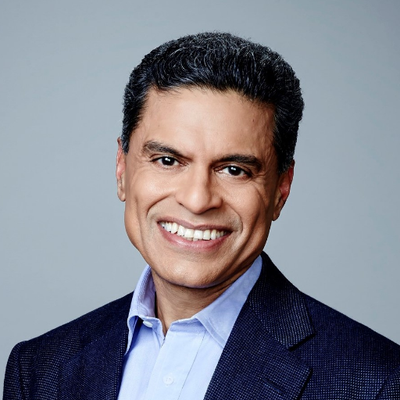
For Benjamin Netanyahu, the war with Iran is clearly about destroying the Islamic Republic.
But Washington’s focus should be different: it needs to secure the gains it has made — a disarmed and defanged Iran — without pushing the country into civil war.
My take:
Charles Munkuli retweeted

Andre Agassi: “Novak Djokovic is like an amoeba that swallows you and drags you underwater. He can beat you defensively, he can beat you offensively. He can beat you whatever way he wants.”
xitter.cf/ChadDinas/status/20297…
Charles Munkuli retweeted

Let's not abuse our elders maCdes, please.
Mlevu aka Prof Pendulum aka @ProfJNMoyo was almost brought to tears by @zenzele and @Dr_JAMavedzenge .
I now understand why @ProfJNMoyo had to resort to bombing newsrooms in his days as The Minister of Information🤣🤣🤣🤣. You guys are outrageous.
Listen to this clip until the end.
Bcc: @citezw