
Tulane PGY-1 | Healthcare Management & Policy alum @UmichSPH | CA ➡️ IL
Joined June 2020
- Tweets130
- Following168
- Followers86
- Likes1K


Chanan Batra, MHSA retweeted

What Feynman forgot to elaborate on is that after the guess you make on what’s right, and you present it to your University administrators, they can take your guess and pass it along to whomever they believe should proceed with the experimental proof, with the original creator been thrown off the boat of discovery.
Chanan Batra, MHSA retweeted
What Feynman forgot to elaborate on is that after the guess you make on what’s right, and you present it to your University administrators, they can take your guess and pass it along to whomever they believe should proceed with the experimental proof, with the original creator been thrown off the boat of discovery.

In 1964 a soon-to-be Nobel laureate walked into a Cornell auditorium and spent seven evenings explaining the nature of physical law to a general audience. Bill Gates paid the BBC out of his own pocket to keep those recordings on the internet forever.
His name was Richard Feynman, and the lectures are called The Character of Physical Law.
He was 46 years old when he gave them. He would win the Nobel Prize in physics the following year for his work on quantum electrodynamics. The BBC filmed every session. The tapes then went into distribution at universities through the 1970s, disappeared in the 1980s, and stayed lost until Gates licensed them for a Microsoft research project in 2009 specifically so they would never go offline again.
Here is the framework buried inside those lectures that changed how I think about knowledge itself.
In the final lecture of the series, titled Seeking New Laws, Feynman stops the philosophy and tells the room exactly how scientific discovery actually works. Not in metaphors. In three sentences.
He says in general we look for a new law by the following process. First we guess it. Then we compute the consequences of the guess to see what would be implied if the law we guessed is right. Then we compare the result of the computation directly to nature, to experiment, to observation, to see if it works.
And then he delivers the line that has outlived him by forty years.
If it disagrees with experiment, it is wrong. In that simple statement is the key to science. It does not matter how beautiful your guess is. It does not matter how smart you are, who made the guess, or what his name is. If it disagrees with experiment, it is wrong. That is all there is to it.
Read that again slowly.
He is not describing physics. He is describing the only intellectually honest way to hold any belief about the world. The method is indifferent to credentials, indifferent to elegance, indifferent to how much you want the idea to be true. Reality is the only referee, and reality never explains its rulings.
The second thread running through the whole series is the one Feynman kept circling back to across all seven nights.
He argued that the deepest beauty of a physical law is not in what it depends on but in what it refuses to depend on. Newton's law of gravitation works the same way on a falling apple, a moon in orbit, and a galaxy at the edge of the observable universe. That is not a detail. That is the entire point. A law that only works in one place is not a law. It is a coincidence. The test of a real generalization is whether it survives contact with situations its inventor never imagined.
The part that hits hardest comes in the opening lecture on gravitation.
Feynman is walking the audience through how Newton assembled the theory, and he pauses to say something most scientists never say out loud.
The importance of a physical law, he tells the room, is not how clever we were to find it. It is how clever nature was to pay attention to it. The universe did not have to be lawful. It did not have to reward pattern recognition with deeper pattern. The fact that it does is what makes science possible at all, and it is a standing miracle no one has ever explained.
Feynman ends the final lecture with a warning almost everyone misses.
He says the principles we now have may still be wrong in places we have not noticed. He suspects, out loud, that space being continuous is one of them. He offers no replacement. He just marks the edge where his own confidence runs out and tells the audience that honest uncertainty is the correct default for anyone actually trying to find the truth, instead of defend a position.
Sixty years later the full series still streams for free. Seven hour-long lectures. The best of Feynman at the peak of his powers, filmed before he was famous to the general public, speaking to a crowd that was never supposed to understand physics at this level.
Bill Gates kept them online because he understood what most people still miss.
A three-sentence method for testing any belief against reality is worth more than most of what graduate school teaches in three years.

Chanan Batra, MHSA retweeted
Let’s continue with this conversation openly and transparently.
What was meant @nytimes Michael Lauer labeling my whistleblower activity reported to him as “hyper competitive” behavior on my part?
If today’s Davids beat Goliaths in open forum, but overseeing regulators you don’t approve of the results, do they have the right to make the competition landscape and the results invalid?
Who is harmed by the government officials playing favorites and calling foul when it’s actually the government officials colluding with the government subsidized entity that’s doing the fouling?
How is the public harmed by that subterfuge?
How was the public (and the entire landscape of “oncology”harmed in MY particular case?
@nytimes
@AACR_CEO
@NIHDirector_Jay
@NIHFunding


Chanan Batra, MHSA retweeted
Anonymous Tsunami:
In 2009, I presented to the world key evidence for a unified theory on the origin (pathogenesis) and evolution (progression) of lung cancers, AND how to best diagnose and treat it. It was a presentation that both criticized the process by which molecular discoveries to advance the science of medicine were being made, and an approach to make that fundamental process better.
I was canceled for that publication (a public presentation of a novel conceptualization or a new idea), exiled from the community of professional physician-scientists and forced out of the physician-scientist (translational medicine) labor force.
Ironically, the individual who orchestrated that separation was the very individual who had recruited me to UCLA Achool of Medicine with that exact purpose, and benefitted most from my presence there for 20 years.
Nevertheless, since I was closer to the truth (the deep understanding of a complex problem) than any of my contemporary peers and colleagues and supervisors, my word and my knowledge lives on without me. It’s simply in the process of being converted into something that is “self-evident.” I am very happy that’s happening, but the moment and the circumstances are bittersweet in that it’s occurring without added contributions from the original artist who created that theory, and who continues to carry a clearer vision of the disease process of lung cancers than anyone in the world. So, in that respect, there’s a bigger story that needs to be told.
@dgsomucla
@aacr
@NCIDirector
@theNCI
@NIHDirector_Jay
@Nature
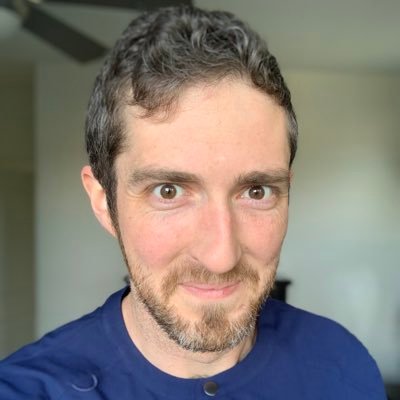

Every morning I log into the EMR and see this face and every night I leave with the human race still going strong
@DGlaucomflecken saving the world one 3rd year IM rotation at a time

1
3


Chanan Batra, MHSA retweeted

This baby is visually impaired, and then he was given additional glasses, so he could see clearly. His smile when he saw his mother and father clearly😍
xitter.cf/HafidzAlattas/status/1…


RIP to one of the modern giants of public health. Dr. Farmer’s work in Haiti inspired me to major in Global Health as an undergrad. He was the standard for what it means to serve others with empathy and compassion


Chanan Batra, MHSA retweeted

Santa has read your tweets all year. Many of you will be getting science books.
Chanan Batra, MHSA retweeted

“But you knew what you were getting into when you got student loans!”
And you knew the risk of opening a business. Next.
Chanan Batra, MHSA retweeted

The Dept of Education did a report on Biden's ability to cancel student debt so Biden just redacted the entire thing, how is this real lmao


Chanan Batra, MHSA retweeted
In every specialty, DO seniors face lower odds of matching than MD seniors.
Here are the data for the 2020 Match:


Chanan Batra, MHSA retweeted

Happy Friday from picturesque Ann Arbor!

ALT Diag surrounded by fall colors, with the flag of the United States in the center

ALT Orange, red, yellow, and green trees rise above a sidewalk that leads to the Ross School of Business

ALT Various fall colors blanket a view that includes West Quad, the LSA Building, and the Hatcher Graduate Library in the distance

ALT Red and orange trees rise up next to a sidewalk at the University of Michigan
Was part of this program this past summer and absolutely loved it! If any potential applicants have any questions feel free to reach out! #MedStudentTwitter

Applications for the 2022 @sloan_kettering Medical Student Fellowship Program are NOW OPEN. 📆Due date: Monday 1/3/2022 11:59pm ET
This FUNDED research opportunity allows you to spend the summer in NYC doing research w/ people like me 😀 Please share!
sam.mskcc.org

1