

Narratives that scale
On-Chain
Joined July 2022
- Tweets837
- Following397
- Followers426
- Likes1.2K




Pinned Tweet
Enter the Mill: a better way to launch a token
@LFJ_gg launched #TokenMill, a one-stop hub for permissionless tokens creation w/ a novel BCAMM model.
Already bored, right? I betcha.
Let’s try again.
Token Mill is the perfect on-chain playground for pre-rich retardios like us.

Nice to see a project we included in our research resources database speak at @eth_milano

ethmilan is proud to announce @stablewatchHQ as speaker!
Our friends @machiuwuowo and @Halko500k will talk about the idea of the "risk-free rate", how it works in defi, whether there is one, and how we can even calculate it?

ETHMilan launched its conference mindshare dashboard on @cookiedotfun
incredible announcement! 🍪
we have been cooking with @cookiedotfun a dashboard of the ETHmilan mindshare!
go start shilling ethmilan to the world to earn mindshare and exclusive perks tbd like merch, drinks, vip party rsvp
check it out at 👇
cookie.fun/tokens/eth-milan

Make your DeFi history collect you

Your onchain journey didn’t go unnoticed. It got recorded.
Most NFTs show what you bought.
Brahma Imprint shows what you’ve built.
Soulbound. Dynamic. Free.
Now Live!
Mint now → imprint.brahma.fi
ChainEye Research retweeted

Thanks to @Chain_Eye for mentioning us among the top research contributors in Web3.
Appreciate the recognition. Now back to building the best-in-industry reports.
🔗 Check out the link in comments

Last year we mapped the Web3 Research space out to identify its élite contributors.
From well-known names to emerging players, here is a list of 200+ research projects that will help you keep up with the latest cutting-edge Web3 breakthroughs!

Access the full database from here: txtaan.notion.site/Research-…
Tagging some of the featured OG researchers!
@TheTieIO @Presto_Research @anza_xyz @Shaughnessy119 @temporal_xyz @Kairos_Res @Ian_Unsworth @RedactedRes @Louround_ @zerokn0wledge_ @0xngmi @asxn_r @FourPillarsFP @xparadigms @TKVResearch @cot_research @Shoalresearch @threesigmaxyz @reflexivityres @Punk9277 @blocmates @563defi @therollupco @andyyy @ournetwork__ @spencernoon @matthuang @SimplicityWeb3 @2077Research @1kxnetwork @lawmaster @initc3org @variantfund @hiFramework @cchungccc @Rewkang @OuroResearch @DWFLabs @ag_dwf @dragonflyvc @tomhschmidt @ChorusOne @castle_labs @thesis_co @AleaResearch @paramonoww @ArcanumVentures
ChainEye Research retweeted

DeFi has yield. TradFi has payments.
Today we connect them with Brahma Cards. Brahma Cards enhance programmable finance, bringing onchain logic toward real-world outcomes.
Agents or applications securely convert yield, capital, or onchain conditions into real-world payments.
How? ⬇️
. @RamonTheMeme has launched, reuniting the FAMIGLIA vibes into one CA.
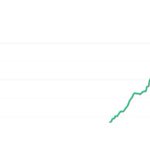
The token went live yesterday, and it's now sitting at 0.00046 SOL.
This is the current chart:
The team has revealed they're working on getting $RAMON launched on CEXes, meanwhile pushing on marketing initiatives:
- web banners on 20 high traffic crypto related websites.
- DexTools and DexScreener boost.
- billboards live in Las Vegas & SpaceX headquarters in Houston, TX.
- 800 websites press releases
- AMA tour planned
Finally they added the token grants holders some benefits such as exclusive rewards, airdrops, NFTs, merch and even IRL luxuries.

Builders’ Talk #2– MilkyWay
Navigating the Modular Frontier: An Exclusive Interview with @milky_way_zone
Following our ongoing series of interviews with key DeFi builders, we recently had the opportunity to sit down with the MilkyWay team to unpack their vision about their new restaking protocol, the rationale behind deploying a dedicated rollup chain on Initia, and how they plan to leverage the Cosmos ecosystem—particularly Celestia—to drive scalability and interoperability.
At the intersection of liquidity, security, and interoperability, MilkyWay is pioneering the first restaking protocol in the modular ecosystem: this conversation offered valuable insights into MilkyWay’s current progress and future trajectory, and we hope it will shed light on the project’s underlying vision for those keen to explore the emerging modular ecosystem.
We delved into MilkyWay’s approach to restaking, upcoming plans for multi-chain expansion, strategic partnerships with AVSs, and the unique role that their native token $MILK plays.
Much like our previous talks, we’ve aimed to capture both the technical intricacies and the broader community ethos that fuel MilkyWay’s continued growth.
Exploring Celestia’s Edge and Cosmos Tech-Cult
To kick start the convo, the MilkyWay team shared their broader perspective on the Cosmos ecosystem and explained why they believe Celestia is currently at the forefront of Data Availability (DA).
Cosmos Community and Tech-Driven Ethos
Compared to other blockchain communities often dominated by short-term trading discussions, Cosmos gatherings are “dominated by deep technical conversations and brainstorming sessions” the team notes.
They recalled, for instance, a @celestia dinner where attendees collaborated on bridging solutions and scrawled potential designs in a notebook, showcasing a culture centered about fundamental exploration that stands in contrast to the hype-driven nature seen in other ecosystems.
Moreover, the integration of the Skip team as Interchain Inc, now a subsidiary of the Interchain Foundation, signals that top-tier talents are converging on the Cosmos ecosystem.
“They’re one of the teams that I have huge respect for” a MilkyWay core contributor emphasizes.
Why Celestia?
Celestia has positioned itself as the leading data availability (DA) layer, competing with Avail, EigenDA, and Near.
However, it currently holds a first-mover advantage that has set it apart from the competition.
“No obvious winner at this point and no one can predict who is going to be the clear winner in the future, but as of today, Celestia is clearly leading the market” the MilkyWay team stated.
Beyond first-mover benefits, @celestia is pioneering LazyLedger and LazyBridging, two concepts that are reshaping how blockchains handle data availability and security.
The team pointed to Mustafa Al-Bassam’s tweets and the Celestia whitepaper, which highlight how this model could establish Celestia as a serious contender against Ethereum’s monolithic approach.
According to MilkyWay, the expertise of the Celestia team, backed by some of the most respected minds in blockchain research and development, is also a very strong point for building with them.
Some of the core contributors include:
◾️ Mustafa Al-Bassam (Co-Founder & CEO) – Holds a PhD in Computer Science from UCL and previously co-founded Chainspace, a blockchain project later acquired by Facebook.
◾️ Ismail Khoffi (Co-Founder & CTO) – A cryptography and blockchain infrastructure expert, formerly a senior engineer at Tendermint and the Interchain Foundation.
◾️ John Adler (Co-Founder & Chief Research Officer) – Creator of Optimistic Rollups and former scalability researcher at ConsenSys.
“Celestia’s design is shaking up the current landscape, and it has the potential to become a major ETH contender in the future” the team said.
This aligns with the broader Cosmos ethos, where projects are focused on fundamental innovation rather than short-lived hype cycles.
As a modular DA layer, Celestia ensures high throughput, cost-efficiency, and seamless interoperability—three essential pillars for the next generation of blockchain infrastructure.
How to stand out of the crowd: MilkyWay Restaking
Then, we shifted our focus toward MilkyWay’s core offering: the restaking protocol.
Unlike other restaking solutions—@eigencloud, @symbioticfi, and @Karak_Network are primarily EVM-centric, MilkyWay zeroes in on the modular ecosystem.
“We are the first restaking protocol in this space, and as of today, we do not have a direct competitor” states a MilkyWay contributor.
Differently from its competitors, MilkyWay centers on programmable rules, enabling AVSs to define custom delegation and slashing parameters. This flexibility lets projects fine-tune their security and decentralization models.
“There are so many AVSs that require different pain points” a team member explains.
“Our goal is to become the most versatile protocol so each AVS can tailor their security needs”.
Another key difference that sets MilkyWay apart is that it doesn’t restrict itself to a single chain. Support for Celestia, Initia, and potentially other chains ensures that restaking can encompass a broad range of assets and ecosystems.
“The modular approach plus chain agnosticism is a game-changer for anyone needing flexible yet robust security” the team emphasizes.
Clash of the Titans: $TIA Restaking vs. $ETH Restaking
Celestia remains a pivotal player in MilkyWay’s long-term strategy. With the modular DA layer’s first-mover advantage, MilkyWay sees Celestia’s TIA restaking as a more scalable and higher-yielding alternative to Ethereum staking.
“$TIA staking rewards are more attractive than $ETH staking rewards, especially when combined with MilkyWay’s restaking fees” the team highlighted.
Beyond just yields, interoperability and scalability were key factors in choosing Celestia over EVM-based solutions.
Celestia’s modular design enables efficient data availability sampling, ensuring that even as transaction volumes increase, network efficiency remains uncompromised.
This type of scalability is crucial for future-proofing the ecosystem, allowing MilkyWay to grow without facing the bottlenecks seen in traditional monolithic chains.
One area of particular interest is how MilkyWay incentivizes $TIA restaking on Celestia over $ETH restaking on Ethereum.
While acknowledging that both can coexist, the team highlights several benefits unique to $TIA restaking:
◾️ Higher Yields
$TIA’s staking rewards tend to be more competitive, especially when combined with MilkyWay’s restaking fees. As a result, early adopters can see more attractive returns.
◾️ Interoperability
The Cosmos ecosystem’s built-in cross-chain communication stands in contrast to Ethereum’s more siloed environment, allowing $TIA restaking to secure a wider array of services.
◾️ Scalability
Celestia’s modular architecture promises the throughput necessary for demanding DeFi applications.
By resting on a specialized DA layer, the entire network can grow without being bottlenecked by single-chain limitations.
This focus on modular infrastructure underscores MilkyWay’s ethos: “Scalability and interoperability shouldn’t be nice-to-haves; they’re fundamental pillars of modern DeFi” remarks the team.
Going modular with @initia
The concept of restaking has gained immense traction on @ethereum, with projects like @eigencloud, @symbioticfi, and @Karak_Network making waves.
But while Ethereum continues to dominate the conversation, the modular blockchain ecosystem has yet to see a dedicated restaking player.
“We are the first restaking protocol in the modular ecosystem. As of today, we do not have a direct competitor” the team emphasized.
Moving beyond Celestia,, we addressed MilkyWay’s decision to deploy a dedicated rollup chain (dubbed “Minitia”) on the Initia ecosystem.
Why Initia?
One of the first major moves for MilkyWay was integrating Initia for its liquid staking service.
But why this chain?
“Initia provides robust tooling and infrastructure for launching innovative services, such as built-in pricing oracles and seamless interoperability via its @LayerZero_Core module” the team noted.
However, when it comes to restaking, MilkyWay is firmly rooted in its own Layer 1, built with CometBFT and Cosmos SDK—a deliberate choice to ensure maximum control over security and decentralization.
As clarified by a team member: “We are deploying our rollup chain on the Initia ecosystem to support our liquid staking service for $INIT. But our restaking protocol is not built on this rollup chain. We have our own L1 for restaking, built with CometBFT and the Cosmos SDK framework”.
Initia's interwoven rollups provide a scalable infrastructure where multiple AVSs can operate without congestion.
These rollups act as data highways, ensuring that liquid staking operations remain smooth and efficient.
As staking markets become more complex, seamless interoperability between these rollups will be a game-changer for liquidity providers and stakers alike.
TVL, Expansion, and the Road to $1B
As of today, MilkyWay’s restaking protocol holds over $173M in TVL, while its liquid staking vertical has amassed $13.75M.
With a rapidly growing ecosystem and new integrations in the pipeline, the team has set its sights on a major milestone—$1B in TVL.
“We see $1B as a practical upper limit for now, as no AVSs currently require security beyond this threshold. However, we will scale accordingly through governance” they shared.
Expansion plans are already in motion:
◾️ Support for new assets: INIT, BTC, ETH, stablecoins (USDC, USDT), and more.
◾️ AVS integrations: Allowing partners to utilize their native tokens as restakeable assets.
◾️ Ecosystem growth: Partnering with key AVSs across modular blockchain sectors.
Among the latest remarkable integrations, MilkyWay recently partnered with @noble_xyz and @SkipProtocol to integrate USDC restaking, allowing restakers to secure rewards (currently 0.2 mPoints per day per USDC restaked!) without being exposed to price volatility.
For AVSs, this integration unlocks a broader and less volatile liquidity base that they can tap in.
Regarding mPoints, the program will officially end on February 28, 2025, with new integrations, incentives and upgrades marking the transition into the protocol’s next phase of growth.
Perhaps, this may be a good time to keep stacking mPoints to maximize position before the final snapshot.
Overall, the beauty of MilkyWay’s growth strategy is not just in TVL but in sustainable security provisioning.
As more AVSs onboard, the capital efficiency of the ecosystem increases, further reinforcing the network effect—where each new participant makes the entire system more valuable.
Many different AVSs, Only One Shared Security Programmability is at the core of MilkyWay’s differentiation. Unlike rigid, one-size-fits-all frameworks, MilkyWay introduces programmable rules that allow AVSs to tailor delegation, slashing, and security models to their precise needs—an industry first.
MilkyWay’s commitment to collaboration is evident from its strategic partnerships with innovative AVSs, each leveraging our restaking protocol for unique value:
◾️@nubit_org
Value: Scales Bitcoin’s data availability for Ordinals and Layer 2s.
Why MilkyWay: Multi-asset restaking and programmable rules enhance scalability.
◾️@blackwing_fi
Value: Enables liquidation-free leverage trading for long-tail assets.
Why MilkyWay: Decentralized security, multi-asset support, and aligned operator incentives.
◾️Restaked Layer (@initia)
Value: Incentivizes IBC relayer operations for reliable blockchain data transfers.
Why MilkyWay: Programmable slashing ensures uptime and accountability.
◾️@supersightxyz
Value: Trustless AI inferencing for crypto-specific LLMs. Why MilkyWay: Flexible slashing (Jail/Stake Slash) maintains high operator standards.
◾️@RAVE__Trade
Value: Allows blue-chip asset trading with any asset as collateral
Why MilkyWay: Decentralized sequencer set
◾️@spicenetio
Value: The permissionless shared liquidity layer for unstoppable trading applications, delivering high performance.
Why MilkyWay: Decentralized sequencer set
◾️@0xfairblock
Value: Dynamic confidentiality network that delivers high performance, low overhead, and custom confidential execution to blockchain applications
Why MilkyWay: Decentralized off-chain component of their stack
These collaborations illustrate how MilkyWay’s restaking protocol is poised to support a diverse array of applications—from Bitcoin data availability to AI-driven analytics—furthering its ambition to become a universal security layer in the modular space.
$MILK Those Juicy Restaking Fees
MilkyWay’s $MILK token is central to its revenue-sharing and community incentive model.
Beyond TVL and integrations, the protocol’s native token, $MILK, is positioned as a core incentive layer for participants.
“$MILK stakers receive a share of protocol fees from both liquid staking and restaking, along with potential airdrops from AVS native token launches” the team revealed.
As the ecosystem grows, the $MILK token is expected to play a vital role in governance, reward distribution, and securing the modular blockchain network.
Given its structure, $MILK may evolve into the economic backbone of modular restaking, ensuring continuous innovation within the protocol.
Moreover, a well-structured incentive model will be crucial for long-term adoption.
As seen in other staking ecosystems, users are incentivized not just by yields, but by the long-term utility of their staked assets.
MilkyWay’s fee-sharing mechanism ensures that stakers benefit from network growth, while AVSs receive security guarantees without facing excessive costs.
In fact, both liquid staking and restaking fees are shared with $MILK stakers, aligning them closely with the protocol’s financial success.
On top of that, when partner AVSs launch or introduce their tokens, $MILK stakers stand to benefit via airdrops, rewarding early supporters and strengthening ties between MilkyWay community and its ecosystem projects.
“By giving a portion of the protocol’s success back to our stakers, we ensure our community directly shares in MilkyWay’s growth” says the MilkyWay team.
What’s Next? 2025 and Beyond
MilkyWay is entering a critical growth phase in 2025. With new liquid staking assets, deepening AVS integrations, and aggressive TVL expansion, the modular blockchain space is about to get its dedicated restaking giant.
“Our vision is to become the single gateway for modular security and liquidity” the team stated.
But beyond just being a technical pioneer, MilkyWay is helping redefine the governance model of modular security.
By integrating decentralized governance frameworks, the protocol ensures that community stakeholders have an active role in shaping the network’s direction.
As mentioned, MilkyWay is also planning to expand beyond $TIA by adding $INIT liquid staking, among other assets.
As these additions gain traction, fee generation will naturally increase.
More importantly, the new restaking protocol will allow projects to “bootstrap their economic security” potentially unlocking further capital inflows.
“Our vision is to become the single gateway for modular security and liquidity” explains the team, noting that multiple AVSs are already lined up to leverage the restaking layer.
By bundling liquid staking and restaking into a cohesive DeFi hub, MilkyWay aims to retain user liquidity within its platform, boosting its annualized revenue and reinforcing network effects.
Current Metrics:
TVL: $13.75M $TIA liquid staked
Annualized Fees: $1.4M
Annualized Revenue: $142k
Conclusion
MilkyWay is forging its own path in the increasingly competitive DeFi sector by concentrating on modularity, interoperability, and a chain-agnostic approach.
From deploying Minitia on Initia for liquid staking, to embracing Celestia’s game-changing DA layer, every decision reflects the team’s ambition to bring a holistic and future-proof security solution to the market.
Whether it’s programmable rules that let AVSs customize their slashing and delegation requirements or the $MILK token that rewards long-term stakers with protocol fees and AVS airdrops, MilkyWay’s strategy thrives on balancing tech-focused vision and incentives design.
With a target TVL of $1B and a rapidly expanding lineup of partner AVSs, the protocol seems well-positioned to serve as a cornerstone for those seeking robust security and liquidity in the modular blockchain ecosystem.
“Our ultimate goal is to become the definitive platform for liquid staking and restaking in this new modular era of DeFi” the MilkyWay team concludes.
We hope you’ve enjoyed this second installment of Builders’ Talk as much as we did.
A special thanks to the @milky_way_zone team for taking the time to share their insights and good luck in your journey!
If other buildooors wanna talk about their work, our DMs are open!
And as always, don’t forget to follow @Chain_Eye for high-quality content on high-quality DeFi projects.


ChainEye Research retweeted

Wanderer above the Sea of mETH
Even if a tiny bit late, this is my contribution for the COOK MegaChef Content Bounty!
Ready to dive deep into @mETHProtocol’s history, achievements and future plans?
mETHProtocol: The Tale of a Meteoric Rise
If we had to define mETH Protocol in one sentence, it would be: the beating heart of DeFi on @0xMantle.
Venue for rich community rewards initiatives, Headquarters of Mantle’s products adoption, and definitely one of Mantlet's favorite protocols.
But how did it get here?
How did it launch both the 4th largest ETH liquid staking token ($mETH) and the 6th largest ETH liquid restaking token ($cmETH)?
How did it surpass $1B TVL in just 66 days? (yes, it’s still a record among LSTs)
Well, we’ll get there.
Following the MIP-30 approval, Mantle LSP rebranded to mETH Protocol, launching on December ‘23, and announced $COOK (the coolest governance token ever envisioned) and $cmETH.
The secret sauce that allowed it to demolish all these milestones and records mainly has three ingredients: an ecosystem of hungry buildooors, a smart use of capital and incentives, and a kick-ass team.
Functional go-to-market strategies follow this pattern:
1. You create a product that is actually needed (good ol’ PMF)
2. You build an ecosystem around your products
3. You leverage incentives to kickstart and optimize organic growth
Most crypto protocols do 3 before 1&2, and they usually end up killing their own token.
But not @0xMantle: their wise use of the Treasury funds should be showcased as case study for other Web3 companies on how to effectively incentivize ecosystem’ players.
That’s what led mETH Protocol to become the successful platform we all love.
$mETH immediately gained traction thanks to the fast implementation that it received from Mantle’s DeFi eco.
Protocols such as @MerchantMoe_xyz, @Agnidex and @lendlexyz immediately integrated $mETH, quickly bootstrapping growth.
Same for $cmETH, which could leverage several restaking protocols like @eigencloud, @Karak_Network, and @symbioticfi, crossing $500M TVL within a week.
In addition to this, the decision to reward the community to the fullest has had the best ROI.
Instead of giving out unsustainable token rewards, Mantle used its Treasury to receive allocations from several protocols, and then gave out these rewards to the community (e.g. EigenLayer).
In the $COOK case, 60% of the supply was allocated directly to the community, instead of rewarding team members, VCs and insiders as a lot of protocols still tend to do.
Let’s now analyze all the reward programs led by @mETHProtocol for its community.
mETH Protocol: The Lost Art of Incentivization
With a 1,5B TVL for $mETH and a 700M TVL for $cmETH, @mETHProtocol has developed two of the best products in the industry.
The best part? They rewarded the community plenty for using them!
Let’s crunch some numbers now…
1. mETH Protocol’s Double-Dose Drive
For this campaign, @0xMantle leveraged its own staked $ETH to offer a 7.2% native yield to its community—double the benchmark native yield for ETH LSPs.
Basically, they passed its own ETH staking rewards to other mETH stakers.
Sustainable and effective.
2. COOK Feast
Sourced directly from @mETHProtocol Treasury, this campaign distributes rewards for COOK lockers, with a total rewards pool of 200 $cmETH.
Current data shows 330M+ $COOK locked, and 5k+ participants.
3. EigenLayer Campaign
By restaking their $mETH into EigenLayer, Mantle managed to give out to its community an impressive 2.098M $EIGEN, with distribution divided in 3 batches.
1st batch: 1,077,480.69 $EIGEN
2nd batch: 50,000 $EIGEN
3rd batch: 1,021,155.98 $EIGEN
(I dare you to find a more rewarding ecosystem lol)
4. Methamorphosis S1
The Methamorphosis campaign marked the passage from Mantle LSP to the mETH Protocol we know today.
This campaign has introduced both $COOK and $cmETH, and rewarded the utilization of mETH and cmETH, making the first attain the 4th position among the largest Ethereum LSTs, and the 6th position for its brand new LRT.
Over the course of Season 1, $mETH's Total Value Locked (TVL) increased by 12.5% across both Ethereum network and Mantle Network.
The total reward for Metamorphosis Season 1 has been 250M $COOK, with an additional 1.8M $COOK tied to the Stash Campaign.
- Mantle Rewards Station: During the Methamorphosis S1, Mantle Rewards Station recorded a 125% increase in $MNT locked.
Total Rewards have been 200M $COOK for S1, and we can speculate on a similar allocation for Methamorphosis S2.
- @puff_drgn x mETH: With a staggering 300M $COOK distributed across The Ultimate Trilemma and the Puff Dragons NFT, this was my personal favorite campaign (I may be biased ehehe).
The little dragon campaign has been one of the most rewarding initiative and for sure the funniest, plus we hope that Mantlets have learnt a thing or two regarding game theory!
5. Methamorphosis Season 2 (ongoing):
Since the start of S2, we witnessed big adoption for both $mETH and $cmETH, who saw their TVLs surge.
We can speculate about a similar S1 allocation (250M $COOK)
Intern’s referral: app.methprotocol.xyz/campaig…
6. mETH'ed Up SZN
This campaign introduced the content bounties, providing the community with a different source of reward.
You write gud content about @mETHProtocol, and @mETHProtocol rewards you. Noice.
Total Rewards: $1K worth of $COOK
7. mETH MasterChef
Yeah, the reason we’re here today.
Similar to the previous campaign, another community content bounty!
Total Rewards: 30k $COOK
To give you a rough calculation, all the previously mentioned rewards (at current market prices) amount to more or less $840M, and we didn’t count the Double Dose Drive rewards cuz we lacked some data.
Total $COOK rewards by mETH Protocol: 1.2B+ $COOK
Total non-$COOK rewards: $200 cmETH + 2.1M $EIGEN
You can do your own calculation and see we’re (more or less) right.
Almost 1B, given out to its community while keeping everything sustainable economic-wise.
Now, my dear Anon, I think you understand “Why Mantle” and “Why mETH”, right?
Otherwise, read everything again!
Dulcis in fundo, for 2025 mETH envisions to start developing and offering institutional-grade products, leveraging the team expertise and experience in ensuring the safest and most rewarding staking products on the market.
See you on on-chain, Mantlets!


Welcome to our latest upgrade.
→ methprotocol.xyz
Discover your new home for the tastiest crypto yields.
.@JamboTechnology: On-chain Mobile Network
Emerging markets are tagged out of the DeFi market.
2.6B people still don't have a mobile phone.
1.4B+ are unbanked.
Crypto never pushed that much on mobile development. This however, could bring in new DePIN/DeFi-related dynamics

And the growth effect it generates comes from it being earned through airdrop/incentive campaigns of Jambo Ecosystem partners.
$J went live, and its Bitget Launch was 33x oversubscribed, with $167M $BGB committed.
xitter.cf/bitgetglobal/status/18…

Do you feel the hype? 🔥
$J @JamboTechnology Satellite Launch Sale on Bitget LaunchX was 33x oversubscribed, with $167M in BGB committed! 🤩
$J trading will go live in 30 minutes. Are you ready?
➡️ bitget.com/spot/JUSDT

We'll keep an eye on Jambo developments and monitor the impact it will have in onboarding new users and powering new projects.
As always, make sure to follow @Chain_Eye for high quality posts about high quality projects.