

UV offset, digital and wide format printing. We print awesome things for innovative brands and creative people. Let's print something awesome together!
- Tweets702
- Following235
- Followers605
- Likes48
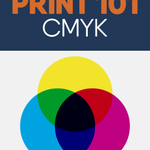




ALT PRINT 101 and CMYK above overlapping cyan, magenta, yellow circles forming green, red and blue mixes with a black center

ALT Close-up of hands turning pages in a modern architecture magazine.

ALT PRINT 101: RGB above overlapping red, green and blue circles showing cyan, magenta, yellow and a white center.

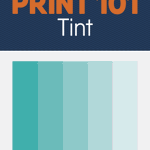
ALT Educational graphic titled "PRINT 101: Tint." Below the header is a horizontal color bar split into five adjacent vertical swatches demonstrating a tint gradient. The swatches transition step-by-step from a full, saturated teal on the far left to progressively lighter, pale minty-teal tints on the far right.

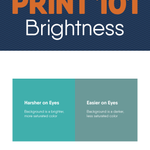
ALT PRINT 101 Brightness — left: bright, saturated teal labeled "Harsher on Eyes"; right: darker, muted teal labeled "Easier on Eyes".

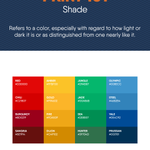
ALT PRINT 101 Shade header and definition above a 4x4 grid of 16 color swatches labeled with names and hex codes

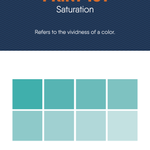
ALT PRINT 101 Saturation — eight teal swatches showing decreasing vividness left-to-right and top-to-bottom.

ALT Header "PRINT 101: Hue" with a brief definition above a multicolored donut color wheel (blue, green, yellow, orange, pink, purple).


ALT PRINT 101 — Volatile Organic Compounds (VOCs) header with explanatory text and a molecule icon emitting teal vapor lines.

ALT PRINT 101 Viscosity: printing methods' viscosity ranges, Thermal Inkjet 1–5 mPa·s to Offset 40k–100k mPa·s

ALT PRINT 101 Solid: shows 100%, 60%, 40%, 20%, 10% ink coverage with halftone dot patterns and matching gray swatches.

ALT Steve (Studiothink) praises Cedar Graphics: journals exceeded expectations; client thrilled and they'll hire them again.

ALT PRINT 101 explains ink coverage with rectangles showing 5%, 10%, 20%, 40% and 80% filled areas.

ALT The Fay M. Clark Hall of Fame Award featuring Hassan Igram and website www.cedargraphicsinc.com

ALT Educational graphic titled "PRINT 101: Flood." Text explains that flood coating or printing covers an entire page or form with ink, varnish, or coating. Below is a photograph of a night sky print filled with stars and silhouetted trees at the bottom, finished with an overall shiny flood gold glitter coating labeled in the bottom left corner.

ALT Educational graphic titled "PRINT 101: Cure." Text explains that after printing or applying a coating or varnish, time is required to allow inks and coatings to cure, or dry. Below the text is a photo of a metal wire drying rack holding several printed posters stacked on different shelves to air-dry.

ALT Educational graphic titled "PRINT 101: Dye Ink." Text explains that dye inks are standard for inkjet printers, are water-soluble with longer dry times, and have low light resistance, making them unsuitable for outdoor products. Below the text is a photo showing two rows of transparent ink tanks with colorful caps resting on a bright yellow and blue surface.

ALT Educational graphic titled "PRINT 101: Latex Ink." Text explains that latex inks are pigmented, water-based inks using a polymer to apply color and protect substrates in wide-format applications. The bottom image shows a wide-format printer outputting a sheet with vibrant, colorful vertical stripes.