

I read here and enjoy the life of others.
Minden
Joined May 2010
- Tweets28.4K
- Following288
- Followers773
- Likes2.8K







Sebastian Seidel retweeted
Ich bin dieses Jahr wieder beim #DevWalk dabei und freue mich, euch wiederzusehen. 2026 besuchen wir Leipzig. Start ist am alten @devopenspace Hotel. luma.com/vgpgabff

Sebastian Seidel retweeted

You only have China to thank for this.

Beginning July 20, Claude Fable 5 will be included in all Max and Team Premium plans, at 50% of limits.
Pro and Team Standard users will continue to have access to Fable via usage credits, and will receive a one-time $100 credit.
Demand for Fable has been challenging to predict, which is why we rolled it out to subscription plans in stages, extending access several times as we secured additional capacity.

Sebastian Seidel retweeted

Palantirs CEO rechnet mit der KI-Industrie ab — und trifft einen Nerv.
Alex Karp, Chef von Palantir, hat in einem TV-Interview die gesamte Frontier-KI-Branche frontal angegriffen. Seine Kernthese: OpenAI, Anthropic und Co. liefern keinen echten Mehrwert — sie verkaufen Rechenleistung und kassieren dabei die wertvollsten Daten ihrer Kunden.
Karp sagte wörtlich: „Jedes einzelne Unternehmen in diesem Land ist stinksauer. Sie zahlen für Tokens, die keinen Wert erzeugen."
Sein Vorwurf geht noch weiter: Wer seine internen Dokumente, Kundendaten und Geschäftsstrategien durch ein Frontier-Modell jagt, trainiert damit möglicherweise das Modell, das morgen den eigenen Konkurrenten stärkt. Die eigene Wettbewerbsstärke wird so direkt in die Trainingspipelines der KI-Labs eingespeist — und später als neues Enterprise-Produkt zurückverkauft.
Karps Kernfrage, die Silicon Valley bis heute nicht beantwortet hat: „Wenn die Modelle wirklich so wertvoll sind — warum verlangen sie dann Geld pro Token? Wenn ich dir morgen eine Milliarde Dollar einbringe, würde ich sagen: Ich nehme 30 Prozent. Token-Preise sind das Eingeständnis, dass das Produkt keinen verlässlichen Wert liefert."
Das trifft die Branche an einer empfindlichen Stelle. Denn wenn die größten Unternehmenskunden tatsächlich das Vertrauen in den ROI von KI-Abonnements verlieren, wackelt die gesamte Bewertungslogik der großen Labs — und damit auch die Narrative, auf denen Milliardenbewertungen wie die von OpenAI gerade ruhen.

Sebastian Seidel retweeted

The US government, citing national security authorities, has issued an export control directive to suspend all access to Fable 5 and Mythos 5 by any foreign national, whether inside or outside the United States, including foreign national Anthropic employees.
The net effect of this order is that we must abruptly disable Fable 5 and Mythos 5 for all our customers to ensure compliance.
Access to all other Claude models is not affected.
We apologize for this disruption to our customers. We believe this is a misunderstanding and are working to restore access as soon as possible.
Read our full statement: anthropic.com/news/fable-myt…


Sebastian Seidel retweeted

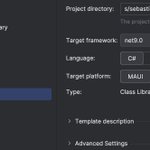
Material 3 for MAUI Android is HERE 🎉
One property → <UseMaterial3>true</UseMaterial3> → instant modern controls: SearchBar, Entry, DatePicker, Slider, ProgressBar, Buttons + more 🎨
Brand stays yours, UI gets the upgrade.
Read the blog 👉 buff.ly/Tkea81B

ALT screen capture of .NET Maui Android. text reads: .NET MAUI Material 3 for .NET MAUI Android.
Sebastian Seidel retweeted

🏃♂️ I've gamified my own run so I can race my own ghost with the Meta Ray-Ban Display.
I built a web app for the glasses, loaded a previous GPX from Strava, and dropped game mechanics on top.
Pick up coins when you keep pace, sprint zones reward extra points if you push, and a mini leaderboard on the lens shows how you're tracking against your past self in real time.
Best part: it actually works. Seeing your ghost 20 m ahead is a way stronger nudge than any number on a watch. 😅

Sebastian Seidel retweeted

some great things for #dotnetmaui devs coming in .NET 11. CoreCLR is the new default runtime implementation for ALL platforms starting now!
devblogs.microsoft.com/dotne…

Ich bin dieses Jahr wieder beim #DevWalk dabei und freue mich, euch wiederzusehen. 2026 besuchen wir Leipzig. Start ist am alten @devopenspace Hotel. luma.com/vgpgabff
I spent some time over the weekend playing around with the #Lego #Porsche GT4 and .NET MAUI. The result is a short blog post about #dotnet #maui and #Bluetooth LE using the Lego HUB cayas.de/en/blog/bluetooth-l…


Hi @felixrieseberg, long time no see since Leipzig but good to see you again for a tool I use all day. Is there a way to place feature requests? My team and I would like to define ourselfs when the usage-reset should take place. Lets say every Monday 7am.
Sebastian Seidel retweeted

We all agree that Iran & Co have very precise missiles, yes?
So why do we not hear of them hitting hospitals and schools every day? Even "by accident" ?
Ask yourself why this is the case, and what this says about their military doctrine, their values, and their mindset.
Sebastian Seidel retweeted

My company rolled out AI tools 11 months ago. Since then, every task I do takes longer.
I am not allowed to say this out loud.
Not because there is a policy. There is no policy. There is something worse than a policy. There is enthusiasm.
There is a Slack channel called #ai-wins where people post screenshots of AI outputs with captions like "this just saved me an hour." There is a VP who opens every all-hands with "the companies that adopt fastest win." There is a Director who renamed his team from Operations to Intelligent Operations. There is a peer review question that now asks: "How have you leveraged AI tools to enhance your workflow this quarter?"
If the answer is "I haven't, because I was faster before," that is a career decision.
So I leverage.
Emails.
Before the tools, I wrote emails. This took the amount of time it takes to write an email. I did not measure it. Nobody measured it. The email got written and sent and it was fine.
Now I write the email. Then I highlight the text and click "Enhance with AI." The AI rewrites my email. It replaces "Can we meet Thursday?" with "I'd love to explore the possibility of finding a mutually convenient time to align on this." I read the rewrite. I delete the rewrite. I send my original email.
This takes 4 minutes instead of 2. The 2 extra minutes are the enhancement. I do this 11 times a day. That is 22 minutes I spend each day rejecting improvements to sentences that were already finished.
In #ai-wins I posted a screenshot of the rewrite. I did not post the part where I deleted it. 23 people reacted with the rocket emoji.
That is adoption.
Meetings.
We have an AI notetaker in every meeting now. It joins automatically. It records. It transcribes. It summarizes. After each meeting I receive a 3-paragraph summary of the meeting I just attended.
I read the summary. This takes 3 minutes. I was in the meeting. I know what happened. I am reading a machine's account of something I experienced firsthand. Sometimes the account is wrong. Last Tuesday it attributed a comment about Q3 revenue to me. My manager made that comment. I spent 4 minutes correcting the transcript.
Before the notetaker, I did not spend 7 minutes after each meeting correcting a robot's memory of something I personally witnessed. I attend 11 meetings a week. That is 77 minutes per week supervising a transcription nobody requested.
I mentioned this once. My manager said "think about the people who weren't in the meeting." The people who weren't in the meeting do not read the summaries. I checked. The read receipts show single-digit opens. The summaries exist not because they are useful but because they are there. I read them for the same reason.
Documents.
I write a weekly status update. Before the tools, this took 10 minutes. I typed what happened. I sent it. My manager skimmed it. The system worked.
Now I open the AI writing assistant. I give it my bullet points. It produces a draft. The draft says "Significant progress was achieved across multiple workstreams." I did not achieve significant progress across multiple workstreams. I updated a spreadsheet and sent 4 emails.
I rewrite the draft to say what actually happened. Then I run my rewrite through the grammar tool. It suggests I change "done" to "completed" and "next week" to "in the forthcoming period." I click Ignore 9 times. Then I send the version I would have written in 10 minutes. The process now takes 30.
I have been doing this every week for 11 months. I have added 20 minutes to a task that did not need 20 more minutes. I call this efficiency. I have been calling it efficiency for 11 months. That is what efficiency means now. It means the additional time you spend to arrive at the same outcome through a longer process. Nobody has questioned this definition. I have not offered it for review.
I kept a log once. 2 weeks. Every task, timed. Before-AI and after-AI. The after number was larger in every case. Every single one. Not by a little. The range was 40 to 200 percent.
I deleted the log.
I deleted it because it was a document that said, in plain numbers, that the AI tools make me slower. And a document like that has no place in a company where AI adoption is a strategic priority. I could not send it to my manager. He championed the rollout. I could not post it in #ai-wins. I could not raise it in a meeting because the notetaker would transcribe it and the summary would read "[Name] expressed concerns about AI tool efficacy" and that summary would be the first one anyone actually reads.
So I do what everyone does.
I use the tools. I spend the extra time. I post in #ai-wins. I write "leveraged AI to streamline weekly reporting" in my review and my manager gives me a 4 out of 5 for innovation. I have innovated nothing. I have added steps to processes that were already finished. I have made simple things longer and labeled the difference with words that used to mean something.
Every week in #ai-wins someone posts a screenshot. And 20 people react with the rocket emoji. And nobody posts the part where they deleted the output and did the task themselves. Nobody posts the revert. Nobody posts the before-and-after timer. Nobody will. Because "I was better at my job before the AI tools" is a sentence that cannot be said out loud in any company that has decided AI is the future.
Every company has decided AI is the future.
So we leverage. Quietly. Adding steps. Calling them optimization. Getting slightly less done, slightly more slowly, with slightly more steps, and reporting it as progress.
My yearly review is next month. There is a new section this year. "AI Impact Assessment." It asks me to quantify the hours saved by AI tools per week.
I will write a number. The number will be positive. It will not be true.
But the AI writing assistant will help me phrase it convincingly. That is the one thing it does well.
Sebastian Seidel retweeted

An employee requested to work remotely from Bali for six months.
He wanted to live the 'digital nomad' lifestyle.
I told him absolutely. We believe in work-life integration.
I approved his 'Global Mobility' application immediately.
He was thrilled to trade his apartment for a villa with a pool.
He signed the location addendum without reading the appendix on 'Purchasing Power Parity.'
When his first paycheck landed, he called me in a panic.
It was for $650.
I explained that under our 'Geographic Equity Model,' salaries are algorithmically adjusted to the local cost of living of the employee's current GPS location.
Since a bowl of noodles in Ubud costs $2, we simply cannot justify paying San Francisco rates.
We are helping him live like a local.
It’s the authentic experience he asked for.

Sebastian Seidel retweeted

We hacked the AWS JavaScript SDK, a core library powering the entire @AWScloud ecosystem - including the AWS Console itself 🤯
How did we do it? Just two missing characters was all it took.
This is the story of #CodeBreach 🧵👇
