

Philosophy • psychology • psychotherapy (gnōthi seauton) • psychiatry • silence • EN/PL • „If it required brains to figure it out, I never should have said it"
Polska
Joined July 2017
- Tweets6.1K
- Following1.1K
- Followers1.2K
- Likes23.1K




Konrad Banicki retweeted

"KOMBINOWAĆ": The Polish art of outsmarting reality.
There is a Polish verb that has no satisfactory equivalent in English or French. It is kombinować, and understanding it is essential to understanding the Polish national character.
Kombinować means finding a solution to a problem through ingenuity, improvisation, personal connections, dubious arrangements, and occasionally methods that would make a German lawyer suffer a nervous breakdown.
It is neither necessarily legal nor necessarily illegal. Neither entirely honest nor entirely dishonest. It occupies that fascinating territory between human intelligence and criminal entrepreneurship.
And Poles have elevated it to something approaching an art form.
Imagine that three Europeans discover their washing machines have broken down.
The Englishman telephones a repair company. The technician arrives on Tuesday, identifies the defective component, orders a replacement, and schedules another appointment.
The Frenchman telephones customer service, argues for forty minutes about consumer rights, threatens legal action, and eventually writes an indignant letter to the manufacturer. He might even establish an association of dissatisfied washing-machine owners.
The Pole looks at his washing machine and announces:
Spokojnie. Coś wykombinujemy.
(Don't worry. We'll "figure something out", but it's a bit more than that...)
What follows is difficult to describe within the conventional boundaries of economic science.
He telephones his cousin, who knows a mechanic, whose brother-in-law once worked at a factory producing agricultural equipment. The mechanic has no washing-machine components, but he possesses a motor from an old Soviet tractor.
The motor is too large.
No problem.
A neighbour knows somebody who can modify it. Unfortunately, that somebody owes money to another neighbour, who happens to need help transporting a refrigerator.
Three telephone calls, two bottles of vodka, one borrowed trailer, and an entirely unrelated dispute about a missing bicycle later, the washing machine works.
It now sounds like a MiG-21 preparing for takeoff, but it works.
And the Pole is delighted.
He has not merely repaired an appliance. He has defeated reality.
This is kombinowanie.
The Polish “Coś wykombinujemy” contains something more adventurous than "we'll figure something out".
The process itself is an expedition into the unknown.
French offers several partial equivalents. Se débrouiller conveys resourcefulness. Bricoler describes improvisation. Magouiller suggests suspicious arrangements. Combiner can refer to devising schemes.
But Polish conveniently compresses all these possibilities into one verb.
A man who kombinuje might be an ingenious inventor, an exceptionally resourceful neighbour, a slightly dishonest businessman, or a future defendant in a corruption trial.
Sometimes all four.
And this peculiar mentality has historical foundations.
For much of the twentieth century, particularly under communism, Poles inhabited an economy in which official procedures frequently proved incapable of satisfying elementary material needs.
You wanted a refrigerator? The shop had none.
You wanted building materials? The warehouse was empty.
You wanted to repair your car? The necessary components were unavailable.
But somewhere, somebody knew somebody.
The communist state had developed an elaborate system for planning production, allocating resources, and distributing goods. The Polish population responded by developing an equally elaborate system for circumventing it.
An entire parallel economy emerged, built upon favours, exchanges, informal obligations, ingenious substitutions, and personal relationships.
The bureaucrat possessed the regulations.
The kombinator possessed his cousin's telephone number.
And quite frequently, the cousin proved more useful than the entire Ministry of Industry.
Naturally, there was a price to pay.
A society organised around kombinowanie may produce extraordinarily resourceful individuals while tolerating spectacularly dysfunctional institutions.
Why demand that the system function properly when you can always find a way around it?
Why repair the road when you know a shortcut through somebody's field?
Why simplify the administration when everyone knows that the appropriate stamp can be obtained through a friend?
The kombinator triumphs over dysfunction, but his triumph can also help perpetuate it.
Yet it would be a mistake to regard kombinowanie merely as the cultural residue of communism. The word and the attitudes it describes have a broader history. They express a particular admiration for intelligence that refuses to remain confined within established procedures.
In this sense, kombinowanie has an almost artistic dimension.
The engineer asks what an object was designed to do.
The kombinator asks what else it could possibly do.
The administrator sees a regulation.
The kombinator sees an interesting literary text open to interpretation.
The economist sees an inefficient allocation of resources.
The kombinator sees an opportunity to exchange a broken motorcycle for six chickens, a barrel of diesel, and an introduction to a man who works at the town hall.
There is something profoundly creative in this attitude, even when the results are absurd.
Of course, the English also improvise, the French also circumvent rules, and the Germans are perfectly capable of inventive dishonesty. These are not exclusive national behaviours.
What is distinctive is the extraordinary semantic and cultural career of the Polish word: its ability to turn practical improvisation, cunning, opportunism, and social resourcefulness into variations of the same recognisable activity.
And perhaps the greatest difference lies in the attitude towards the unexpected.
For the English pragmatist, a good solution is one that works reliably.
For the French intellectual, a good solution should ideally also be theoretically defensible.
For the Polish kombinator, a good solution is one that nobody would have imagined in the first place.
Preferably one that also leaves him with a spare tractor motor, three bottles of vodka, and a neighbour who owes him a favour.

Konrad Banicki retweeted
There is a curious habit in the Polish 🇵🇱 language that foreigners often find difficult to understand: the almost compulsive use of diminutives.
A diminutive is a modified form of a word, usually created by adding a suffix, that makes something sound smaller, cuter, more familiar, or more affectionate. In English, it's done by turning dog into doggie, cat into kitty, or mom into mommy. But imagine a language in which practically anything — your coffee, your dinner, your money, your house, your bed, or even your problems — can be transformed into something endearing. Welcome to Poland.
In Polish, butter is masło, but it can become masełko. Coffee is kawa, but a pleasant cup becomes kawka. Tea is herbata, but a comforting one is herbatka. Bread is chleb, but it can become chlebek. A duvet is kołdra, but beneath the right circumstances, it becomes kołderka. The objects have not necessarily changed in size. The butter has not shrunk, the coffee is not served in a doll's cup, and the duvet still covers the same bed. What has changed is the speaker's emotional relationship with these objects. The Pole does not merely consume butter. He establishes an affectionate relationship with it.
And this is particularly remarkable considering that the Poles are a nation of warriors. They have fought the Germans, the Russians, the Swedes, the Turks, and occasionally one another. Their national mythology is populated by cavalrymen, insurgents, martyrs, and men who would rather die than surrender. Yet, after a long day of defending Western civilisation, the Polish warrior returns home, takes off his boots, puts on his kapciuszki (little slippers), asks his wife for some zupka (little soup), enjoys a little masełko (butter) on his chlebek (little bread), and finally disappears beneath his beloved kołderka (little comforter).
Imagine a fifty-year-old Polish man, weighing a hundred kilograms, built like a wardrobe, with the face of someone who has personally survived three Russian invasions. He enters a restaurant and asks for a little kawka. He might then inquire about a ciasteczko (little cake), before calling his wife to tell her that he will soon be back in his domek, his dear little house. There is nothing particularly childish about the man. He may be a colonel, a construction worker, or a retired boxer. He simply inhabits a language in which tenderness is not incompatible with masculinity.
And this is where Polish diminutives reveal something fascinating about the national character. Polish culture possesses a strong martial tradition, but also an exceptionally rich domestic vocabulary of affection. The public world celebrates sacrifice, endurance, and heroism. The private world celebrates warmth, nourishment, family, and familiarity. Between the battlefield and the kitchen lies an enormous emotional distance, and the Polish language crosses it effortlessly.
One might even detect here a distinctly feminine, or more precisely maternal, dimension of the Polish soul. Not because tenderness belongs exclusively to women, but because Polish diminutives so often express the emotional logic of care. A mother offers her child zupka, holds his rączka (little hand), kisses his główka (little head), and puts him to sleep in his łóżeczko (little bed). These are not merely smaller versions of soup, hands, heads, and beds. They belong to a world in which ordinary things become objects of affection, attention, and protection. And something of this vocabulary survives into adulthood, long after the child has grown a moustache, acquired a mortgage, and developed strong opinions about Russia.
The importance of women in Polish family life provides an interesting cultural context for this linguistic habit. The figure of the Polish mother, the Matka Polka, occupies a remarkable position in the country's collective imagination. Historically, she has been represented not merely as a caregiver but as the guardian of the family, the educator of future patriots, and the custodian of national continuity during periods when the Polish state itself had disappeared. It would be excessive to attribute Polish diminutives directly to this tradition, but the emotional correspondence is striking. Behind the Polish cult of military heroism stands another ideal: that of the home, the mother, the family, and the intimate world that all those heroic sacrifices are supposedly intended to defend.
Of course, Polish diminutives are not always expressions of affection. They can also convey politeness, irony, condescension, or commercial calculation. A waiter offering kawka may be expressing genuine warmth, or merely hoping for a larger tip. A shopkeeper asking for pieniążki — an affectionate diminutive of pieniądze, meaning money — still expects the full amount. And when someone tells you that there is a little problemik, the situation may be considerably more serious than the word.
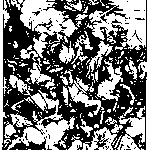
Image: Jacek Malczewski, Self-Portrait in Armour (Autoportret w zbroi), 1914. Oil on cardboard, 54 × 65 cm.


Konrad Banicki retweeted

La famosa partida de ajedrez entre Magnus Carlsen y Garry Kasparov tuvo lugar el 18 de marzo de 2004 durante el torneo de partidas rápidas Reykjavik Rapid en Islandia.
Este enfrentamiento se convirtió en leyenda porque puso cara a cara al indiscutible número uno del mundo y "Ogro de Bakú", Garry Kasparov de 40 años, contra un niño noruego de apenas 13 años.
El resultado de esa primera partida fue un histórico empate (tablas) en el que el pequeño Magnus tuvo contra las cuerdas al mejor del planeta.
Kasparov llegó tarde a la primera ronda. Mientras el reloj corría, el joven Magnus Carlsen se sentó a esperar con total tranquilidad.
Quedó registrada en video una de las imágenes más famosas de la historia del ajedrez: Magnus, vistiendo una sudadera azul, se levantaba de la mesa, miraba otras partidas del torneo y bostezaba con aparente aburrimiento mientras Kasparov pensaba profundamente sus movimientos.
A pesar de que Kasparov ganó el match global y eliminó a Carlsen, el mundo del ajedrez entendió que estaba presenciando el nacimiento de una nueva era.
Los comentaristas de la época predijeron en ese mismo instante que el joven noruego se convertiría en campeón del mundo, algo que Magnus Carlsen terminó logrando en 2013.

Konrad Banicki retweeted

“The most beautiful city in the world, with its wonderful culture, all the things that I’ve just learned to appreciate, & these wretched spoilt brats are trying to pull it all down & smashing windows & burning cars which don’t belong to them.”
Sir Roger Scruton, Paris [May '68]

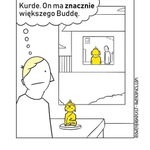
"Damn, he’s got a way bigger Buddha" or the ego as a very deceitful entity...
By: instagram.com/owenbroadcast/

"For although in a certain sense and for light-minded persons non-existent things can be more easily and irresponsibly represented in words than existing things, for the serious and conscientious historian it is just the reverse. Nothing is harder, yet nothing is... 👇👇👇

On Exactitude in Science by Jorge Luis Borges:
"... In that Empire, the Art of Cartography attained such Perfection that the map of a single Province occupied the entirety of a City, and the map of the Empire, the entirety of a Province. In time, those Unconscionable Maps... 👇

... saw that that vast map was Useless, and not without some Pitilessness was it, that they delivered it up to the Inclemencies of Sun and Winters. In the Deserts of the West, still today, there are Tattered Ruins of that Map, inhabited by Animals and Beggars; ... 👇
... in all the Land there is no other Relic of the Disciplines of Geography." @DrGipps
Konrad Banicki retweeted

A classic Reuters photograph of Vishy Anand during his 1998 FIDE world championship match against Anatoly Karpov.

Konrad Banicki retweeted

Poland is one of the most fascinating countries in cinema history. We present you The 35 Best Polish Movies of All Time: buff.ly/WWWzsHP


Konrad Banicki retweeted

En 1984, una pareja celebraba su boda en Polonia cuando cinco hombres de pelo largo entraron sin invitación y terminaron tocando con los instrumentos de la orquesta.
Eran los integrantes de IRON MAIDEN.
Pero lo más increíble es que aquella noche no tocaron ni una de sus canciones.
La banda se encontraba de gira por Polonia, todavía bajo el régimen comunista, cuando sus integrantes terminaron en el club Adria, en la ciudad de Poznań, donde se estaba celebrando una boda.
Al principio solo querían tomar unas copas. Pero cuando vieron que había músicos tocando en directo, se les ocurrió una idea: pedirles prestados los instrumentos y subir al escenario.
Los músicos de la fiesta aceptaron, aunque el baterista estaba especialmente preocupado por lo que aquellos desconocidos pudieran hacerle a su equipo.
Y entonces ocurrió algo que parecía imposible.
Bruce Dickinson, Steve Harris y sus compañeros comenzaron a tocar "Smoke on the Water", de Deep Purple, y "Tush", de ZZ Top.
Lo más divertido es que no interpretaron ninguna canción de Iron Maiden.
Bruce Dickinson recordaría años después que ni siquiera estaba seguro de que los invitados supieran quiénes eran aquellos músicos que habían aparecido de repente en su celebración.
Pero hay un detalle que hace esta historia todavía mejor: todo quedó grabado.
Parte de aquella actuación terminó apareciendo en el documental Behind the Iron Curtain, que registró la histórica gira de Iron Maiden por Europa del Este en 1984.
Y pensar que, mientras miles de seguidores pagaban por ver a Iron Maiden en concierto, unos novios polacos terminaron teniendo a la banda tocando gratis en su boda.
Hay parejas que contratan una orquesta para su boda. Y hay otras que, sin saberlo, terminan con Iron Maiden tocando canciones de Deep Purple.
Konrad Banicki retweeted

Mi papá escondía soldaditos de plástico por toda mi casa cada vez que venía de visita. Decía que una mujer soltera necesitaba «un buen sistema de seguridad». Los encontraba custodiando los cereales, detrás de la tele y vigilando el papel higiénico.
Murió hace tres años. Pensé que a esta altura ya había encontrado a todo su pequeño ejército.
Esta noche desmonté la lámpara de la cocina para cambiar una bombita. Había uno acostado adentro, apuntando con su rifle a la puerta de entrada.
Parece que papá tenía un francotirador cuidándome todo este tiempo.
Viejo te saliste con la tuya. Te extraño.

Readers added context they thought people might want to know
Esta historia es una versión de una anécdota viral compartida ampliamente en internet (a menudo atribuida a "Marissa" sin verificación independiente).
upsocl.com/en/her-father-…
x.com/Complex/status…
Konrad Banicki retweeted

🌍 On #WorldMentalHealthDay, I’m pleased to share that our paper on adult mental health in digital environments is now in press, co-authored with @Castalia1981
Exploring how digital life shapes wellbeing, relationships, & clinical assessment. #WorldMentalHealthDay
