

Assistant Professor @AuburnU @AuburnEngineers in ChemE; PhD in Chemical and Environmental Engineering; art, music, & nature enthusiast; she/her
- Tweets75
- Following209
- Followers312
- Likes158

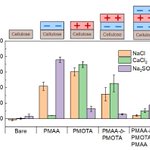



ALT To slow climate change accelerated by worldwide demand for fossil fuels, researchers have investigated a variety of alternative energy sources. One of these is “blue” energy, generated by mixing waters with differing salinities. When these solutions of varying chemical potential are mixed, such as river water and seawater, the Gibbs free energy of mixing is released, which can be harvested to perform useful work. Several technologies have been developed to harvest blue energy, such as using nanochannels, generating the new field of nanopore-based power generation (NPG). However, although single nanopore studies have shown enormous promise, assessing net energy efficiency and inherent limitations at full process scale and realistic operating conditions is essential toward determining NPG’s practical significance. Unfortunately, modeling by Wang et al. (DOI: 10.1021/acsnano.0c08628) suggests that this approach will not be viable.
