

Investigadora científica en el Laboratorio de Control del Dopaje del @SaludISCIII. #Metabolomics #Lipidomics and #MassSpec lover👩🏻🔬
Madrid, Spain
Joined February 2016
- Tweets1.4K
- Following605
- Followers549
- Likes2.6K



Pinned Tweet
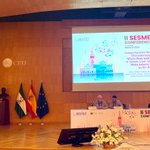
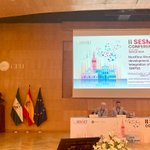
Muchas gracias @FarmaciaCEU por el reconocimiento! Y muchísimas gracias a todos por toda vuestra ayuda @metabolomicaceu. Sin vosotros no lo hubiese conseguido 💜
📷: @ferstolle

Carolina González retweeted

Nuestro compañero el Dr. Carlos Sanmiguel Vila, investigador del Departamento de Plataformas Aéreas del INTA, presenta el proyecto PREVENT que investiga cómo utilizar la IA y los modelos predictivos para detectar, con antelación, perturbaciones aerodinámicas y mejorar la seguridad y el control de vuelo.


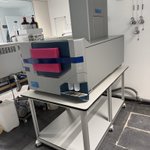
It’s finally here! 😍 Day 1 of setting up the @SCIEX ZenoTOF 8600 at our @SaludISCIII Doping Control Laboratory 🧪✨
Can't wait to push the boundaries of metabolomics & lipidomics for clean sports and health research. Let the science begin! 💻🧬 @SCIEXOmics – at Madrid, Spain


Carolina González retweeted

✅ España se incorpora a @OpenResearch_EU, la plataforma pública de publicación científica en acceso abierto impulsada por la Comisión Europea.
📖 @cienciagob representará a nuestro país en la plataforma a través de la @FECYT_Ciencia.
ciencia.gob.es/Noticias/2026…

Carolina González retweeted
En el INTA seguimos a la vanguardia de la seguridad aérea con el proyecto PREVENT (Predicción y detección de eventos turbulentos extremos).
Liderado por nuestro investigador Carlos Sanmiguel Vila, este proyecto busca dar respuesta a las turbulencias en aire claro.


Carolina González retweeted

Scikit-bio: a fundamental Python library for biological omic data analysis nature.com/articles/s41592-0…

Carolina González retweeted

A new prospective @ScienceAdvances study involving more than 1000 pregnant women from three low- and middle-income countries suggests there is a relation between maternal lipid levels during pregnancy and preterm birth and gestational age. scim.ag/3KPyp54

Carolina González retweeted

Model-based clustering uses statistical models, most commonly Gaussian mixtures, to identify patterns and group data points based on probability rather than just distance. Each cluster is represented by a probability distribution, and the algorithm estimates both the parameters of these distributions and the likelihood that each point belongs to each cluster. Unlike simpler methods such as k-means, it provides a probabilistic view of group membership and can model clusters of different shapes, sizes, and orientations.
✔️ Can reveal hidden patterns in complex data
✔️ Works well even when clusters overlap
✔️ Uses statistical criteria like BIC to choose the number of clusters objectively
✔️ Accounts for varying cluster shapes and orientations
❌ Can lead to overfitting if too many clusters are chosen without proper model selection
❌ May produce misleading results if model assumptions, such as Gaussian-shaped clusters, do not hold
❌ Computationally more demanding than simpler methods
❌ Not ideal for highly irregular clusters, where approaches like DBSCAN or spectral clustering might work better
In the example below, the first plot shows all data points in black. The next view assigns each point to a cluster and colors it accordingly. Ellipses represent the estimated Gaussian components of the model, illustrating the probability-based grouping and the variability within each cluster.
🔹 In R, the mclust package fits Gaussian mixture models, selects the optimal number of clusters using BIC, and offers tools for uncertainty visualization, which is important for interpreting ambiguous points.
🔹 In Python, the sklearn.mixture.GaussianMixture class supports Gaussian mixture modeling, with BIC or AIC for model selection, and results can be visualized using matplotlib or seaborn.
For more insights into statistics, data science, R, and Python, join my email newsletter for practical tips delivered directly to your inbox. For more information, visit this link: eepurl.com/gH6myT
#DataViz #DataAnalytics #Python #R4DS #programmer #RStats #database
Carolina González retweeted

Multimodal learning enables chat-based exploration of single-cell data go.nature.com/3WPGJnW

Carolina González retweeted

MultiModalGraphics: an R package for graphical integration of multi-omics datasets bmcbioinformatics.biomedcent…

Carolina González retweeted

We are thrilled to be hosting scientific and anti-doping experts from around the world this weekend in Atlanta, Georgia for the 24th Annual USADA Symposium on Anti-Doping Science! Many thanks to our international partners for the critical collaboration as we work together to advance anti-doping science and the global anti-doping movement.
Stay tuned for more about the conference!
#AntiDoping #Science


Carolina González retweeted

Nature research paper: Imidazole propionate is a driver and therapeutic target in atherosclerosis
go.nature.com/4m6m6OZ

Carolina González retweeted

🔥NEW paper from our lab! Ever wondered how the metabolite/lipid composition of human bone marrow HSCs changes during differentiation,aging,AML? Check our work nature.com/articles/s41556-0… driven by the brilliant @MCRomeroMulero & @Marialena_L with Jörg! @mpi_ie @ETH_en @NatureCellBio

Carolina González retweeted

A new study from the lab @NatureMedicine
Over 6,000 proteins, more than 10,500 individuals.
#Alzheimers, #Parkinsons, and #FTD. @Ali_bioinformtx maps the shared and disease-specific plasma proteomic landscape of neurodegeneration @WashUNeurology nature.com/articles/s41591-0…

Carolina González retweeted

#Lipidomics Unveils Critical Lipid Pathway Shifts in #Alport #Syndrome
#VisualAbstract by @md_abdulqader83
kireports.org/article/S2468-…
@CarolGlez1990 @metabolomicaceu

Carolina González retweeted

Paper | Circadian ontogenetic metabolomics atlas: an interactive resource with insights from rat plasma, tissues, and feces | #Metabolomics #Lipidomics #CircadianRhythms #DevelopmentalBiology #OpenScience #DataResource | coma.metabolomics.fgu.cas.cz… | doi.org/10.1007/s00018-025-0…

Carolina González retweeted

Energy metabolism is really quite remarkable
Little bits of energy we call metabolites flow continuously, converging in our mitochondria (TCA or Krebs cycle) where they are re-routed and directed where needed
The basis of life and health is the flow of energy
Great animation showing the fate, trajectory, and possible routes that glucose (top) and glutamine (bottom right) take within most of our cells
Video by @janetiwasa
Carolina González retweeted

🧪 Is the dark metabolome just noise?
In Part 1 of our 5-part series, El Abiead & Dorrestein push back on claims that most LC-MS/MS features are fragments — and explain why this matters for science & careers.
🔗 Read: ow.ly/f0Yp50W4CZM
#Metabolomics #MassSpec
