

Trading the markets with code. Price action, automation, and what actually works. Software Engineer.
Joined July 2016
- Tweets253
- Following124
- Followers249
- Likes3.8K




$XAUUSD
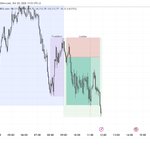
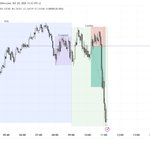
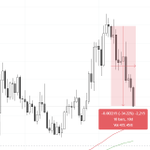
Two shorts, both hit their targets.
Two entries, one idea. 6.4R in the bag.
Logic in the comments

First entry: Price was respecting the EMA, we had a nice downtrend, plus old targets below. The 1h FVG got respected, which kept our short idea valid. Then I waited for an inverse of the EMA 20 and for the small FVGs to get inversed.


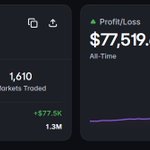
One wallet worth watching for copytrading on Polymarket.
+$47.5K in October alone
Active since August. 34,334 trades in just over two months, all on one market: Bitcoin 5m Up or Down.
The numbers:
→ $1.3M volume
→ $77.5K profit
→ about $2.30 per trade on a ~$38 average entry
→ 53.1% win rate
→ 1,610 markets traded
→ +$47.5K in October alone
The best single trade made $4,113, but that’s an outlier. The profit comes from thousands of small entries with a small edge.
A 53% win rate doesn’t look like much. At this volume, it turns into a steady upward curve.
Wallet in the first reply.


Rest in peace, @arkham 💔
$1,500/month for access + slashed alert limits.
If you were tracking wallets there, time to migrate.


Nice 2R trade on EURUSD
Logic: Frankfurt high was swept, DXY low was swept and on a low timeframe there was a good possibility to go up.
Then you look for an entry and here you go.


Block Blast made around $127M between January and May 2026.
$127M from a block puzzle. Someone reverse-engineered the code, and according to them, your skill barely matters. What matters is how much you’re worth in ad revenue.
What the game reportedly reads:
→ your phone model
→ your country
→ how much the ads you’ve seen have earned them
→ whether vibration is turned on
A model (XGBoost) runs right on your phone and predicts how much ad money you’ll still bring in. The game gets easier or harder based on that.
The rules found in the code:
“MultiClearBoostThenKillTrait”
You feel like a genius until your session reaches the usual length. If you play past it while an expensive ad is ready, you lose right away.
“RewardHighValueAdHarvestTrait”
If you watch ads, you get easier pieces so you can almost beat your record. Then you lose, and an ad pops up to “continue your run.” Keep going and your score quietly gets a hidden +10% so you come back.
“MABXiBaiTrait”
A/B tests which minute to make you lose, to see which one gets you to watch an ad.
If a block puzzle can engineer this much, think about what casinos and slot apps are doing. “It’s warmed up, it’s about to pay” is just the system working as designed.
The game isn’t testing you. It’s pricing you.

Where did the idea that trading is easy come from? That it beats a regular job?
Here's my own experience.
1. Hours
Job: a 40-hour week.
Trading: I sit at the chart from 8:00 to 17:00 and skip 12:00 to 14:00.
It's basically the same time.
2. Exhaustion
Job: I came home physically drained.
Trading: I finish the day mentally drained.
Either way, all I want is rest.
3. Health
Job: physical work wears your body down over time.
Trading: constant stress does the same, just from the inside.
4. Pay
Job: you get paid at the end of every month.
Trading: nothing protects you, and you can lose what you already have.
The dream of easy money and a beautiful life is tempting, and it's fake.
Once you quit your job and go full-time, you see the picture isn't that pretty after all.
A wallet worth watching
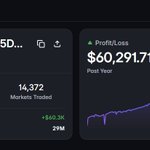
No name, just an address. Since March it has traded 14,360 markets, pushed $29M in volume and made $60.1K in profit.
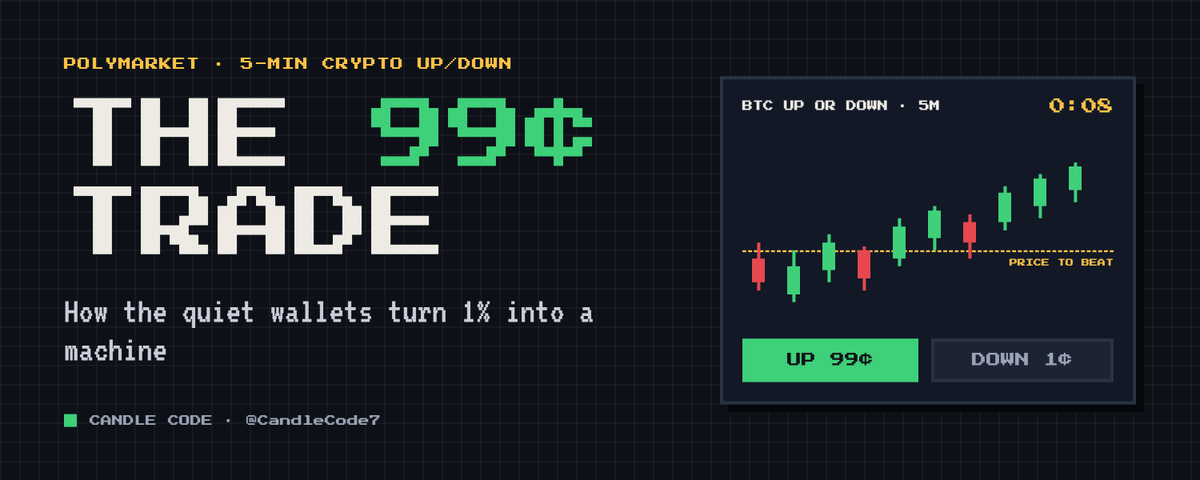
It only trades crypto Up or Down markets: Bitcoin, Solana, BNB, XRP. It enters at 98–99c when the outcome is almost decided and waits for the $1 payout. Position sizes run from $2,000 to $39,600, and everything closes the same day.
The key number isn’t $60K. If it had never lost, it would be sitting near $290K. So it loses regularly and still ends up in profit. That’s far stronger proof than a smooth PnL line with no red at all.
polymarket.com/uk/@0x9ad6c53…

JUST IN: @AnthropicAI says its Claude Mythos model designed highly efficient quantum circuits that could bring useful quantum computers within reach sooner.
Why it matters:
→ Better circuits mean fewer qubits needed, so practical machines arrive before the hardware fully catches up
→ Drug discovery and new materials get simulations classical computers can't run
→ The clock speeds up on today's encryption, including the signatures securing crypto wallets
AI is now speeding up the tech that comes after it.
Almost every prop firm rule set boils down to 3 types:
1 - Target > max loss
2 - Target = max loss
3 - Target < max loss
Most trading influencers you see show results under rule set #3, where you're asked to make less than you're allowed to lose.
Example: payout target is 4%, max loss is 10%.
With zero edge, the odds of hitting +4% before -10% are 10 / (4 + 10) = 71.4%. Market and strategy don't matter.
That's why under these rules even a slightly losing strategy can keep collecting payouts. The math is doing the work, not the trader.
Next time someone flexes prop payouts, check the rules before the P&L.

An interviewer asked Kyle Soska, how he'd turn $100k into $1M.
His answer: "Get a job."
His point is that $100k is too small to justify spending your whole working life compounding it. The returns don't pay for your time.
At $1M the advice changes:
→ keep living costs low
→ take the smaller opportunities
→ wait for the rare trade worth sizing up
Most people underestimate how capital intensive trading really is. Skill matters, but without size, even a great edge pays like a part-time job.
Losing streak checklist. Save this for when you need it.
1. Stop and assess
Don't try to win it all back in one trade. Count losses in R, not $. Check whether you followed your rules on every trade.
2. Review your execution
Go through your last 10 trades. Separate losses from broken rules from normal read mistakes. Compare your behavior to how you usually trade.
3. Check the stats
Is this within the normal losing streak for your system? Have market conditions or price behavior changed?
4. Check your head
Ask yourself:
"Do I feel the urge to make the money back fast?"
"Am I looking for proof of my emotions instead of analyzing?"
5. Decide what's next
Broke rules → stop trading and review the mistakes.
Emotionally drained → take a break until you're back to normal.
Want to change your system → backtest it first.
6. Get back to the process
Define your entry conditions before the session opens. Judge trades by execution, not by P&L or the urge to win it back. Don't raise your risk.
A losing streak doesn't mean you're a bad trader. Your job is to figure out if it's normal variance, execution errors, or your edge fading.
Bookmark this and reread it when you're in that spot.
