








Agrippa retweeted

67 years ago today, ‘Take Five’ by Dave Brubeck Quartet was released as a single.
It went on to become the best-selling jazz single of the 20th century.
Agrippa retweeted

We had to bomb Iran because the sanctions weren’t working… now we have to sanction Iran because the bombs aren’t working.
- all the really smart war bros

Agrippa retweeted

L’HISTOIRE DU FOU DU VILLAGE
Il y a bien des années, dans une petite ville de la province de Matera en Italie, un groupe d'habitants s'amusait aux dépens d'un homme surnommé le fou du village, un homme qui vivait de petits boulots et de mendicité.
Chaque jour, ces gens, retrouvant le fou au bar, s'amusaient à lui proposer de choisir entre deux pièces de 100 lires (environ 0,68 franc français, soit 0,10 €) et un billet de 500 lires (environ 1,69 franc français, soit 0,26 €).
Invariablement, il choisissait les deux pièces plutôt que le billet, ce qui, inutile de le préciser, était source de moqueries.
Un jour, un homme qui observait le groupe se délecter du pauvre homme l'interpella et lui fit remarquer que, même s'il prenait bien deux pièces, leur valeur combinée était inférieure à celle du billet.
Le "fou" répondit alors : « Monsieur, je sais très bien que je ne suis pas si bête. Le billet vaut plus, mais le jour où je le choisirai, la partie sera finie et je ne gagnerai plus les 200 lires par jour. »

Agrippa retweeted

You can understand why ancient Chinese artists drew ink landscape paintings. This happened in the real world in Hangzhou, China. Not a CGI video.
Agrippa retweeted
Chinese PHD student asks Nolan if he Christiniazed The Odyssey’s Greek morals and why he changed Oddyseus emotional journey while Jimmy Fallon does Cyclops Beer Pong with The Oddsey cast

Agrippa retweeted

In 1499, Michelangelo overheard people crediting his greatest work to someone else. He snuck into St. Peter's at night and carved his name on the sculpture. He regretted it immediately and never signed anything again for the rest of his life...
He was 24 years old.
The year before, a French cardinal had paid him 450 gold ducats to sculpt a statue for his own tomb. The contract had one strange clause: it had to be "the most beautiful work of marble in Rome, one that no living artist could better."
Michelangelo had never completed a major public commission. He accepted anyway...
He carved for two years from a single block of Carrara marble that he later called the most perfect stone he ever worked. What he produced was the Pietà: the body of Christ, lifeless, across the lap of his mother.
When it was unveiled, visitors refused to believe a 24-year-old Florentine had made it. They credited the work to a more famous Lombard sculptor. So according to Vasari, Michelangelo slipped into the basilica with a chisel and carved his name in Latin across the sash running between Mary's breasts:
MICHAELANGELUS BONAROTUS FLORENTINUS FACIEBAT.
"Michelangelo Buonarroti, the Florentine, made this."
Then he vowed never to sign another work.
He kept that vow. Through the David. Through the Sistine Chapel. Through the dome of St. Peter's. Through 65 more years of work, until he died at 88. Not one of them bears his name.
What I can never quite get over is that he was only 23 when he started. A young man who believed he could carve the most beautiful object on earth. And then he did...
If you enjoyed this, I write a newsletter read by over 50,000 people who love rediscovering the wonder and beauty of the past, one story at a time. You can join us here: james-lucas.com/welcome
History is more beautiful than we remember.


Agrippa retweeted

The author of the manual, Bernard Gui, is the villain in the Name of the Rose.
He has a lot to teach the repressive autocratic pseudo-left.

Agrippa retweeted

René Guénon spoke of the transcendental unity of traditions. There is transcendental unity of civilisations as well. But each civilisation can achieve that level only when it arrives at its spiritual top, not bottom (like liberal modern atheist materialist West).
Agrippa retweeted

OUT NOW
In The Papal Curse, Laurent Guyénot traces Europe’s chronic division to the medieval papacy. Crusades, anti-imperial politics, individualism, and global expansion formed a system that blocked continental unity and still shapes modern crises.
Foreword by Alain de Benoist

Agrippa retweeted

‘Augustus maintained that wars should only be entered into when the potential gains far outbalance the potential losses. He said that risking military action for a small return was like fishing with a golden hook.’
– Suetonius, Augustus, 25.

Agrippa retweeted
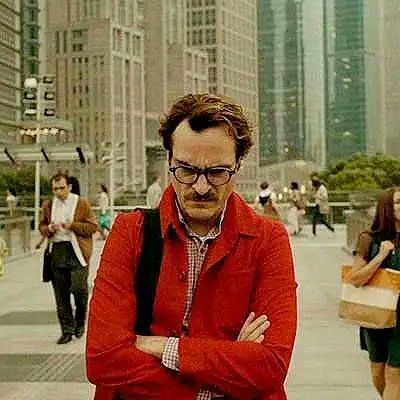
Jesse Plemons in Bugonia (2025) gives one of the best performances of the year, and it’s barely being talked about.


