

The Accessibility Institute brings together expertise to develop innovative ways to create a more accessible and inclusive society.
- Tweets1.3K
- Following458
- Followers666
- Likes869




ALT The Professional Education for Accessibility Competence (PEAC) logo is at the top left. The headline reads: Accessibility pays off. The subtext reads: Optimizing workplace practices results in a 20% performance edge over competitors and improves employee satisfaction. On the right is a group of four individuals interacting.

ALT The Professional Education for Accessibility Competence (PEAC) logo is at the top left. Below this reads the course name: PEAC 200: Understanding Accessibility and Human Rights Legislation. The headline below the course name reads: Break down barriers. Create real change., followed by the date of the course, August 19 & 21 and the location Online.

ALT The Professional Education for Accessibility Competence (PEAC) logo is at the top left. Below this reads the course name: PEAC 100: Applying Accessibility Foundations. The headline below the course name reads: See the difference accessibility makes, followed by the date of the course, August 12 & 14 and the location Online.


ALT Members of the Canadian Accessibility Network (CAN) pose with keynote speaker, Rick Hansen, at Ottawa City Hall during the City of Ottawa's AccessAbility Day 2025 event, held in celebration of National AccessAbility Week (NAAW). From left: CAN Collaborator Antonia McGuire, Rick Hansen, and CAN Administrative Coordinator, Shara Weaver.

ALT A Blueprint for Accessibility: Carleton University’s Accessibility Institute Paves the Path. Read Now! Underneath this is the Accessibility Institute at Carleton University logo. Background image shows 4 individuals looking at a document in a modern office.

ALT Rick Hansen Foundation Accessibility Certification™ Training. Register now for Fall 2025 and Winter 2026. Background image shows a close up of a person reviewing construction drawings. Under this is the Carleton University logo and the Rick Hansen Foundation logo.

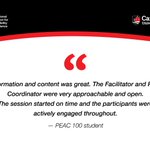
ALT The Professional Education for Accessibility Competence (PEAC) logo is at the top left corner with the Accessibility Institute at Carleton University on the top right. At the centre is a quotation from a PEAC 100 student that reads: The information and content was great. The Facilitator and Program Coordinator were very approachable and open. The session started on time and the participants were actively engaged throughout.

ALT Accessibility Education and Training. Image shows a group of individuals in a learning setting. Under this is the Accessibility Institute at Carleton University logo.

ALT Happy Global Accessibility Day! #GAAD2025. Image shows a circular dark shape resembling a globe, symbolizing global connectivity and awareness. Under this is the CAN logo in English and French.

ALT Unlock the Power of Accessibility. Elevate Your Expertise. Transform Your Workplace. Lead with Inclusion. PEAC 500: Developing Accessible Workplace Practices. May 20 & 22, 2025. 12:00 to 4:00 PM. Online. Image shows 2 individuals looking at a laptop screen. Under this is the PEAC logo and the Accessibility Institute at Carleton University logo.

ALT A person wearing a red knit sweater sits at a desk, their laptop open in front of them as they scroll on their phone in a perfect illustration of a subscriber reading the latest issue of the Canadian Accessibility Network e-newsletter as soon as it hits their inbox. Text overlay on top of a red rectangle under the image reads: May Newsletter, catch up on the latest issue of the Canadian Accessibility Network news and events, can-rca.ca

ALT A workplace benefits from having many thoughts and ideas coming from a variety of different individuals so it’s essential to ensure people with a range of lived experiences are part of the conversation. Diane Biesinger, Senior Manager with the Human Resources Professionals Association (HRPA). Image shows quotation marks and a head shot of Diane Biesinger. Under this is the Accessibility Institute at Carleton University logo.

ALT Enhanced accessibility competence helps attract and retain talented employees. Read Now! Image shows 3 individuals in an office laughing. Underneath this is the Accessibility Institute at Carleton University logo. Image background shows three individuals looking at a screen.

ALT Dedicated Access Fund. Image shows Carleton University campus. Under this is the Accessibility Institute at Carleton University logo.

ALT Unlock the Power of Accessibility. Elevate Your Expertise. Transform Your Workplace. Lead with Inclusion. PEAC 600: Creating Accessible Learning Environments. May 13 & 15, 2025. 12:00 to 4:00 PM. Online. Image shows individuals sitting in a boardroom. Under this is the PEAC logo and the Accessibility Institute at Carleton University logo.

ALT An individual presenting to a group on the right. The Professional Education for Accessibility Competence is at the top left of the photo. Below this says: PEAC 600 Creating Accessible Learning Environments. Better training starts with accessibility. May 13 & 15 and Online. The Accessibility Institute at Carleton University logo is at the bottom left.

ALT Unlock the Power of Accessibility. Elevate Your Expertise. Transform Your Workplace. Lead with Inclusion. PEAC 500: Developing Accessible Workplace Practices. May 20 & 22, 2025. 12:00 to 4:00 PM. Online. Image shows 2 individuals looking at a laptop screen. Under this is the PEAC logo and the Accessibility Institute at Carleton University logo.

ALT Accessibility is a lot more complex than a single discipline or a single sector and that’s why the intersectional approach is so important. Dr. Boris Vukovic, Director, Accessibility Institute and Canadian Accessibility Network. Image shows quotation marks and a small head shot of Dr. Boris Vukovic. Under this is the Accessibility Institute at Carleton University logo.