

The CSSA is the voice of the sport shooter and firearms enthusiast in Canada. We protect Canada's long-established firearms heritage.
Canada
Joined December 2011
- Tweets2.8K
- Following168
- Followers9.4K
- Likes339




Nathalie Provost’s group: “We have to ban the SKS to close the assault-style loophole.”
Canadian gun owners: clears the shelves of a non-restricted rifle Ottawa can’t track
Tony Bernardo: “Salesperson of the Year.”

2.4 million licensed firearm owners.
Not a problem. Not a threat. Not the issue.
Hunters. Competitors. Precision shooters. Action shooters. Shotgun athletes. Hand gunners. Long-range specialists.
Every discipline. One community that trains, gets licensed, and follows the law.
While politicians chase headlines and confiscation schemes, these are the people who actually show up — responsible, regulated, and Canadian.
This is the real picture of firearm ownership in this country.
#CSSA #ShootingSports #Canada #ResponsibleOwnership #cdnpoli

WITH DEEPEST SYMPATHY
Our thoughts are with the fallen, the injured, their families, and everyone affected by the tragedy at CFB Wainwright.
-Canadian Shooting Sports Association

A Toronto police constable is facing charges after the Canada Border Services Agency intercepted two firearm suppressors in a parcel shipped from the United States.
The case raises a much bigger question: Why are suppressors prohibited in Canada?
Suppressors reduce the sound of a gunshot, but they do not eliminate it. In many countries, they are treated as practical safety equipment that helps protect hearing and reduce noise around shooting ranges, farms and hunting areas.
The United Kingdom permits licensed firearm owners to use suppressors. The United States has gone even further. Congress reduced the federal making and transfer taxes on suppressors to $0. Effective October 9, 2026, the Bureau of Alcohol, Tobacco, Firearms and Explosives also stopped enforcing the National Firearms Act’s prior-approval, registration and tax-stamp requirements for suppressors nationwide. State and local laws still apply, but the federal barriers that governed suppressors for decades are no longer being enforced.
These changes reflect a growing recognition that suppressors are not “silent” weapons or Hollywood props. They are noise-reduction devices, like car mufflers.
The Canadian Shooting Sports Association believes it is time to reopen the debate. Canada’s lawful firearm owners should not be denied access to basic hearing-protection technology simply because suppressors have been misunderstood or misrepresented.
This is not about targeting the officer or commenting on charges that remain before the courts. It is about asking whether Canada’s outright prohibition still serves a clear public-safety purpose.
Sources: Bryann Aguilar, “CBSA intercepts firearm suppressors from the U.S. A Toronto cop has been charged,” CTV News Toronto, October 9, 2026; Bureau of Alcohol, Tobacco, Firearms and Explosives, “Update to NFA Transfer Guidance,”


Happy Thanksgiving from all of us at the Canadian Shooting Sports Association.
Today, we give thanks for family, friends, community, and the traditions that bring us together. We are especially grateful for our members and supporters across Canada who continue to champion safety, responsibility, and respect in the shooting sports.

Yukon tabled the first territorial Firearms Act in the country. Bill 11 would put an independent Firearms Advocate in law: funded by the territory, outside the Canadian Firearms Program, and outside the new northern Chief Firearms Officer who administers Ottawa’s rules.
The job is to advise the justice minister, speak for lawful owners, and put the damage on the record in an annual report.
That is not a shield. A territory cannot repeal the Criminal Code or stop the confiscation. More than 2,500 makes and models are still prohibited. As of June, 135 firearms in Yukon had been declared under the federal compensation program.
What it is: a permanent counterweight. Yukon has already asked Ottawa, with the other territories, for a northern exemption, and it has said territorial police will not be used to collect firearms under the program. An advocate turns that into a brief instead of a press release.
Pass the bill. Appoint someone who knows the file. Make the first report the northern case against the confiscation.
A voice against Ottawa. Not a confiscation shield.
#CSSA #Yukon #FirearmsAct #PropertyRights

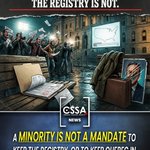
QUEBEC VOTED. THE CAQ IS GONE. THE REGISTRY IS NOT.
Last night, the Coalition Avenir Québec was wiped off the map. About zero seats. Christine Fréchette lost her own riding.
The Parti Québécois will form a minority — about 59 seats on about 28 percent of the vote. Not a majority. Not a blank cheque. Final counts are still being posted.
Before the vote, the PQ said it would keep Quebec’s long-gun registration service. It also said models such as the SKS should be looked at for prohibition.
The Quebec Liberals, now the official opposition with about 40 seats, and Québec solidaire backed the same direction.
This is not a win for licensed owners. The party forming government ran on keeping the registry.
The opening is the minority. Éric Duhaime’s Conservatives went from zero seats to about 19. Their platform said the SIAF and Ottawa’s confiscation program do not stop crime, and that Quebec should stop spending on both. Nineteen seats cannot repeal a law. They can force the question.
Crime is trafficking and smuggling. A registration file on a checked, licensed owner is not a crime strategy. Calling confiscation a buyback does not change what it is.
If you live in Quebec, write your new MNA this week. Start with the Conservative caucus, and with any PQ or Liberal MNA in a rural or hunting riding. Tell them a minority is not a mandate to keep the SIAF, or to keep Quebec in Ottawa’s confiscation program.
CSSA will track what this National Assembly actually does. Members should not wait for the first bill.

As of this post, no Canadian mainstream desk has picked it up.
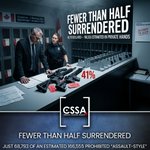
Blacklock’s Reporter published Ottawa’s own return this morning. Individuals declared 68,793 of an estimated 166,555 affected firearms — about 41%. Of those, 67,512 were slated for surrender and destruction, and 1,281 for deactivation. Declarations, not guns collected. Collection is deferred into 2027 while the Supreme Court hears the challenge.
Western Standard and Rebel News ran the figure. CBC, CTV, Global, the Toronto Star and the Globe and Mail have not.
Those are the same desks that covered the promise: a buyback that would remove “assault-style” firearms and make communities safer. Public Safety has already told Parliament there is no legal definition of that term. The government’s count now says most of the firearms it targeted were never even declared.
A low turnout is the result. It is also the part of the story the national newscasts have left on the desk.
Follow the evidence. Get the facts. Then debate policy.
#CSSA #cdnpoli #FirearmsPolicy #LicensedGunOwners

Ottawa’s firearms confiscation program is failing.
Fewer than half of the affected firearms were declared. Of an estimated 166,555 prohibited “assault style” firearms held by individuals, only 68,793, or about 41 percent, were reported under the program.
Enforcement has now been deferred until at least 2027 while the Supreme Court of Canada considers a legal challenge to the regulations.
Licensed firearms owners are not the source of Canada’s violent crime problem. Spending hundreds of millions of dollars confiscating legally acquired property will not stop criminals, illegal gun trafficking, or cross-border smuggling.
Target criminals, not responsible Canadian firearms owners.

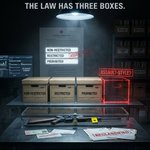
THE LAW HAS THREE BOXES. "ASSAULT-STYLE" IS NOT ONE OF THEM.
In Canada, a firearm is non-restricted, restricted, or prohibited. Those are the classifications in the Criminal Code. A licensed owner can look up a make and model and see which box it is in.
"Assault-style" is not a fourth box. Public Safety Canada said so in its September 21 answer to an order-paper question: "There is no legal definition of an assault-style firearm." The department pointed back to the Criminal Code tests, then to the lists prohibited in May 2020, December 2024, and March 2025.
The RCMP's answer on the same question was just as plain. It does not collect crime data specifically for that label.
That is the problem for every licensed owner on those lists. The firearm was classified one way on the day it was bought. It was moved by regulation. The name used to justify the move is not a legal category, and the police service of jurisdiction for the file does not track crimes under that name.
CSSA's argument has not changed. Use the classifications Parliament wrote. Publish the crime data you do have. Separate licensed owners from trafficking and smuggling. Do not police people with a slogan.
A term Ottawa cannot define, and the RCMP does not measure, is not a basis for taking property from people who already passed the background check.
Follow the evidence. Get the facts. Then debate policy.
#CSSA #FirearmsPolicy #CriminalCode #LicensedGunOwners #Canada

THEY WANT THE GUNS. GOVERNMENT WANTS CHATGPT.
The B.C. government is suing OpenAI, alleging the company failed to notify police about threatening ChatGPT activity before the Tumbler Ridge murders. At the same time, “gun-control” organizations are demanding the RCMP to release detailed information about the firearms used in the murders so those facts can inform future firearms-policy debates.
Canadians still don’t have the complete picture about what happened. The RCMP says the investigation remains active, so it hasn’t released all firearm details.
So why rush to another prohibition list?
Before new restrictions are proposed, Canadians deserve answers.
How were the firearms obtained?
Who legally owned them?
What happened with firearms previously seized from the residence?
Did existing laws fail—or were they not properly enforced?
And why did OpenAI allegedly identify threatening activity without notifying law enforcement?
Those questions should be investigated together, not selectively.
Looking at ChatGPT does not mean ignoring the firearms.
Looking at the firearms does not mean ignoring ChatGPT.
Licensed Canadian hunters and sport shooters did not fail to report the ChatGPT activity. They did not conduct the police investigation. They did not decide what information should remain sealed.
They should not become the default target before all the evidence is known.
Follow the evidence. Get the facts. Then debate policy.
Not the other way around.

Marriage or deer hunting? Choose carefully. This question comes with a follow-up.
Would you grab your bow for archery season or wait for rifle season? Share your answer below and tag the hunting buddy who would struggle with this decision.

Ottawa won’t say how many firearms it collected during its Waterloo confiscation pilot.
Public Safety Canada set a target of roughly 800 firearms—but when Conservative MP Kelly DeRidder asked how many were physically surrendered and collected, the department wouldn’t provide a number.
Did the program meet its target, fall short, or collect any firearms at all? Taxpayers deserve a straight answer.
A target isn’t a result.

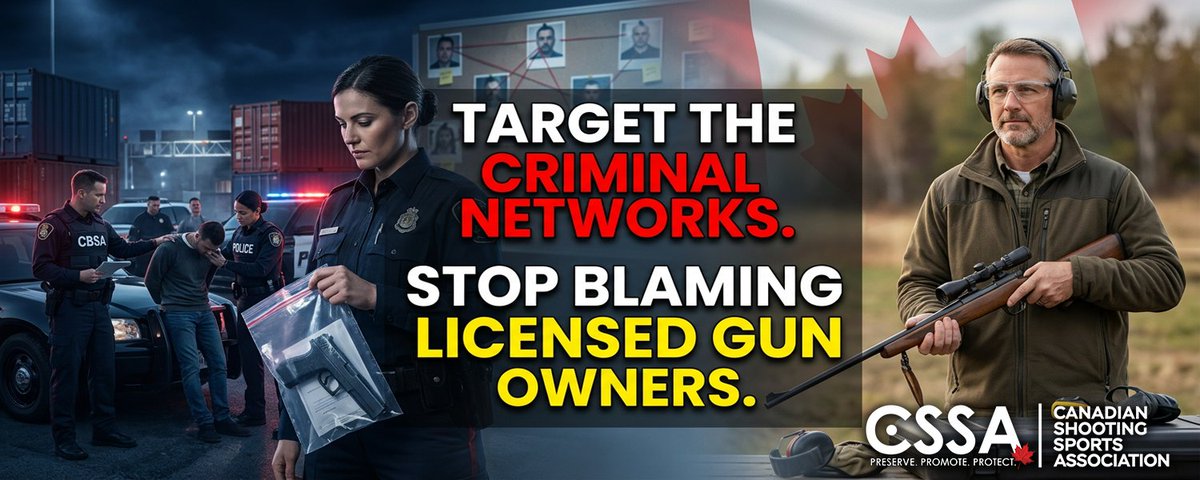
They searched the wrong people.
Canada’s firearms policy is very good at finding licensed owners. The people who got trained. Passed a background check. Bought their firearms legally. Use them at a range or in the field.
It is much worse at finding illegal guns.
If you follow the law, Ottawa can always pile on more rules. If the gun entered the country illegally and was never registered, the press conference still finds a way to blame the legal gun owners.
#CSSA #FirearmsPolicy #LicensedGunOwners #PublicSafety #LegalGunOwners #Canada

The number of licensed firearm owners in Canada keeps growing.
Crime committed by licensed owners does not.
That isn’t an opinion. It’s what the data shows.
We’re hunters, sport shooters, farmers, collectors, and parents. We complete the training, pass background checks, and follow the rules.
Yet federal firearms policy continues to target responsible owners instead of the criminals driving gun violence.
If you shoot, hunt, or simply believe Canadians shouldn’t be punished for crimes they didn’t commit:
• Invite someone new to the range this month.
• Ask your MP: “How will this policy reduce violent crime?”
• Share this with someone who still equates lawful firearm ownership with criminal activity.
#CSSA #ShootingSports #cdnpoli #CanadianFirearms

Municipal elections matter to Ontario’s firearms community.
City councils don’t issue PALs or classify firearms, but their decisions can affect where lawful shooting takes place, whether ranges can open or expand, and how local police resources are prioritized.
Before you vote, ask your candidates:
Do you recognize shooting ranges and gun clubs as legitimate recreational facilities?
Will you distinguish licensed firearm owners from criminals using illegal guns?
Will you support evidence-based discharge bylaws developed in consultation with hunters, farmers, landowners, clubs, police and rural residents?
Will policing resources focus on violent offenders, trafficking, smuggling and illegal firearms?
Check the record. Ask direct questions. Get clear answers.
Ontario’s municipal and school board elections take place Monday, October 26, 2026. Confirm your voter information and advance-voting options with your municipality.
Vote like discharge bylaws matter.
Vote like range zoning matters.
Vote like police priorities matter.
Because they do.
