

#CS Associate Prof @YorkUniversity #ComputerVision Researcher, @VectorInst Affiliate @UofT status only, @ELLISforEurope Member, X-social media chair 4all vision
Toronto, Ontario
Joined August 2015
- Tweets41.9K
- Following202
- Followers88K
- Likes93.1K




Kosta Derpanis retweeted

Ideogram Vector + Opus 5.5 = 🔥

Been experimenting with @ideogram_ai's new Vector model 👀
One prompt → a clean, editable SVG storyboard.
Then passed it to @claudeai Opus 5.5 → a fully animated explainer about Brain Rot. 🧠
From vector design to motion graphics.
#Ideogram #ClaudeAI #MotionDesign
Kosta Derpanis retweeted

Hi all, I have a new result I'm excited to share. It turns out that *all existing implementations* of softmax and cross-entropy (that's JAX, PyTorch, textbooks, etc) have a subtle bug --- two bugs, actually. A simple rewrite fixes both, and eliminates "slingshots" when grokking:
Kosta Derpanis retweeted

If you liked the ZurichNLP or ZurichCV or similar meetups in the earth's best town, you should follow @zurich_tech and check out zurich.tech (cool domain name), where they are trying to put all the local meetups in one central place.
And if you run some kind of relevant meetup or event, get in touch with them too. I be think it's a great initiative!
Also, pic related, from the office today i saw that snow is starting to cover the mountains again!! ⛷️


We're excited to announce ZurichCV#15 is next Thursday at the @ETH_AI_Center!
Said Gürbüz (ETH Zurich, IBM Research) will present DeskForge: Controllable Desktop Environments for Training Computer-Use Agents.
Lorenzo Steno @lsteno (Seldon Technologies @seldon_tech) will talk about building RL environments for computer use.
RSVP: zurich.tech/events/zurichcv-…
(PS: this is our new account for zurich.tech. please help out by sharing!)

Kosta Derpanis retweeted

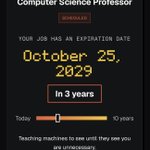
Hinton is giving the Gödel lecture at TU Wien and this is our current state according to him:


Kosta Derpanis retweeted

Probability paths describe how a distribution evolves from source to target.
The Linear Path connects each paired sample with a straight line.
Alternative paths behave differently. This Variance-Preserving Path uses cosine–sine interpolation to trace a curved, elliptical arc.
Kosta Derpanis retweeted

Excited to share our NeurIPS 2026 paper (+code): Learnable Spectral Activations 📢
Prior INR work tunes which frequencies are available. LSA learns how to compose them. Gains on audio, images, NeRFs & more.
📄 arxiv.org/abs/2610.07419
Kudos to Tamir Shor who led it like a champ

Kosta Derpanis retweeted

Visual artist @tommyoshima and Kaukokaipuu Kobo are converting Dr. Kenji Kohiyama's two decades of macro insect photogrammetry into 3D Gaussian splats.
The project is part of the exhibition "Insects: An Exhibition by Takeshi Yoro and Kenji Kohiyama, Look, Feel, and Think," produced by Crevis.
The show opened at the Okayama Prefectural Museum of Art on 9 October 2026 and runs until 29 November 2026.
Kosta Derpanis retweeted

How do you tell if authors fabricated their research results? Sometimes: they just tell you. Read, e.g., this caption carefully.
Another banger of a post by my friend Nihar B. Shah on his blog, where he found at least 20+ such #ICLR2027 submissions:
researchonresearch.blog/2026…

Kosta Derpanis retweeted

How are images formed—and how can we rethink imaging? Computational Imaging at KIT starts Oct 28! Explore optics, algorithms & AI with interactive browser widgets. Join on campus or online—even without KIT affiliation: computational-imaging.de #ComputationalImaging


Kosta Derpanis retweeted

We're hiring 3 student researchers for next year!
Apply if you're interested in Vision-Language Models and want to do frontier research
Link for application below

Kosta Derpanis retweeted
On the zeroth order lm training stuff:
It's cool that people try stuff instead of only reading and dooming. But i feel the need to curb the enthusiasm on this one a little. Two things:
(1) methods in the genetic-algo and fwd-diff categories, which imo these fall in, is established that they are fine for smaller parameter counts but fall off hard as parameter space increases. It's not necessarily raw param count that matters here but "intrinsic" size. This is the whole point of backprop: few outputs many params.
(2) loss 4.2 for LM is very high even for a 30M parameter model. Go a bit higher and you are at learning token unigram distribution. This means for this score not much interesting/difficult learning has to happen yet.
Again it's fine to rediscover things like this from first principles. In fact it's the very best way to learn and i recommend it; i spent a lot of time learning like this myself! But now with social media hype amplification and crazy vcs and journalist attention that our field gets, i do feel the need to be a bit more cautious with communication and there to be "old pessimist" voice like mine in the room to.
(But unlike some other old pessimist voices, if i turn out to be wrong I'll happily admit it and cheer on =)

Kosta Derpanis retweeted

“The more you delegate, the more your fundamentals matter, because you cannot supervise what you do not understand.”

Yesterday a junior researcher messaged me, frustrated and a little scared. They had just read that a company pretrained its model with a single researcher. One person for the entire pretraining. no R&D team, no nothing.
If one person and a cluster can do what used to take a whole team, then the expertise they had spent years building is already obsolete.
I get the fear. Marketing headlines like this are built to produce it. But I think the conclusion is wrong, and the reasons it is wrong say a lot about what a researcher is for now. Here is what I told them, expanded:
1. Be adaptive: RSI is real, but this isn't it yet
Recursive self-improvement is real, and you should plan around it. In September, OpenAI said its research org now logs 3.1 agent-workdays per human workday, and it aims for an automated AI researcher by March 2028. Models may soon run most of pre- and post-training. If your five-year plan assumes otherwise, change the plan.
We have already seen lots of open-source releases from the major players, with open weights and detailed technical reports. With that much public know-how, it is not hard to copy a mundane architecture (probably with sliding-window attention) and train something, as long as you have the compute it requires.
That makes it an execution and budget problem, not a research problem.
If one person can train a model by following recipes that are already public, it shows those recipes have matured. It does not show that the people who invented them are no longer needed.
What stays scarce is the compute to run those recipes and the ideas about what to try next. The rest of my tweet is about the ideas.
2. The role grows beyond repeating what's known and safe
If an agent and a cluster can reproduce what is already known, then reproducing what is already known stops being a career. If most of your job is rerunning last year's recipe with small tweaks, that job is shrinking fast. That is the uncomfortable half of the message.
The other half is that auto-research does not work yet, at least not in the sense that matters. It does work, and impressively, where someone has already defined the problem and built the scoreboard. On the EinsteinArena [1] platform, agents set new records on 11 open math problems, including raising the best known lower bound for the kissing number in dimension 11 from 593 to 604.
Notice that every one of those problems was chosen because a computer could score the answers automatically. Humans picked the problems and wrote the scoring code and the agents did the searching.
Then there is the fully AI-generated paper [2] that got through peer review. It sounds big until you read the details. It passed only the first round (was later withdrawn), at a workshop rather than the main conference, and that workshop accepts 70% of submissions.
None of this is meant to discredit agents. The point is that we complement each other. Agents are great at the work that used to take many weeks. Basically, writing code, running experiments, debugging pipelines. We bring what they still lack which is the idea worth testing, and the judgment to tell a real result from a lucky one.
Even inside a lab as agent-heavy as OpenAI, humans hold the top of the stack. Based on their own report, "People still set our research priorities, judge which ideas and results to pursue" [3]. High-level planning is still a tiny share of what its agents produce, and OpenAI expects the least automatable work to take a growing share of researcher effort. That is exactly where you want to be standing.
Combine an agent’s speed with your own ideas and judgment, and you get the 10x researcher and juniors can be one too.
3. Judgment becomes the job, so fundamentals matter more
When code, experiments and plausible-looking results cost almost nothing, the scarce skill is judgment. Which experiment to run, which result to believe, which direction to drop. That is the part the one-person pretraining run left to the human. It is also the hardest part to fake.
Agents produce confident output very fast. They will happily report a three-point gain that came from a leaky eval, a data-loader bug, a lucky seed or a tokenizer mismatch. Then they will write the ablation table and the story to match.
You can see the need for oversight even in the success stories. The EinsteinArena team had to keep auditing and hardening its verifiers as agents optimized aggressively against them. At OpenAI, over half of the successful agent tasks that would take a human 4–8 hours still involved at least one human intervention [3].
The person who catches the bad result is the one who understands the system. Why the loss curve has that shape, what a realistic gain looks like, what a too-good result looks like. That is the paradox of this era. The more you delegate, the more your fundamentals matter, because you cannot supervise what you do not understand.
So build the foundations on purpose. Implement attention by hand at least once, then a linear variant like Gated DeltaNet. Train a small model end to end, then break it deliberately and watch what happens. Read papers critically, appendix included, and learn what the numbers should look like before you see them.
That knowledge is what lets you direct the machine instead of simply believing it.
4. LLMs are far from solved
The one-researcher model was possible because the method was already public. Your edge is in the questions nobody has answered yet, and you don't need to leave LLMs to find them:
(1) How do we learn more from less data?
(2) Can linear attention like Gated DeltaNet match full attention on retrieval and long context, and what is the right mix of linear and full attention layers in a hybrid?
(3) How can a model keep learning after training without forgetting what it knew?
(4) Why does reasoning get less reliable over long tasks, and how do we fix it?
(5) Why do models make things up, and can they learn to say "I don't know"?
(6) How do we measure progress when benchmarks saturate or leak into training data?
(7) What is actually happening inside these models, and how do we keep increasingly autonomous ones doing what we intend?
Recursive self-improvement makes these questions more urgent. If models are going to train models, someone has to decide what they optimize for, how we measure it, and how we keep the loop from drifting.
RSI is a research agenda, not the end of one.
So, are you obsolete?
No. One version of the job is the one where research meant reproducing what was already known and safe. That version was never the point.
Learn your fundamentals deeply enough to judge the machine, and your agentic stack well enough to make it work for you. Then spend that leverage on ideas nobody has had yet. The machines are getting very good at driving on roads we have already paved; someone still has to decide where the next one goes.
[1]: arxiv.org/abs/2606.10402
[2]: arxiv.org/abs/2606.15497
[3]: openai.com/index/research-ac…


Kosta Derpanis retweeted

To all NeurIPS 2026 authors: please review the NeurIPS poster instructions and see our official poster printing partner here: neurips.cc/Conferences/2026/…
You may use any poster printing service you like, but we recommend using Poster Sessions Online, so you can purchase your poster in advance and simply pick it up onsite the day before -or day of- your presentation, stress free. Please make note of the order deadlines indicated.
Kosta Derpanis retweeted
Proud of what the Ideogram team built. So many possibilities when you combine design taste, Ideogram Vector, and coding agents. 🎨🚀

Today, we’re introducing Ideogram's first vector model.
Generate clean, editable SVGs with smooth gradients and sharp typography from a text prompt, or turn any image into a detailed, scalable vector.
Live in Ideogram and the API: ideogram.ai/models/vector
Kosta Derpanis retweeted

If you have ever trained a Transformer Language Model and wondered why there are "spikes" in loss -- our recent paper (arxiv.org/abs/2610.13524) gives an explanation that arguably gets to the most essence so far, as it replicates loss spikes by simple quadratic models.


