




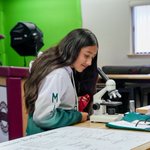
CSBA President Dr. Debra Schade took a tour of the 200-student Warner USD on Oct. 13 to learn more about how the small, rural district provides students opportunities to thrive through its various arts, agriculture and career technical education programming and boosts engagement with the help of its tribal and county partnerships despite the infrastructural challenges it faces in terms of transportation, the ability to provide safe drinking water and more.
“Warner Unified may be small in enrollment, but its commitment to students and the strength of its community are substantial,” Schade said while reflecting on the visit. “The visit reinforced the importance of recognizing the unique needs of rural districts and ensuring that every student, regardless of background or ZIP code, has access to meaningful educational opportunities and a promising future.”


Common Sense Media has released a collection of free resources to support families, teachers and district leaders to support thoughtful, developmentally appropriate decisions about technology use in the classroom. Details: blog.csba.org/tech-in-school…

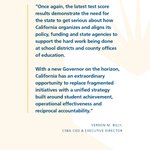
In response to the Oct. 15 release of California’s 2026 student assessment results, CSBA CEO & Executive Director Vernon M. Billy issued a statement calling for reciprocal accountability in improving student outcomes. Read it in full here: ow.ly/c4ws50ZYwFT


As #HispanicHeritageMonth comes to an end, the latest CSBA blog post is recognizing the 80-year anniversary of landmark California desegregation case Mendez v. Westminster and how its legacy lives on today. Read it now: ow.ly/rUgi50ZY6ov

The start to the 2026–27 school year in Larkspur-Corte Madera SD looked a bit different than prior years. The first two weeks were device free in the K-8 district, which serves about 1,200 students in the Bay Area. Each grade level received six lessons focused on digital citizenship and wellness created by Common Sense Media.
Educators focused on creating a positive classroom climate and culture, setting expectations for technology use and how to work and engage with one another. The response from students, parents and staff was “overwhelmingly positive,” said Superintendent Brett Geithman. Learn more: blog.csba.org/larkspur-corte…

New research from @ctschoolsucla documents persistent disparities in academic achievement, graduation, attendance and school discipline, as well as substantial racial and geographic disparities among children who experience homelessness. Learn more: blog.csba.org/achievement-ga…

LegislatED is wrapping up for the year with a recap of four CSBA-sponsored bills that were signed by the Governor and how they intend to positively impact the TK-12 landscape. Thank you to Assemblymembers Darshana Patel, Avelino Valencia and José Luis Solache, Jr., for authoring this important legislation.
Learn more about the bills and the fate of other significant education-related measures: blog.csba.org/2026-signed-bi…
Last month, @SchoolHouseConn hosted a webinar — “Showing Up, Staying Connected: Family Engagement Strategies to Support Student Attendance” — offering practical strategies for building relationships with families and reducing attendance barriers. Find a recap on the CSBA blog:
blog.csba.org/family-engagem…

CSBA President Dr. Debra Schade recently visited Region 2 where she met with trustees and toured Enterprise ESD, Redding ESD, Shasta Union HSD and Shasta COE sites, learning about offerings from throughout the region spanning the performing arts, career technical education, innovative programs for special education students, elementary STEM exploration and more.
She said that her experiences underscored the importance of listening to local voices to understand the successes and challenges happening in the state’s varying communities and was a reminder of the tremendous creativity and commitment that exists in California public schools.


There were minimal changes in the rates of 12th graders who enrolled in college immediately after graduation (the following fall) between 2024 and 2025, according to the @NSClearinghouse's 14th annual High School Benchmarks report. Learn more about the postsecondary journeys of recent high school grads: blog.csba.org/benchmarks26/

CSBA’s Research and Educational Policy Development Department is collecting superintendent evaluation templates from districts statewide to inform updated guidance for governance teams. If your board has an evaluation tool or process it’s willing to share, board presidents and superintendents are invited to submit it via email as an attachment to [email protected] by Oct. 16.
A recent research paper by @NDCresearch, a CSBA Business Affiliate, outlines best practices for closing schools in response to factors like declining enrollment, underused facilities, staffing challenges, aging campuses and tight budgets. Learn more: blog.csba.org/school-closure…

A virtual debate between the two candidates for state superintendent of public instruction takes place tonight at 7 p.m.

Live debate: Candidates for California schools chief face off as the role changes
REGISTER: bit.ly/4hCDcTR

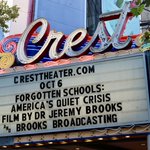
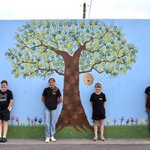
A new documentary, which premiered Oct. 6 in Sacramento, takes viewers inside rural schools and communities, sharing the stories of students, educators and families and shining a spotlight on the rural school experience. “Forgotten Schools: America’s Quiet Crisis” features interviews with Calaveras COE Superintendent Jared Hungerford, Interim @CalaverasUsd Superintendent Ron Estes, Mark Twain Union SD Superintendent Louise Simson and Bret Harte Union HSD Superintendent Scott Nanik (pictured in this gallery).
“The main message is that rural schools matter, and our students deserve the exact same great opportunities as students in large city districts,” Nanik said. “This film shines a needed light on rural education. It shows the incredible dedication of our teachers, staff and families who work together every day to help young people thrive.”


In 2024–25, roughly one in five districts (19 percent) had to cancel school days due to facilities issues, impacting 2 million students, according to a September report by the U.S. Government Accountability Office.
These findings are based on a nationally representative survey of public school districts that concluded that affected students lost an estimated 3.5 days of learning because of the closures. Learn more: blog.csba.org/gao-facilities…

CSBA President Dr. Debra Schade spent a jampacked couple of days presenting at the Antelope Valley School Boards Association Sept. 29 meeting which included perspectives on district priorities, opportunities and challenges, and touring schools in the @avuhsdistrict, @WUSDSchools and Palmdale school districts.
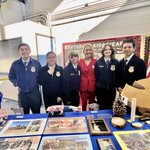
Schade saw firsthand the ways in which advanced composites and biomedical programs, e-sports, ROTC, robotics, Future Farmers of America, culinary arts and dance pathways are creating opportunities that respond to students' interests, needs and aspirations, as well as how career technical education and exploration and hands-on programming help students connect learning to real-world experiences and future opportunities.
She said the visits highlighted the importance of local governance, thoughtful investments and the role of district leadership in creating opportunities for students.


During the 2025–26 academic year, just 17.4% of the country’s 500 largest school districts experienced superintendent turnover, the lowest level observed by @WeAreILO since before the pandemic, according to an analysis on the subject. More: blog.csba.org/superintendent…

A recent study by @BrookingsInst examined what happens to secondary school multilingual/English learners when a state brings academic content knowledge into the reclassification process. Review a summary of its findings: blog.csba.org/academic-crite…
