

@sgsah PhD student at @UofGlasgow researching Scottish, English and British coins. Details: https://xitter.cf/t.co/r6nBbgMq40
Glasgow
Joined November 2021
- Tweets4.3K
- Following734
- Followers3.6K
- Likes13.9K




Pinned Tweet
This is the earliest coin to depict Jesus. It was minted in Constantinople in 450 to celebrate the marriage of Emperor Marcian & Pulcheria. Jesus is shown between the imperial couple. This specimen from the Hunterian collection is the only known example.
Queen Victoria is depicted on this gold 1 cent coin of British Ceylon (modern-day Sri Lanka) that was minted in 1870. The circulating 1 cent coins of Ceylon were made from copper. This extremely rare specimen was struck in gold for presentation purposes. From the Hunterian.
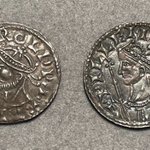
The victor and the vanquished: silver pennies of Harold II (1066) and William the Conqueror (1066-1068). Both are from the collection of the Hunterian.


William the Conqueror, who won the Battle of Hastings on this day in 1066, is depicted on this silver penny. This coin was struck at the Hastings mint within two years of the decisive battle that bears the town’s name (1066-1068). From the Hunterian collection.
A proof shilling of Queen Anne that was minted in Edinburgh in 1707. Unlike the regular coins that were struck for circulation, the proof has a plain edge. This coin was acquired by William Hunter sometime between 1770 & 1783. It's now in the Hunterian collection.
A proof shilling of Queen Anne that was minted in 1707 as part of the Edinburgh mint's efforts to recoin all the silver Scottish coins in circulation into new British coins. This proof specimen from the Hunterian was minted to a higher standard than regular circulating coins.
The reverse features the arms of the newly formed Kingdom of Great Britain (they combine the lion rampant of Scotland with the three lions of England) and those of the kingdoms of France and Ireland.


Here's another look at the Scottish gold lion of Robert III that was minted between 1393 and c.1403. The design of a crucified St Andrew was re-used on the coins of James II (1437-1460) & James IV (1488-1513). This specimen is from the Lord Stewartby Collection at the Hunterian.


Saint Andrew is shown crucified on a saltire on this Scottish gold lion of Robert III that was minted sometime between 1393 & c.1403. Robert III was the first King of Scots to issue gold coins in large numbers. This example is from the Lord Stewartby Collection at the Hunterian.
This unique pattern gold ducat of James V of Scotland that was struck in 1539 is the very first coin minted in the British Isles to bear a date. Only a single specimen is known to exist, which is now in the collection of the National Museum of Scotland.


The gold sovereign of Henry VII (1485-1509) was the first English coin that was worth a pound. These four examples from the collection of the Hunterian show how its design evolved over time.


