

Licensed clinical psychologist and researcher @bcmhouston. Passionate about OCD, trauma, and LGBTQIA+ mental healthcare. Views my own. She/her.
Houston, TX
Joined March 2022
- Tweets792
- Following358
- Followers474
- Likes1.4K





Caitlin Pinciotti, PhD retweeted

I've said for years that ACT is not a technique you apply to other people from a safe distance. It asks something of the person doing the work, too. Your willingness to go into difficult territory with a client is grounded, at least in part, in your own relationship with difficult territory.
#psychological flexibility
#ACT
#ACTtherapy


Caitlin Pinciotti, PhD retweeted
Almost everyone I've ever worked with carries some version of this, including therapists, including me. So the first thing I'd say is: you're in very good company.
Here's the move I find most useful: rather than asking whether the belief is true, ask what it does. Does holding onto it tightly help you build the relationships you want? Does it help you do the work that matters to you, live in the way you actually want to live?
Almost always the answer is no. You don't have to resolve whether it's accurate to decide that you're not going to let it run your behavior. That's a different question, and it's one you actually have some agency over, starting right now.
What's been sitting with you? If it's a question, leave it in the comments.
#psychologicalflexibility
#ACT
#ACTtherapy

Caitlin Pinciotti, PhD retweeted

📢 I’m recruiting!
I’ll be reviewing applications for a new Clinical Psych Ph.D. student for Fall 2027.
🔬 SRPR Lab: suicide risk, assessment, disclosure & prevention
📅 Deadline: Dec. 1
🔗 drseanmmitchell.com
Please share! 🔁
#ClinicalPsychology #PhD #SuicidePrevention

Caitlin Pinciotti, PhD retweeted

People tend to think the difference between PTSD and cPTSD is single event vs repeated/cumulative experiences, but that describes cause, not what it looks like. Personality remains a more descriptive domain for how trauma can impact development throughout the lifespan.
Caitlin Pinciotti, PhD retweeted

Too often, men who experience sexual assault stay silent about what happened for decades—if they ever share at all. This is what stops them from disclosing, and what can be done to better support male survivors. psychologytoday.com/us/blog/…

I’m running an online consultation group through the @IOCDF Training Institute on Thursday afternoons this fall for clinicians seeking to grow their clinical skills related to co-occurring trauma/PTSD in OCD treatment. Limited to 4 slots, registration opens August 24th at noon!

“When a patient with OCD has experienced trauma, how do I determine whether the trauma is clinically relevant - and if it is, what do I do differently?”
I’m looking forward to joining @SheppardPratt to dive deep on this question as part of their OCD & Anxiety Lecture Series /1
..this Friday at 1pm Eastern! Register now for this 1hr, *free* CE talk at cme.sheppardpratt.org/conten…
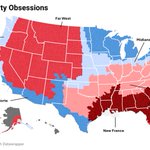
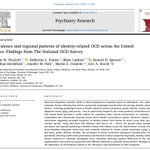
Extremely excited to share this 🚨new research🚨 coming out of The National OCD Survey 🇺🇸 This study was born out of the thought “wouldn’t it be cool if…?” and 3 years and 5k participants later, we can finally answer the question: Does OCD differ across regions of the U.S.? 1/

..fears of downward mobility and financial instability in a region characterized by economic inequality, emphasis on self-reliance, and weaker social safety nets. There is so much more to come from this work, and I want to thank the countless people who worked so hard to 9/
disseminate this study far and wide so we could recruit a large enough sample to ask the questions so many of us in this field have wondered but have never had the data to answer. Check out the full paper at sciencedirect.com/science/ar… and follow along for more in the future 🇺🇸 10/
Caitlin Pinciotti, PhD retweeted

A review of childhood anxiety research found that parents often respond to a child’s distress by allowing avoidance, providing repeated reassurance, changing routines, or taking over responsibilities.
This “family accommodation” is associated with more severe anxiety, greater impairment, and poorer treatment response.
Parents are trying to help. But shielding children from discomfort can backfire by reinforcing avoidance and preventing them from learning that they can handle anxiety themselves.
pmc.ncbi.nlm.nih.gov/article…
