
Friendly neighborhood captain 📦🍃✈️ we work for the people and give back to our communities. Get verified and work with the winning team
Portland, OR
Joined November 2026
- Tweets69
- Following58
- Followers7
- Likes328


CULTIVR retweeted

What Happens to Your Soil When You Stop Digging — Year by Year 🌱
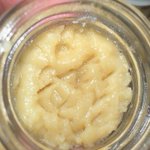
The no-till approach is the fastest growing gardening technique in America in 2026 — and the results in this cross-section tell you exactly why. Every time you till, you destroy the biological infrastructure your soil spent months building. Here is what that infrastructure looks like when you leave it alone.
Year 0 — Conventionally tilled soil is pale, compacted, and structurally uniform. The repeated mechanical disruption destroys soil aggregates — the clusters of particles held together by fungal threads and microbial activity — leaving a dense uniform mass with poor drainage and limited biological life.
Year 1 — Add a 3-inch layer of compost or organic mulch on the surface. Do not dig it in. The first earthworms arrive within weeks, drawn by the surface organic matter. The top inch of soil begins darkening as microbial activity increases.
Year 2 — The mycorrhizal fungal network begins establishing — fine white threads connecting plant roots to soil particles and to each other. This network is what gives no-till gardens their characteristic water efficiency and disease resistance. Root channels from previous seasons remain open as pathways for new roots.
Year 3 — The top 6 inches is now visibly dark, crumbly, and rich. Soil aggregates are abundant — the soil has physical structure created by biological activity rather than mechanical loosening. Water infiltration has increased dramatically. Fertiliser requirements have decreased because the biological community is cycling nutrients continuously.
Year 4 and beyond — The soil is essentially self-managing. The biological community — fungi, bacteria, earthworms, beneficial nematodes, and thousands of other organisms — processes organic matter, releases nutrients, suppresses disease pathogens, and maintains soil structure continuously. This is what gardeners and farmers mean when they say "living soil."
#notill #sustainablegardening #organicgardening
