

Chief Executive Officer Council of Governors
#DevolutionisWorking
Joined February 2016
- Tweets3.4K
- Following883
- Followers3.8K
- Likes799







The delivery of affordable housing must go hand in hand with secure land ownership and clear accountability.
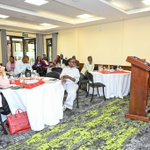
On Day 2 of the Intergovernmental Sector Forum in Naivasha, we agreed on practical measures to resolve land allocation, planning, surveying and titling challenges affecting affordable housing projects on County Government land.
Key resolutions include expediting the issuance of land titles, developing county-specific action plans with clear timelines, strengthening joint monitoring and fast-tracking the implementation of the Tripartite Agreement.
We will also strengthen the role of County Affordable Housing Committees and intergovernmental coordination to address implementation bottlenecks.
Ultimately, a housing project is only complete when beneficiaries receive their sectional titles. This calls for sustained collaboration between the National and County Governments to accelerate delivery while safeguarding county land ownership interests.


Affordable housing delivery must be anchored in the law, sound land administration and effective intergovernmental coordination.
Today, I joined @ahb_kenya and stakeholders at the Intergovernmental Sector Forum on the Implementation of the Affordable Housing Programme to address legal, technical and administrative bottlenecks affecting projects on County Government public land.
Our focus is on streamlining land allocation, planning, surveying, titling and regularisation, with clear institutional responsibilities and timelines to accelerate implementation.
As we work towards delivering 45,000 housing units by the end of 2027, compliance with the Constitution, applicable laws and approved County planning frameworks remains critical.


Yesterday, I joined stakeholders in a consultative engagement convened by the Council of Governors, in collaboration with GIZ, to validate and refine the County Public Service Boards (CPSBs) Handbook.
The Handbook will provide standardised operational guidelines to strengthen ethical leadership, transparency and accountability in recruitment and disciplinary processes, while promoting professionalism and continuity across our 47 Counties.
I called on stakeholders to provide practical input to ensure the Handbook reflects the realities of county public service, upholds merit, fairness and integrity, and aligns with constitutional and legal requirements, including during transitions in county administrations.


Ms. Mary Mwiti, EBS retweeted

The Council of Governors (CoG) led by the Chairman H.E Muthomi Njuki held a consultative meeting with the Commission on Revenue Allocation ( @CRAKenya ) to review its draft recommendations on the Division of Revenue for FY 2027/28.
The Council highlighted key funding gaps requiring consideration, including KSh 8.6 billion for UHC workers, KSh 65.7 billion for newly delineated and transferred functions, KSh 15.2 billion for SRC remuneration reviews, and at least KSh 2 billion for Collective Bargaining Agreements (CBAs).
Other priorities include funding for the assumption of office and transition processes, as well as adjustments to reflect revenue growth.


Ms. Mary Mwiti, EBS retweeted

Achieving inclusive leadership requires collective responsibility.
Governments, political parties, civil society, media, development partners, and communities all have a role to play in advancing women's participation and influence.
youtube.com/live/SzN1_simbcU…


🧩 Investing in mentorship, visibility, resources, and opportunities for emerging women leaders is critical to strengthening representation in 2027 and beyond.
#WomenInLeadership
youtube.com/live/SzN1_simbcU…

Grateful to God for the gift of life as I turn a year older. Each year is another milestone in the journey towards achieving the goals and aspirations I have set for myself.
My heartfelt appreciation to all the women leaders and the @KenyaGovernors Secretariat for making this wonderful surprise happen and making my day extra special.
Asanteni sana! ❤️🙏 – at Nairobi, Kenya


Women’s leadership must be backed by deliberate action, strong networks and institutional support.
Today, the Council of Governors in partnership with @unwomenkenya convened the G7 Women’s Leadership Meeting, bringing together women leaders, development partners and other stakeholders to advance women’s political participation ahead of the 2027 General Elections and beyond.
The discussions underscored the need to strengthen mentorship, build the capacity of women aspirants, mobilise resources, address gender-based violence and online harassment, and promote inclusive political party nomination processes.
We resolved to strengthen collaboration across political divides and develop a coordinated roadmap to increase women’s representation in elective and appointive leadership, while advancing the implementation of the two-thirds gender principle.
A more inclusive democracy requires deliberate investment in women’s leadership and equal opportunities to participate in decision-making.


Congratulations to the newly elected leadership of the Council of Governors.
As you take up these responsibilities, we look forward to your leadership in strengthening devolution, advancing intergovernmental relations, and championing the collective interests of county governments for improved service delivery to all Kenyans.
I wish you success as you steer the Council towards a stronger and more impactful devolution agenda.


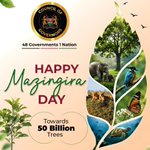
This Mazingira Day, let us reflect on the role each of us plays in protecting our environment through tree growing, responsible waste management, conserving water and safeguarding our natural resources.
County governments have a critical role in advancing sustainable environmental practices and strengthening climate resilience. Through collective action and responsible stewardship, we can secure a healthier environment for future generations.
Let us turn our commitment to environmental conservation into meaningful action.
Happy Mazingira Day!

I joined the Agriculture and Food Security Transformation Summit for a high-level discussion on moving from agricultural data to better outcomes for farmers.
Counties have helped register approximately 8 million farmers on KIAMIS, but registration is only the beginning. We must turn this data into timely extension services, better planning, early warning, market access and improved farmer incomes.
Counties are already demonstrating what is possible. Makueni’s Kilimo Makueni MIS, Meru’s myMeru and Merucow platforms, and Kirinyaga’s digital agriculture initiatives are using technology to strengthen farmer registration, extension, mapping, market linkages and service delivery.
Under #NAVCDP, counties have also digitised more than 800 SACCOs and 350 farmer producer organisations, strengthening the digital ecosystem around farmers and their institutions.
Going forward, we need an interoperable national–county digital agriculture ecosystem: national systems providing common standards, security and scale; counties providing local intelligence and last-mile services; and farmer institutions connecting these services to producers.
Our measure of success must be the farmer who receives the right advice at the right time, the cooperative that reaches a better market and the young person who earns a livelihood from agriculture.
We must turn registration into service, information into investment, and early warning into early action.


As we prepare for the fourth transition cycle, our focus is on ensuring that transition does not disrupt government operations or service delivery.
County Secretaries have a critical role in safeguarding institutional memory, public resources, records and continuity. Transition is a legal process, and it requires professionalism, impartiality, accountability and early preparation.
In the words of H.E. Dr. @GovernorKahiga , “transition is not simply about handing over offices. It is about protecting institutions, preserving public resources, maintaining institutional memory and, above all, ensuring that services to our people continue without interruption.”
We are working to ensure that County Governments remain functional, responsive and ready to serve citizens throughout the transition.


Ms. Mary Mwiti, EBS retweeted
Preparations are at an advanced stage for the Agriculture and Food Systems Transformation Summit 2026, set for 7–9th October in Nairobi.
As agriculture is a devolved function, County Governments are working directly with farmers to improve productivity, strengthen value chains, expand market opportunities and increase incomes.
The Summit will bring together the National Government, County Governments, farmers, the private sector and development partners to advance the transformation of Kenya’s agriculture and food systems.
Counties are coordinating farmer participation to ensure their experiences, priorities and solutions are at the heart of the conversation, while also showcasing progress and strengthening National–County collaboration.


Thank you @NationAfrica for featuring my opinion on building carbon markets that deliver tangible benefits at the local level.
For carbon markets to succeed, climate action must translate into real value for communities creating livelihoods, supporting local economies and ensuring those closest to the resources benefit from their protection.
nation.africa/kenya/blogs-op…

At the 3rd K-WASH Programme Steering Committee meeting, I called for urgent action to address the financing, capacity and project-readiness challenges slowing implementation across the 19 participating counties.
We need targeted support to counties, increased county budget allocations, enhanced coordination between Counties, WSPs and WWDAs.
Regulatory agencies should also play a facilitative role to enable Counties realise results translating to resources for investments.
As we approach the Mid-Term Review, we must use programme performance to strengthen implementation and ensure K-WASH investments translate into improved access to water and sanitation for communities.


Today, I signed an MoU between the @KenyaGovernors and Savanna Global Health Institute (SGHI) to strengthen county-led learning and knowledge exchange in Primary Health Care.
Through the County Joint Learning Network, we will support counties to document what works, share lessons and scale practical solutions in health financing, quality of care, supply chain and performance management.
This partnership strengthens our commitment to ensuring that evidence and county experience inform better health outcomes across Kenya’s 47 counties.


Timely engagement with @DiscoverJKUAT and the CALP Network to explore stronger county capacity for humanitarian cash assistance and disaster management.
Where markets are functioning, cash assistance gives affected families greater choice and dignity while keeping local economies moving.
We agreed to develop a partnership framework focused on practical capacity building, stronger coordination and effective county-led humanitarian response.
Building this capacity will strengthen counties’ ability to respond to disasters based on locally identified needs and coordinate partners more effectively.
@KenyaGovernors


Illicit alcohol and drug abuse requires a coordinated response that puts communities and access to rehabilitation services at the centre.
Today, I represented @KenyaGovernors and the County Governments in a high-level meeting chaired by Deputy President Prof. @_KithureKindiki, where we agreed on stronger National–County Government collaboration to address the challenge.
A key resolution is to establish at least one public rehabilitation centre in every county, while a sector forum within 14 days will address licensing, regulation, consumption and rehabilitation.
County Governments remain ready to work with the National Government and other partners to strengthen prevention, treatment and rehabilitation services across the country.


Another successful day here at the ongoing 81st UN General Assembly in New York, I joined county leaders, global partners and technology innovators at the “Connect, Power, Heal” side event to explore how technology and partnerships can transform healthcare across Kenya’s 47 Counties.
The Intercounty MPDSR Initiative, anchored at the @KenyaGovernors , demonstrates the power of counties working together to address preventable maternal and newborn deaths.
We are calling for stronger partnerships to scale connectivity, telemedicine, digital health and data systems across counties.
Our goal is to ensure that no woman dies while bringing forth life, and every newborn should not only survive, but thrive.
@Proximie
@Amref_Kenya
@LwalaCommunity


Thank you @TheStarKenya
Carbon market that delivers for Counties and communities
the-star.co.ke/opinion/star-… – at Nairobi, Kenya
