

Stiftungsprofessur für nachhaltige Stadt- und Tourismusentwicklung an der @FHWienAT , Stadt & Ungleichheit, @univienna @UnterbauUniWien & @IGLektorInnen
Ottakring
Joined March 2013
- Tweets15.1K
- Following1.6K
- Followers1.3K
- Likes57.8K




Pinned Tweet
Das Interview zur Stadt von oben und unten zu Gast bei @martinschenk auf @oktotv bei eingeschenkt hier zum nachschauen okto.tv/de/oktothek/episode/…

Da war wohl der Praktikant am Werk? @dietomaselli ist von den @diegruenen und nicht der ÖVP @ORF @ORFBreakingNews – at Vienna, Austria


Ich finde das ist demokratiepokitisch ein Trauerspiel. – at Vienna, Austria

@josefkalina sagt, Gerhard Zeiler solle @GDornauer in die @SPOE_at zurückholen.
Antwort hier 👇👇👇
➡️➡️servustv.com/de/page/AASE0NQ…
⏭️⏭️youtube.com/watch?v=TVq-B-fa…
#ServusTV #ServusON #Interesse #Partei
Wo sind die #spöfrauen ?
In der aktuellen Debatte geht es nur um die Befindlichkeiten
#alterweißemänner #spö
Wo bleiben die kompetenten Frauen? Es gibt eine neue Generation an Frauen die Bürgermeisterinnen, Bezirksvorsteher innen & Ministerin sind & Ideen fürs Land haben. – at Vienna, Austria

Cornelia Dlabaja retweeted

Ich bewerbe mich als JOURNALISTIN für den Posten als ORF Generaldirektorin: als Zeichen GEGEN Politik- Einfluss und FÜR den Schutz unabhängiger Redakteure. ANECKEN statt ANBIEDERN, Recherche statt Hofberichterstattung. Der Dank des ORF sollte den Gebührenzahlern gelten.

Cornelia Dlabaja retweeted
Weißmann war nicht allein verantwortlich. Er hatte viele männliche Helferlein. Was eint sie? Sie ertrugen keinen Widerspruch im ORF System von Frauen. So bleiben sie als Saubermänner in Amt und Würden und Frauen werden mit nassen Fetzen davon gejagt. Easy
Cornelia Dlabaja retweeted
Nein. Es geht darum, dass es mächtige Männer auch im ORF intern schaffen, sich gegenseitig "Unbedenklichkeits- Bescheinigungen"auszustellen und viele das glauben wollen: Männer und Frauen. "Gesellschaftlicher Konsens", dass Ehre der Männer mehr gilt als Ehre von Frauen?
Cornelia Dlabaja retweeted

Armin Thurnhers stilistische Weißmann-Analyse im @falter_at ist nichts hinzuzufügen. Außer vielleicht: Erstaunlich wieder einmal, wie dürftig sich Alphatiere als alphabetisiert erweisen.


Cornelia Dlabaja retweeted

Auf dem Weg nach Wien! ❤️
Wir sehen uns um 18 Uhr vor dem Innenministerium - Herrengasse 7! Bleiberecht für Victoria & Joseph!


Cornelia Dlabaja retweeted

In January 1976, Carol Burnett went out for a quiet dinner in Georgetown, Washington, D.C. She shared a few glasses of wine with her husband and friends, laughed, chatted, and even offered tastes of her dessert to nearby diners—a small, generous moment. On her way out, she was briefly introduced to Henry Kissinger. They exchanged a few polite words, and the evening ended without incident.
That was all that happened.
But weeks later, millions of Americans read a very different version.
The National Enquirer published a short story portraying Burnett as loud, intoxicated, and disruptive. It claimed she had argued with Kissinger, spilled wine on another guest, and laughed it off. The account was brief—but entirely fabricated.
What readers didn’t know was that the paper’s own source had never described anything like that. In fact, he had explicitly said she wasn’t drunk. Attempts to verify the story turned up nothing. Still, the tabloid ran it.
When Burnett saw the article, it hit deeply. Both of her parents had struggled with alcoholism, and she had long spoken openly about it—not for sympathy, but to help others. Now, a false story had publicly tied her to something she had spent years addressing with honesty and care.
The impact was immediate. Strangers began treating her differently. Comments were made. Assumptions spread. A story that wasn’t true had taken on a life of its own.
When she consulted her lawyers, they warned her: taking on a publication like the Enquirer would be costly, difficult, and likely unsuccessful. The paper had a reputation for outlasting anyone who challenged it.
She chose to move forward anyway.
In court, the details emerged piece by piece—the unreliable sourcing, the lack of verification, the decision to publish regardless. After hours of deliberation, the jury reached its conclusion: the tabloid had acted with reckless disregard for the truth.
The verdict came in 1981. Burnett was awarded damages, marking a rare and significant win in a case against a major tabloid. Though the final settlement changed over time, the impact of the decision didn’t.
For many, it signaled something important—that even public figures have a right to defend the truth about themselves.
Burnett later made it clear that the case was never about money. What mattered to her was something more lasting: how her story would be remembered.
Because once something is printed, it doesn’t just disappear. It lingers—in records, in archives, in memory.
She wasn’t just challenging a lie in the present.
She was protecting the truth for the future.

Cornelia Dlabaja retweeted
🚨 Joseph & Victoria müssen bleiben 🚨
Seit 8+ Jahren in Österreich, als Kinder geflüchtet, Matura geschafft, integriert, Studium/Ausbildung in Innsbruck – und jetzt verhaftet & von Abschiebung nach Nigeria bedroht.
Mitstudierende fordern: Stoppt das!
tt.com/artikel/30930881/mits…

Cornelia Dlabaja retweeted

Wir schreiben zum zweiten Mal einen Nachwuchspreis in historischer Transformationsforschung aus!

Cornelia Dlabaja retweeted

Gründungspreis PHÖNIX zeichnet jährlich herausragende Start-ups, Spin-offs, Prototypen und Projekte von Female Entrepreneurs aus, die Forschungsergebnisse erfolgreich in die Praxis umsetzen. Er wird von der AWS in Kooperation mit der FFG und der IV verliehen! 💪💚 @KommunikaCat


Cornelia Dlabaja retweeted

Luiza is in the 29 finalists of the 15th Leica Street Photo Contest – out of 2.803 photographers in an open competition. Come and look at them at the Leica Gallery in Vienna, next to Stephansplatz. leica-camera.com/de-AT/event…


In den 13 Jahren ist viel passiert, weltpolitisch zu viel. Wir leben heute in einer anderen Gesellschaft. Twitter war damals ein schöner Ort. #MeintwitterJubiläum

Cornelia Dlabaja retweeted

Ich hab ein Buch geschrieben! Erscheint am 19. März und ihr könnt es natürlich gerne schon jetzt vorbestellen. Von Ötzi bis Saliera is alles dabei und vor allem: extrem schöne Illustrationen von Chris Scheuer. Bussi an Benevento Publishing - Infos zu Lesungen kommen noch.


Cornelia Dlabaja retweeted
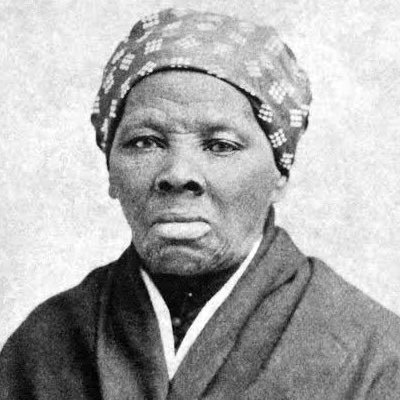
Buck Colbert Franklin was a Black lawyer who survived the 1921 Tulsa race riots and fought won in the court on the behalf of other survivors.

Cornelia Dlabaja retweeted

The numbers keep getting progressively worse for Drumpf. Here are his updated state-by-state net-approval ratings. They're bigly bad. Make sure to spread them far and wide. He'd hate that.
Idaho: +28.0%
Wyoming: +21.9%
West Virginia: +16.4%
North Dakota: +9.7%
Tennessee: +5.1%
Montana: +3.8%
Alabama: +3.0%
Oklahoma: +3.0%
Arkansas: +2.4%
Utah: +1.5%
Louisiana: -1.6%
South Dakota: -1.9%
Mississippi: -3.0%
Nebraska: -3.5%
Kentucky: -3.6%
Missouri: -4.9%
Florida: -6.7%
Kansas: -7.7%
Alaska: -8.8%
South Carolina: -9.2%
Iowa: -10.9%
Indiana: -11.1%
North Carolina: -11.9%
Ohio: -13.1%
Arizona: -14.1%
Virginia: -16.1%
Nevada: -16.4%
Michigan: -16.7%
Texas: -16.7%
Georgia: -17.9%
New Hampshire: -18.2%
Wisconsin: -18.8%
Pennsylvania: -19.4%
Minnesota: -21.3%
New Jersey: -22.3%
Maine: -23.0%
Delaware: -23.4%
New York: -25.9%
Colorado: -26.4%
California: -27.0%
Oregon: -29.4%
Massachusetts: -30.2%
New Mexico: -31.2%
Rhode Island: -32.6%
Connecticut: -33.4%
Illinois: -34.1%
Washington: -35.2%
Hawaii: -37.8%
Maryland: -38.1%
Vermont: -42.0%
Washington, D.C.: -77.7%
economist.com/interactive/tr…

