






Greblad retweeted

YOUTUBE JUST BANNED SIMPLY BITCOIN
We bootstrapped this company off zero and we are a team of 15 that depends on YouTube for our livelihoods.
We strictly follow the community guidelines and believe this to be a mistake.
@YouTube @TeamYouTube

Greblad retweeted
JUST IN: $15 TRILLION BLACKROCK RELEASES NEW VIDEO EXPLAINING BITCOIN 👀


Use my referral code and get 500usd in bitcoin 👍🏻 SGQ-MJF-LS

Your idle dollars could be stacking sats every single day. ⚡
With Xapo Bank USD Savings, you hold dollars and earn interest paid daily in Bitcoin. New members get 4.6% p.a. (variable) on up to $100,000 for 90 days, then 4.1% (variable).
No lock-up. Deposit stablecoins and they auto-convert to USD. Your USD balance is protected up to £120k equivalent.
Offer for first-time members who pay their membership fee by 23 October 2026. Terms apply.
👉 bit.ly/47dpm5v

Greblad retweeted

Your idle dollars could be stacking sats every single day. ⚡
With Xapo Bank USD Savings, you hold dollars and earn interest paid daily in Bitcoin. New members get 4.6% p.a. (variable) on up to $100,000 for 90 days, then 4.1% (variable).
No lock-up. Deposit stablecoins and they auto-convert to USD. Your USD balance is protected up to £120k equivalent.
Offer for first-time members who pay their membership fee by 23 October 2026. Terms apply.
👉 bit.ly/47dpm5v
Greblad retweeted
‘The smart, rich, powerful people in the world have picked Bitcoin as the winner.’ - @saylor of @Strategy
The bear market, Bitcoin-backed credit, digital money, and what happens next. Michael Saylor’s full keynote from the @xapobankapp Summit in London, hosted by @kornelijalaura
Timestamps:
0:00 - Introduction
0:46 - Bitcoin below $60K: what Saylor sees that the market doesn’t
2:55 - Why Bitcoin has already won
3:06 - The Amazon and Apple lesson from 2010
4:36 - Getting Bitcoin to a billion people
5:50 - Five drawdowns in five years
6:56 - Strategy as a shock absorber for the market
12:27 - Bitcoin-backed credit explained
22:12 - What happens if Bitcoin falls to $20K?
29:57 - If you want to make money, make the money
31:15 - The Bank of England and 300 years of credit
34:29 - Banking’s most profitable business
36:24 - Where Xapo Bank fits in
42:29 - Headwinds, catalysts and the second half of 2026

Greblad retweeted

Dear Secretary Bessent @SecScottBessent,
My name is Everett Stern. In 2010 I was a compliance officer at @HSBC. From a back office in New Castle, Delaware, I watched billions of dollars move to drug cartels, sanctioned regimes, and terrorist organizations. The enemies of the United States. I documented it, I escalated it, and when the bank would not act, I took it to the @FBI, the @CIA, and eventually the @SECGov.
The result was a $1.92 billion settlement. At the time, it was one of the largest in American history. It was also about five weeks of the bank’s profit. Not one banker was charged. Not one went to prison.
I paid a different price. I lost my career, my savings, and my place in the industry I had trained for. I was blacklisted. Every door in American finance closed at once. I slept on a camping cot in a 300 square foot apartment because I could not afford a bed, and I waited tables at @PFChangs to eat. I tell you this not for sympathy, but so you understand that I know exactly what it costs to do the right thing in American finance, and exactly how little the system does in return.
I made that sacrifice because I believed it would change something.
Yesterday, your department fined @BankofAmerica $1.2 billion for failing to report more than $5 billion in suspicious transactions, some of it tied by your own findings to Chinese laundering networks, narcotics, and the southwest border, alongside 475 apparent sanctions violations touching Russia, Iran, and global terrorism. The bank admitted it willfully violated the Bank Secrecy Act.
Fourteen years after HSBC. A bank with “America” in its name. And once again, not one individual charged.
Secretary Bessent, I want to say plainly what I believe you already know. The fines are not working.
A fine is paid by shareholders, absorbed by the balance sheet, and forgotten by the next earnings call. Bank of America reported earnings this morning. Nobody who set the alert thresholds, nobody who decided the 2024 cease and desist could wait, nobody who chose the backlog over the law will lose a single thing they value. Their lives are untouched. That is the entire reason the behavior repeats.
This is money laundering. This is blood money. Money that reaches a cartel buys fentanyl that kills Americans. Money that reaches a terrorist organization buys the next attack. This country has fought a war on drugs and a war on terror for decades, at enormous cost in lives and treasure, and all the while we have allowed the financing to flow through institutions we charter and regulate. Cut off the money and we win. We have never seriously tried.
There is also a question of equal justice that I cannot let go.
Before I walked into the FBI building to report HSBC, I stopped in front of the Great Seal on the wall and read the words engraved beneath it: “Justice is the defense of our liberty.” I believed that. I still want to. But every day in this country, people go to prison for crimes that are nothing next to moving money for the people who want Americans dead. A suit, a title, and a corporate badge should not be a shield from the consequences that apply to everyone else. If a street dealer goes to prison for what he sells, the banker who moved the cartel’s money should be standing next to him.
I also want to raise something that is rarely said in these conversations. Why has no one inside Bank of America come forward the way I did? The answer is that everyone in American banking knows what happened to me, and to the whistleblowers who came after. The last person who spoke up is the only policy anyone believes. That is a culture problem, and it starts with leadership, in the banks and in the agencies that regulate them.
This is not a political issue. It has spanned administrations of both parties. It is a national security issue, and I am asking you to treat it as one.
Three things would change the math overnight.
Refer individuals for criminal prosecution. Not the analyst in the queue. The executives who set the thresholds and chose the risk. One banker in handcuffs would do more than every fine in Treasury’s history combined.
End “too big to jail.” An institution cannot be too big to fail and too big to jail at the same time. If it is the first, it must be held to a higher standard, not a lower one.
And if Bank of America will not act as America’s bank, review its charter. A national charter is a privilege granted on behalf of the American people. It should be conditioned on not moving money for the people trying to kill them.
Secretary Bessent, you said yesterday that these actions send a clear message that even the biggest institutions are not above the law. With respect, the institution was never the problem. The people inside it are above the law, and they know it. Until that changes, I will keep writing letters like this one, and the next bank will keep paying the next fine.
I gave up everything I had to stop this. I am asking you to use the power you have to finish it.
Respectfully,
Everett A. Stern
HSBC Whistleblower
Founder and Intelligence Director, Tactical Rabbit
Greblad retweeted
What do Asian Bitcoiners do after decades of holding? 👀
"Some of our members have been stacking since Bitcoin was $57.
If you’re holding for the long run- for yourself, your kids, your family - you shouldn’t have to sell to get value from it.
That’s the idea: utility for your BTC, without spending or selling it."
This is just a snippet. Watch the full conversation on what Asian Bitcoiners do next 👇
youtu.be/LBHdGE6YA18
Greblad retweeted

I was in the right place at the right time, and lived the right life experiences to fully ingest the Saylor pill in 2024.
MicroStrategy buying Bitcoin in 2020 was an act of capital allocation, and a bold one at that. It will always seem more obvious as time goes on and as Bitcoin adoption continues to proliferate, but at the time it was a profound statement on the rational way to act during the age of fiat debasement.
But before capital is misallocated, human attention is misallocated, and that is the fundamental experience that allowed the Bitcoin/MSTR combo to hit me like a ton of philosophical bricks.
I was lucky enough to find Bitcoin during the prior decade, but I was even luckier when I worked in an unglamorous industry, where an almost unfathomable number of human hours and attention are spent to eek out additional basis points of profit.
A corporation might spend thousands upon thousands of employee hours reducing unit costs by 15 basis points, negotiating supplier contracts and optimizing labor schedules, improving inventory turnover, etc...
And in addition to that, a company will take out $40 million of debt to finance the build out a brick-and-mortar store in knife fight of a market, knowing it can take 10-15 years just to get the store to print a green quarterly P&L, let alone paying off the debt and ending up at breakeven before two decades pass by.
I worked 100-hour weeks and sacrificed all my freedom in my early 20's. My schedule changed whenever the business demanded it.
And it's funny because eventually I started noticing something peculiar. During the input process to acquire the cash flow, every penny gets scrutinized.
Then the output process. Scrutinized? Hardly.
The resulting profits accumulate on the balance sheet, and remarkably little intellectual labor goes to asking what that capital should own, how its purchasing power should be preserved, or even what risks the company is assuming by doing nothing.
I spent my adult life fighting the entropy of the debasement age in a business that optimizes the production of capital while totally neglecting the stewardship of capital after it's produced.
And then I heard about a man who was borrowing billions in fiat at near 0% rates to buy Bitcoin.
Arguing against the mispriced risks everywhere honestly isn't even necessarily a matter of criticizing an investment decision.
The real issue at hand is that there are entire industries with a total absence of a serious decision-making process.
Consider a hypothetical company with $100 million in treasury assets. A 1% annual difference in risk-adjusted returns represents $1 million. That's potentially more consequential than hundreds of operational improvements that receive orders of magnitude more of management attention.
There is an underlying economic principle that is blatantly ignored by many in this world, that attention itself is a scarce form of capital, and companies often fail to allocate enough of it to deciding how financial capital should be allocated.
This creates two layers of potential inefficiency, because first you have the opportunity cost of an inferior capital decision...
...but then you have the opportunity cost of never investing the time and labor required to discover a superior decision.
And that second cost is particularly insidious because it doesn't appear in accounting reports. Unfortunately, nobody books an expense for a capital allocation thesis that was never investigated.
There is too much intellectual horsepower devoted to microscopic operational decisions. Corporations will spend a million dollars figuring out how to save a penny, then spend virtually nothing figuring out what to do with the dollars they saved.
Another interesting thing I've noticed is how corporations have extensive processes for auditing how employees spend money. But at the same time they often devote far less comparable analytical effort to examining how the money they retain should be held over time.
Holding dollars is an economic choice with assumptions about inflation, interest rates, liquidity, and opportunity cost.
But the greatest inefficiency is always made before an investing decision is made, which is the decision to treat capital stewardship as something that doesn't deserve serious intellectual attention.
I admired Saylor for being willing to question an assumption that thousands of corporations continue to treat as settled. And I don't expect every corporation to arrive as his same answer.
But I do expect the question to deserve the same rigor we devote to earning money in the first place.
The greatest waste of human labor is earning capital that nobody ever bothered to think seriously about preserving.
Greblad retweeted
'#Crypto' platforms keep getting hacked, and now #AI is finding the holes.
Here’s why we’re built differently!
An audience member asked what every crypto and #bitcoin holder should be asking: with AI now uncovering vulnerabilities, what’s actually protecting your money?
Our answer starts with how Xapo Bank is built: no single point of failure, by design.
Watch the full Security by Design session on YouTube for the deep dive.
youtu.be/h5TMwEbyrzM
Greblad retweeted

Another hot take by @marsspitsbarz 🔥

Mars (@marsspitsbarz) on @bitcointoday__ this morning:
Biggest industry Bitcoin created? Scams.
20 million shitcoins. DeFi lending. Exchange failures. Rehypothecation. The whole point of crypto, he says, is to rug you of your Bitcoin and the fact that bad actors will break the law to chase it is a bullish signal.
Greblad retweeted
Live in 1 hour.
International setup strategist Hessel Broekstra + @rkbaggs on banking when your life and work spans multiple countries.
Register here to watch: luma.com/by42ggmt


Greblad retweeted
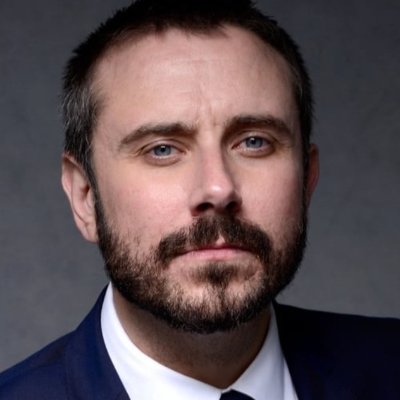
We just released a short film on our investigation into the U.S. bombing of the Minab school in Iran in the opening hours of the war on February 28,2026.
The stories survivors, parents, first responders and others shared with us will forever haunt me.
youtu.be/9OmK0oeq5fc?si=UuIU…

Greblad retweeted
"You could be earning daily bitcoin tomorrow"
Got idle capital in a hot wallet, exchange or fiat? Put it to work in your Xapo account ahead of the bull run is what Head of Content @rkbaggs said on our latest webinar with @piotrbed
Full video here: youtu.be/cD3WtoHAqDM
𝘋𝘰𝘯’𝘵 𝘪𝘯𝘷𝘦𝘴𝘵 𝘶𝘯𝘭𝘦𝘴𝘴 𝘺𝘰𝘶’𝘳𝘦 𝘱𝘳𝘦𝘱𝘢𝘳𝘦𝘥 𝘵𝘰 𝘭𝘰𝘴𝘦 𝘢𝘭𝘭 𝘵𝘩𝘦 𝘮𝘰𝘯𝘦𝘺 𝘺𝘰𝘶 𝘪𝘯𝘷𝘦𝘴𝘵. 𝘛𝘩𝘪𝘴 𝘪𝘴 𝘢 𝘩𝘪𝘨𝘩-𝘳𝘪𝘴𝘬 𝘪𝘯𝘷𝘦𝘴𝘵𝘮𝘦𝘯𝘵 𝘢𝘯𝘥 𝘺𝘰𝘶 𝘴𝘩𝘰𝘶𝘭𝘥 𝘯𝘰𝘵 𝘦𝘹𝘱𝘦𝘤𝘵 𝘵𝘰 𝘣𝘦 𝘱𝘳𝘰𝘵𝘦𝘤𝘵𝘦𝘥 𝘪𝘧 𝘴𝘰𝘮𝘦𝘵𝘩𝘪𝘯𝘨 𝘨𝘰𝘦𝘴 𝘸𝘳𝘰𝘯𝘨.

Greblad retweeted

This child’s face haunted me since the first time I saw it. Muhammad’s fear and his murder by Israel cannot be forgotten.


Greblad retweeted
“the area of the school yard was completely covered in body parts of the children... my arms and legs went numb until I snapped out of it and started collecting the body parts of the martyrs—the children who were in pieces.”
dropsitenews.com/p/minab-sch…
