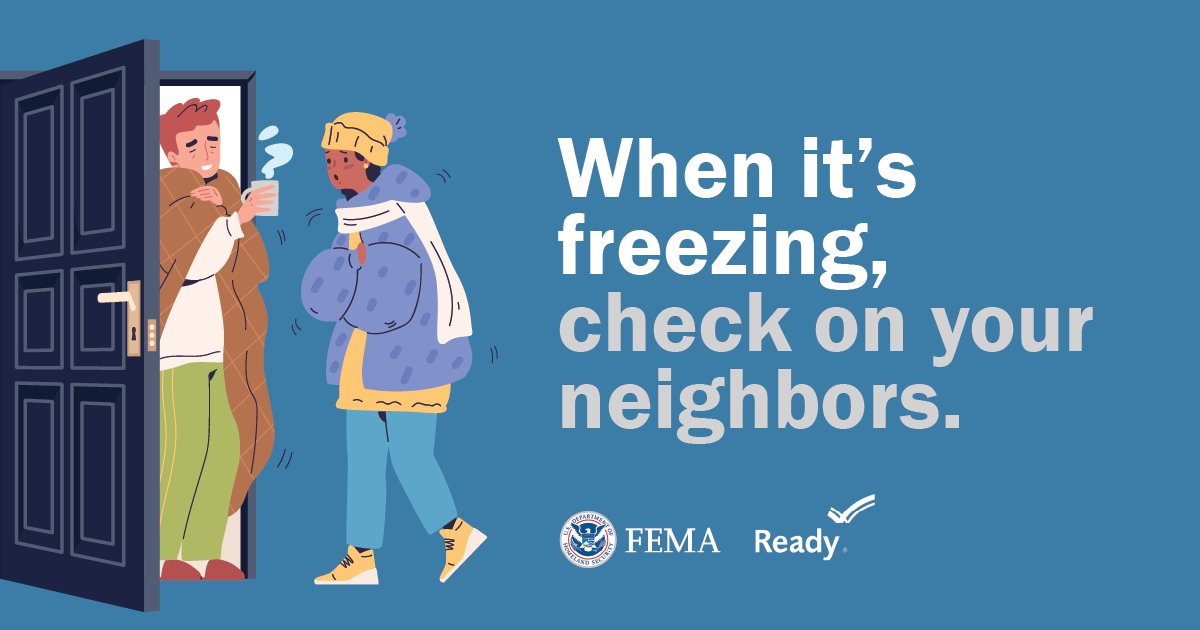
With frigid temperatures, power outages and limited travel in many areas, a quick check-in on your neighbors could be lifesaving. Read our blog for more tips on how to help others stay safe and warm: fema.gov/blog/5-ways-help-yo…
Heavy snow, freezing rain & cold temps are expected across many states this weekend, which could cause damage and widespread power outages. While forecasts may continue to shift, now is the time to prepare. Know what to do if you get a winter storm watch or warning in your area.

ALT Winter Storm Watch means be prepared. A Winter Storm Watch is issued when heavy snow, sleet, or freezing rain is possible. Be prepared to adjust travel plans in case a Warning is issued. Winter Storm Warning means take action! A Winter Storm Warning is issued when heavy snow, sleet, or freezing rain is expected. Travel will become dangerous. Delay or adjust travel plans until conditions improve.
CDC Environment retweeted
When power outages strike, staying connected is crucial. Check your phone for satellite messaging features to reach loved ones or emergency services. Keep devices charged and plan ahead to stay connected when it counts. 📱#EmergencyPreparedness #StayConnected #PowerOutage
CDC Environment retweeted
Be air aware!
Check the Air Quality Index (AQI) at bit.ly/3zUbtqB and adjust your outdoor activities to reduce your exposure to harmful air pollutants.
Air quality safety tips: bit.ly/4h9SQUP
CDC Environment retweeted
Protect others from the heat!
NEVER leave kids or pets in a parked car. Cars can quickly heat up to dangerous temperatures, even with a window cracked open.
More heat safety tips: bit.ly/44iUNtg
CDC Environment retweeted
Protect yourself and those you love when it's hot outside:
🆒Stay Cool
💧Stay Hydrated
🤒Know the Symptoms of Heat-related Illness
Hot days can affect anyone.
Follow these tips: bit.ly/3TwewAE
CDC Environment retweeted
Uninsured Georgia, Tennessee & North Carolina residents impacted by #Helene can replace a 30-day supply of certain prescription medications, durable medical equipment, and medical supplies through the Emergency Prescription Assistance Program. aspr.hhs.gov/newsroom/Pages/… (@FEMA)
CDC Environment retweeted
Natural disasters can make us feel anxious and overwhelmed. If you are pregnant or postpartum, the National Maternal Mental Health Hotline is available to you 24/7, and provides free, confidential support, resources & referrals. #YouAreNotAlone
CDC Environment retweeted
#Milton is an extremely dangerous, life-threatening storm. LEAVE NOW if you are in an evacuation zone; there will not be time to leave on Wednesday. Get help evacuating: floridadisaster.org/disaster…
11am EDT #Milton video update. We'll begin with storm surge.
A large area of destructive storm surge, with highest
inundations of 10 ft or greater, is expected along a portion of the west-central coast of the Florida Peninsula. If you are in the Storm Surge Warning area, this is an extremely life-threatening situation, and you should evacuate today if ordered by local officials. There will likely not be enough time to wait to leave on Wednesday.
CDC Environment retweeted
Don’t underestimate storm surge. If you live in a surge zone for #Milton, stay away from coastal areas and evacuate NOW if told to do so.
Remember: the water rises fast—don't wait. It could be a matter of life and death.
Storm Surge PSA: Debbie's Story
Storm surge is deadly. Prepare for hurricane season: know your risk, have a plan and be prepared.
CDC Environment retweeted
10/8: Evacuation FACT: Shelters are open in areas needing to evacuate for #Milton.
MYTH: You need to leave Florida to escape the storm.
Evacuate TODAY if you've been told to do so, are medically dependent on power or live in a home that can't withstand hurricane force winds.
CDC Environment retweeted
Join us for a thrilling October as CDC’s Tracking Program presents #TrackOrTreat! 🎃
Follow along as we share #publichealth frights and valuable data, tools, and resources from CDC’s Tracking Program. Stay safe and informed!
Learn more: bitl.ly/PublicHealthFrights
CDC Environment retweeted
If you or someone you know is struggling to cope emotionally with the effects of #HurricaneHelene, you're not alone. 💙 Call or text the @Distressline at 1-800-985-5990 for immediate, 24/7 emotional support. Help is just a call or text away. #Helene
CDC Environment retweeted
Many people are still without power & cellular service due to Hurricane #Helene.
Remember: your neighbors are your lifeline. Be sure to check on them during this difficult time - especially older adults & people who need life-sustaining medical equipment or assistance devices.
CDC Environment retweeted
Georgia: Homeowners & renters in 30 additional counties are now eligible for disaster assistance benefits due to the damages from #Helene.
3 ways to apply ⤵
💻 disasterassistance.gov
📲 fema.gov/app
📞 800-621-3362
Designated counties: fema.gov/disaster/4830/desig…
CDC Environment retweeted
Flood waters can be dangerous. Following #Helene, many areas in #WNC are still unsafe to return to. Check with local emergency management teams and officials to ensure it is safe.
Visit ncdps.gov/helene for resources and information.
📷 credit: @NCNationalGuard
CDC Environment retweeted
All roads in Western NC should be considered closed to all non-emergency travel.
_________________________________________
Todos los caminos y carreteras del oeste de NC deben considerarse como cerrados al tránsito vehicular ordinario.
📸 - Southeastern Buncombe County; South of N.C. 9
Scenes like this are common across Western NC today as crews are spread out for #HeleneNC cleanup and recovery.
All roads in Western NC should be considered closed to all non-emergency travel.
CDC Environment retweeted
Responding to natural disaster? You may be exposed to a great deal of heat stress. Heat can increase the risk of injuries in workers as it may result in sweaty palms, fogged-up safety glasses, and dizziness. Find tips to staying safe in the heat: bit.ly/4e5Xty1 #NIHHIS
CDC Environment retweeted
If #Helene left you without power in extreme heat, your local officials can help you find cooling options in your area. If it's safe to do so, you can also find locations in your community with air conditioning such as libraries or shopping malls.