Brisbane, Queensland
Joined March 2013
- Tweets80
- Following1K
- Followers330
- Likes263



Brodie Foster retweeted

Thrilled to see this work published @ScienceMagazine @peterkdearden @GrahamMcC_NZ @ludo_dutoit @TK_Dunedin @BrodieFoster @GracieKroos @Mei_Peng_Otago
Human-driven evolution of color in a stonefly mimic | Science science.org/doi/10.1126/scie…

Brodie Foster retweeted
An amazing case of 'cheating' in NZ #insects - where only some individuals of a harmless stonefly mimic the warning colours of an unrelated toxic (cyanide-producing) stonefly @Mol_Ecol @BrodieFoster @GrahamMcC_NZ
onlinelibrary.wiley.com/doi/…
otago.ac.nz/news/news/otago0…

Brodie Foster retweeted

In the world of #dataviz sometimes art meets science! 🖌👩🔬
We plotted parrot data in the ALA to celebrate #WorldParrotDay 🦜 using the dominant plumage shades for each genus 🌈 and created some accidental art in the process!
Watch out Monet 🎨 @accidental_aRt
#rstats #Rtistry

ALT map of Australia with multi-coloured data points
Brodie Foster retweeted

How do insects adapt to harsh alpine environments? In our new paper, we show how environmental conditions have driven rapid and repeated wing loss in an upland stonefly. doi.org/10.1093/isd/ixac027
@jon_waters_nz @MarsdenFund @ludo_dutoit @BrodieFoster


Brodie Foster retweeted

Amazing opportunity to join the CSIRO National Collections as a research scientist.
jobs.csiro.au/job/Cairns%2C-…

Brodie Foster retweeted

This is spectacular 🥹, a parasitoid flat wasp ovipositing in its host beetle larvae in 100 mio year old amber!
👇
fr.pensoft.net/article/82469…


Brodie Foster retweeted

The first paper from my PhD @MonashBiol with @StevenChown1 and Matt McGee is finally out! I explored the relationship between range size and speciation in honeyeaters, to see what we found (and for some pretty pictures) check out the paper here: bmcecolevol.biomedcentral.co…

Brodie Foster retweeted
Flight loss can drive insect diversification across very small spatial scales! Our new research on the recently discovered flightless Maungatua stonefly, published open access at Insect Systematics and Diversity: doi.org/10.1093/isd/ixac009
@jon_waters_nz @GracieKroos @MarsdenFund

Brodie Foster retweeted

An incredible feather mimic caterpillar from Ecuador
even taking steps back periodically to give the appearance of a dropped feather, moving in the breeze.
Filmed by Andreas Kay
Full video cutt.ly/0mDRb3l
Brodie Foster retweeted

Are you thinking about doing Honours next year? Why not move to the Northern Territory and do an amazing ecological research project with @RIELresearch. @CDUni is offering $3000 scholarships for students who relocate to the NT to do Honours. Message me for info on how to apply.

New paper from my Honours research looking at the diversity of Trichogramma egg parasitoids in Samoa and their potential for controlling a major pest of Brassica crops in the Asia-Pacific region:
doi.org/10.1016/j.biocontrol…

Brodie Foster retweeted
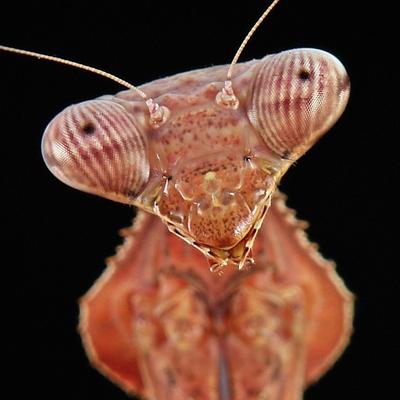
#Spider #Moth (Ambia instrumentalis, Musotiminae, Crambidae)
Members of a few Musotimine genera have wing markings strongly suggestive of spiders, presumably as an anti-predation strategy.
flic.kr/p/2m94wCb
#insect #China #Yunnan #entomology #Lepidoptera #itchydogimages

Brodie Foster retweeted
Derbid Planthopper (Rhotana sp., Rhotanini, Derbidae)
These tiny planthoppers are included in a complex of arthropods who, by virtue of their wing markings and postures, are believed to be mimicking jumping spiders (Salticidae).
flic.kr/p/2m98fkg
#insect #China #Yunnan

Brodie Foster retweeted

Check out my new blog on @Zoology_Otago @BrodieFoster amazing new research showing human-induced flight loss in an NZ insect as a result of prehistoric forest clearance sciblogs.co.nz/lost-worlds/2… @jon_waters_nz @GrahamMcC_NZ @otago @smcnz @sciblogsnz
Great article featuring our paper on flight loss in stoneflies by @vero_greenwood of the New York Times.
nytimes.com/2021/08/11/scien…

Our new paper on the rapid evolution of insect flight loss following widespread deforestation in New Zealand:
royalsocietypublishing.org/d…

Brodie Foster retweeted

Beautiful Pyrgomorph (Greyacris picta)
One of Australia's most incredible grasshoppers, it is found across the arid landscapes of central Australia.
The strong aposematic colouration warns potential predators they are distasteful and when startled reveal their small red wings!