Sanjay Manohar retweeted
🎉 Our paper is now published in @NatureComms
Excited to share this work with my co-first author @ArkadyKonovalov and all our co-authors.
🧠 Preserved higher-order mentalising during strategic interactions after medial prefrontal cortex damage
🔗 doi.org/10.1038/s41467-026-7…
(1/4)
Sanjay Manohar retweeted
Our latest Oxford Biology Primer by Sanjay Manohar @braininthemind is a concise introduction to best practices for coding that everyone who uses code in scientific research should know about.
Find out more: bit.ly/4p1B1vh
Sanjay Manohar retweeted
Why motor learning involves multiple systems: an algorithmic perspective biorxiv.org/content/10.64898… #biorxiv_neursci
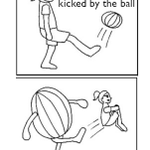
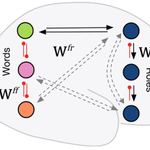
Human thought follows structural rules, independent of what we are thinking about. We separate form & content. E.g, a sentence follows a given syntax, independently of its topic. How can the brain separate content from structure? 🧵on our preprint biorxiv.org/content/10.1101/… 1/6
The model runs in continuous time, and can encode words presented at variable speed. The synaptic rules predict lexical and syntactic priming seen in humans. It can learn syntax by very slow plasticity at the same synapses. Both order and morpheme-based grammars work. 5/6
We're looking for a graduate research assistant for 2 years! Come work in my lab - cognitive neuroscience / computational neurology (🧠ndcn.ox.ac.uk/research/compu…), in Oxford, on motivation in Parkinson's disease. Patient-facing role. Apply now: my.corehr.com/pls/uoxrecruit…
Sanjay Manohar retweeted
Learn to code smarter, not harder!
Join Dr Sanjay Manohar (Oxford) @BrainInTheMind for an online training session:
📅 27 Nov 2025 | 🕑 2–5 pm, Online
Clean, reusable, efficient code in Python, MATLAB & R.
bna.org.uk/events/ems-event-…
#Neuroscience #Coding #ResearchSkills #Python – at Seaford, England
Sanjay Manohar retweeted
Probably the coolest use of sin and cos functions you have ever seen!
a=(y,d=mag(k=(y<5?6+sin(y^1)*6:4+cos(y))*cos(i+t/4),e=y/3-13)+sin(e/4-t)/3)=>point((q=y*k/5*(2+sin(d*2+y-t*4)))+90*cos(c=d/3-t/2+i%2)+200,q*sin(c)+d*29-170)
t=0,draw=$=>{t||createCanvas(w=400,w);background(9).stroke(w,96);for(t+=PI/90,i=1e4;i--;)a(i/790)}//#つぶやきProcessing
Sanjay Manohar retweeted
Nature Neuroscience
Large-scale cortical functional networks are organized in structured cycles
nature.com/articles/s41593-0…
Sanjay Manohar retweeted
In this short letter we explain why binding problems occur in the brain and why deep neural networks need to cope with them. We respond to Scholte and de Haan (TICS 2025), who previously claimed the opposite. authors.elsevier.com/a/1ljgr…
Sanjay Manohar retweeted
Neural evidence for modality-independent storage in working memory
cell.com/current-biology/abs…
#neuroscience
Sanjay Manohar retweeted
Hirschbichler et al. find that DBS-induced VTA inhibition does not impair reinforcement learning, but does lead to more strategic betting behaviour. They propose that the VTA may help sustain reward-driven behaviours over time. tinyurl.com/ywym2u7d
So great to see high quality behavioural modelling together with population decoding!
How do animals learn new rules? By systematically testing diff. behavioral strategies, guided by selective attn. to rule-relevant cues: rdcu.be/etlRV
Akin to in-context learning in AI, strategy selection depends on the animals' "training set" (prior experience).
Sanjay Manohar retweeted
Replying to @UKRI_News
@UKRI_News - a new MRC Centre of Research Excellence in Restorative Neural Dynamics🎉🏆🚀
National flagship aiming to transform medical device-based treatments for brain conditions. #neurotechnology
@UniofOxford @cardiffuni @GreatOrmondSt @imperialcollege @UniofNewcastle @The_MRC
Diagnosing Parkinson’s disease is hard because of the many variants, with different underlying causes. We found that cognitive and psychiatric profiles may help doctors distinguish them.
academic.oup.com/brain/advan…
![Diagnosing Parkinson’s disease is hard because of the many variants, which may have different underlying causes. Currently, arbitrary clinical criteria are used to label patitents. Harnessing two large cohorts of patients from across the UK (total N=1138), we found that patients with different labels also had different patterns on cognitive and psychiatric measures (Hu et al., Brain 2025). This helps clinicians establish diagnoses more firmly, but also use more fine-grained phenotyping that acknowledges the blurred edges between these disorders. [classifier weights also available!].](https://pbs.twimg.com/media/Gtwh65rXEAAccOI.jpg?name=small&format=webp)
ALT Diagnosing Parkinson’s disease is hard because of the many variants, which may have different underlying causes. Currently, arbitrary clinical criteria are used to label patitents. Harnessing two large cohorts of patients from across the UK (total N=1138), we found that patients with different labels also had different patterns on cognitive and psychiatric measures (Hu et al., Brain 2025). This helps clinicians establish diagnoses more firmly, but also use more fine-grained phenotyping that acknowledges the blurred edges between these disorders. [classifier weights also available!].
Currently, consensus clinical criteria are used to label patients. Harnessing two large cohorts of patients from across the UK (total N=1138), we found that patients with different labels also had different patterns on cognitive and psychiatric measures.
This helps clinicians establish diagnoses more firmly, but also use more fine-grained phenotyping that acknowledges the blurred edges between these disorders. Classifier weights also available! sgmanohar.github.io/applets/…