

Provides ADA, 508 & WCAG compliant materials for your customers who are blind or visually impaired. Braille, Large Print, Audio & Accessible PDF Services.
- Tweets10.6K
- Following2.1K
- Followers6.2K
- Likes7.8K






ALT What does Section 504 mean for you? Access to education, employment, services, and information. A stack of books with dark glasses, graduation cap, and globe. Braille Works an Allyant Company logo.


ALT Accessible healthcare starts with accessible information. Request the format that works best for you. Accessible PDF, large print, braille and audio icons. Various printed healthcare documents like Evidence of Coverage and Summary of Benefits. Braille Works an Allyant company logo.


ALT AI is another tool in the accessibility toolbox. It’s a useful option, but not a replacement for accessible information. Open briefcase with Meta glasses, braille, large print, smartphone, headphones, and tablet with an accessible PDF. Braille Works logo.


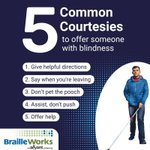
ALT 5 Common Courtesies to offer someone with blindness. 1. Give helpful directions. 2. Say when you're leaving. 3. Don't pet the pooch. 4. Assist, don't push. 5. Offer help. Man with blindness walking with his white cane. Braille Works logo.


ALT October is Blindness Awareness Month, with "Blindness Awareness Month" also written in uncontracted UEB. Stick figure walking with a white cane. Quote from Helen Keller, "Better to be blind and see with your heart, than to have two good eyes and see nothing." Braille Works logo.


ALT What is UEB, and why does it matter? A more consistent code for English braille, from books to email addresses. Hands reading a braille document at a desk with a laptop nearby. Braille Works logo.


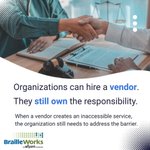
ALT Organizations can hire a vendor. They still own the responsibility. When a vendor creates an inaccessible service, the organization still needs to address the barrier. Shaking hands over a desk with a contract. Braille Works logo.


ALT Braille Works 2027 Calendar cover featuring a lake surrounded by mountains. Our 2027 Braille and Large Print Calendar in here! Quantities are limited. Braille Works logo.


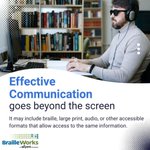
ALT Effective Communication goes beyond the screen. It may include braille, large print, audio, or other accessible formats that allow access to the same information. Man with blindness listening to a screen reader while reading along in braille. Braille Works logo.


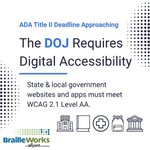
ALT ADA Title II Deadline Approaching. The DOJ Requires Digital Accessibility. State & local government websites and apps must meet WCAG 2.1 Level AA. Public entity icons. Braille Works logo.
