

Open source C++ libraries: algorithms, data structures, concurrency, networking & more. Peer-reviewed, portable, battle-tested since 1998. https://xitter.cf/t.co/MhBwwXNH58
Global C++ Community
Joined March 2017
- Tweets894
- Following218
- Followers4.1K
- Likes497


Pinned Tweet
Level up your C++ skills!
Sharpen your code with the latest from the Boost Libraries, powerful, peer-reviewed, and production-ready
New in Boost:
Bloom – High-performance Bloom filters → boost.org/libs/bloom
Hash2 – Modern, flexible hashing library → boost.org/libs/hash2
MQTT5 – Next-gen MQTT protocol support → boost.org/libs/mqtt5
Explore all Boost libraries → boost.org/libs

Concurrency bugs are more than a performance problem when you're building financial systems.
Under bursty workloads, timing-sensitive issues can threaten the correctness and reliability of an application — precisely when the system is under the most pressure.
Writing concurrent code means thinking beyond the happy path.
Explore the short: youtube.com/shorts/GT7CTYs5w…
#CPlusPlus #SoftwareReliability #Concurrency #Finance

collide(asteroid, ship) needs to know what both objects really are at runtime
C++ virtual functions only check one. Julia and Common Lisp check all of them. Stroustrup co-wrote a 2007 proposal to bring this to C++ but it never got in 🧵👇
Boost Blueprint 141: Boost.OpenMethod
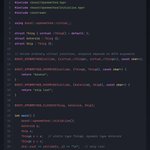
BOOST_OPENMETHOD lets you write a free function that acts virtual in as many arguments as you want. It checks the real type of every argument and calls the most specific match. A version written for the base class handles everything else
Methods live outside your classes. So you can add new behavior to a class hierarchy you don’t own, with no visitor and no changes to its code
Each call is a table lookup that takes constant time, just like a virtual call
Level up your C++ architecture. Follow @Boost_Libraries for the #BoostBlueprint series
#cpp


One function. Two references. One subtle C++ bug.
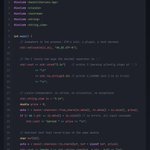
Passing a vector and a reference to one of its elements into the same function creates an aliasing hazard. If push_back() reallocates the vector, that element reference can become dangling.
The lesson? Always think about how your references interact with container operations.
▶️ youtube.com/shorts/44MybSZ5m…
#Cpp #Aliasing #MemorySafety #SoftwareDevelopment

Still writing C++ like it's 1998? It might be time for an upgrade. 🚀
The language has evolved, and so should the way we write it. Instead of manually managing every step, modern techniques let you express transformations more directly and make code easier to read and maintain.
Less boilerplate. More intent.
▶️ youtube.com/shorts/A2OZunuoS…
#CppProgramming #ModernCpp #CppCon #DeveloperTips

A std::vector can make your code look clean and modern — but references to its elements still have rules you need to understand.
If an operation reallocates the vector's storage, existing references and pointers to its elements can become invalid.
Small details like this can turn into serious bugs.
Watch the short: youtube.com/shorts/pXjAepGqX…
#CPlusPlus #STL #Cpp #Debugging

💡 Stop telling the compiler how to do something. Start expressing what you want.
Modern C++ lets you move beyond manual loops, iterators, and boilerplate mechanics toward clearer, more expressive code. Get the map, filter the values, collect the results. Focus on intent—not plumbing.
See how modern C++ changes the way we think about code.
▶️ youtube.com/shorts/A2OZunuoS…
#Cpp #ModernCpp #CleanCode #SoftwareEngineering
std::hash<std::string>{}("hello") can produce different numbers on libstdc++, libc++ and MSVC. That’s allowed
More surprising: the standard doesn’t promise the same hash across runs of the same program. Persist it to disk or send it over the wire and you’ve shipped a bug 🧵👇
Boost Blueprint 140: Boost.Hash2
The interface was proposed to the C++ committee in N3980, “Types Don’t Know #.” Boost shipped it
Hash2 separates what you hash from how you hash it. Pick a specified algorithm (xxhash, FNV-1a, SipHash, SHA-2 and more) and feed it any type with hash_append
Use fixed-width integer types with a fixed byte order flavor and the same struct produces the same hash on every compiler, OS and CPU. Safe for cache keys, content addressing and on-disk indexes
SipHash with a random key adds hash flooding resistance, which std::hash never promised
Level up your C++ architecture. Follow @Boost_Libraries for the #BoostBlueprint series
#cpp

There's a lot of clever thinking behind something as familiar as:
std::sort(...)
Joaquín M. López explains how iterator concepts let algorithms express their requirements—and why the whole system is so powerful.
From Using std::cpp 2026 🎥 youtube.com/shorts/2Yh6uvwzV…
#CPP #Coding #Programming

One of the best things about Compiler Explorer? You can try the code immediately.
Read about a C++ feature in documentation → open a link → experiment → inspect the compiler output.
That tight feedback loop makes learning, prototyping, and design discussions dramatically easier.
🚀 youtube.com/shorts/hdqb-GdoC…
#CPP #CPlusPlus #CompilerExplorer #DeveloperTools

C++ algorithms don't always need to know what they're operating on.
An algorithm can work through iterators or views that alias data inside a container, allowing the same abstraction to work across different container types.
That's a powerful design pattern — but it also makes reasoning about ownership, lifetimes, and mutations more challenging.
Watch the short: youtube.com/shorts/28rP0EBV0…
#CPlusPlus #STL #Programming #Cpp

You don't have unlimited resources. Your system design needs to reflect that.
Bounded queues help prevent incoming work from growing without limit. Under pressure, a well-designed system can prioritize critical messages and shed work that can safely be deferred or discarded.
Plan for the worst case — not just normal operation.
youtube.com/shorts/gqYBOHK0c…
#SystemDesign #DistributedSystems #SoftwareEngineering #Reliability

Ever had a C++ bug that made you question code that looked completely correct? 🤔
std::vector is powerful, but its behavior around reallocation can catch even experienced developers off guard. The danger isn't always obvious from the function itself.
Learn how aliasing and invalidated references can turn a simple push_back() into a problem.
▶️ youtube.com/shorts/44MybSZ5m…
#CppProgramming #STL #Debugging #ModernCpp
Local CPU tasks. Remote work over the network. GPU kernels.
These are very different kinds of operations — but HPX lets developers coordinate them through a uniform asynchronous execution engine.
That consistency can make complicated parallel applications much easier to build and optimize.
Explore the short: youtube.com/shorts/_reGc43jh…
#CPlusPlus #HPX #GPUComputing #Concurrency

C++ code can look perfectly reasonable and still hide a dangerous bug. ⚠️
When you pass a reference to an element of a std::vector and then call push_back(), a reallocation can invalidate that reference. Suddenly, what looked safe becomes undefined behavior.
Watch the short to see how a simple function can create a dangling reference.
▶️ youtube.com/shorts/44MybSZ5m…
#Cpp #ModernCpp #SoftwareEngineering #MemorySafety
What does an impossible chessboard puzzle have to do with C++?
More than you might think. ♟️
This short from Joaquín M. López's Using std::cpp 2026 talk shows how mathematical models and invariants can provide powerful ways to reason about problems.
🎥youtube.com/shorts/5i2fekZad…
#CPP #ModernCpp #Programming
