

10x Engineer @NethermindEth || AWS Community Builder ||Ex Microsoft Intern ||Google Scholar👨🏾💻.. Believer! Lead @logosgeneration || Building @usefiilar 🛠️
Lagos, Nigeria
Joined October 2020
- Tweets10.8K
- Following3K
- Followers4.9K
- Likes20.9K







Pinned Tweet
Alas! I said I was going to post a learning path to get STARTED as a DevOps/Cloud Engineer.
N.B: I'll keep populating this list as time goes
- DevOps & its implementation
aws.amazon.com/devops/what-i…
- Version Control & Programming language
youtube.com/playlist?list=PL…
1/...


Azure & AWS Boy👨🏾💻 (ScriptureToServer) retweeted

Sunset postcards from Zanzibar 🇹🇿
📍Views from my room | Assalam Ecovillage
#boschalumninetwork #zanzibar – at Zanzibar South and Central, Tanzania


People don’t understand how insane this is! 😳

Introducing Griffin, the first model to pass the video Turing test.
48% of people who talked to it live thought it was a real human. Previous systems have had a pass rate <3%. It is #1 on NVIDIA's benchmark for full-duplex AI video.
It’s the first Human Interaction Model (HIM).
Readers added context they thought people might want to know
The 48% figure and "video Turing test" claim are from Tavus's own study of 54 one-minute calls, not independently verified or using a standard protocol. Griffin-Lite leads NVIDIA's VideoFDB benchmark on their public leaderboard.
cellcog.ai/blog/tavus-gri…
research.nvidia.com/labs/amri/proj…
tech-ish.com/2026/10/02/tav…
Heaven is not for good people and Hell for bad people.
Heaven is for those who believe in Jesus, and Hell for those who reject! 🧏🏾♂️

Day 3/365 —After Learning GPU architechture, The “Okay, So What?” Problem 😂
Yesterday I finished my deep dive into GPU architecture.
I understood the GPCs.
--> TPCs.
--> SMs.
--> CUDA Cores.
--> Tensor Cores.
--> HBM.
--> Memory bandwidth.
I was feeling pretty good.
Then one question hit me:
“Okay… so how does an actual AI workload use all of this?”
And I realized I had no idea. 😂
So instead of randomly jumping into CUDA tutorials, I spent yesterday mapping out where to go next.
That led me into AI Performance Engineering.
And then I stumbled into DeepSeek.
This is where things got VERY interesting.
DeepSeek had hardware constraints compared with the newest NVIDIA systems because of export restrictions.
So the problem became:
How do you squeeze more performance out of the hardware you can actually access?
One of the answers was going deeper into the software stack.
Custom GPU kernels.
Think about that for a second.
Instead of simply using existing optimized operations, engineers can write highly specialized code that tells the GPU exactly how a particular computation should be executed.
That's insane. 🤯
Then there was model distillation — training smaller models to reproduce capabilities learned from larger teacher models.
And this started changing how I think about AI infrastructure.
AI performance isn't just:
“Buy more GPUs.”
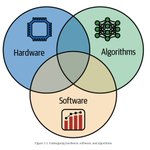
It's an optimization problem across:
Hardware + Algorithms + Software
And that led me into the world of AI Performance Engineering.
Things like:
→ Benchmarking
→ Profiling
→ Debugging
→ Optimization
→ Scaling
→ Resource management
You measure things like:
Latency. Throughput. Memory usage. GPU utilization.
Then you find the bottleneck.
Then you optimize it.
Tools I'm starting to encounter:
• NVIDIA Nsight Systems
• NVIDIA Nsight Compute
• PyTorch Profiler
• Transformer Engine
• NCCL
There's a BIG difference between:
“I can run something on 8 GPUs.”
and
“I can scale this to thousands of GPUs without the whole thing becoming a very expensive space heater.” 😂
That's the rabbit hole I'm entering now:
Distributed training + inference + GPU communication.
Day 3 complete.
And apparently, learning what's inside the GPU was just the beginning. 😂
#GPU #AIInfrastructure #CUDA #NVIDIA #MLOps #PerformanceEngineering #DevOps #LearningInPublic

Day 2/365 — I went inside the GPU today.
And honestly… I think I may have opened a door I wasn't supposed to open. 😂, I entered into so many rabbit holes yesterday and I actually enjoyed it. (Y'all are missing 😉)
Yesterday was about understanding why GPUs exist.
Today, I wanted to understand:
“Okay, but what is actually inside this thing?”
And that's where GPU architecture gets crazy.
Think of an NVIDIA GPU like a massive company.
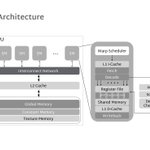
At the top, you have Graphics Processing Clusters (GPCs).
Inside the GPCs, you have Texture Processing Clusters (TPCs).
And inside the TPCs?
Streaming Multiprocessors (SMs).
The SM is basically a self-contained workshop where the actual computation happens.
And inside this workshop, things get even more interesting:
• CUDA Cores
• Tensor Cores
• RT Cores
• Warp Schedulers
• Registers
• Shared Memory / L1 Cache
• Texture units and other supporting hardware
So I started thinking:
CUDA Cores = the regular workers.
Tensor Cores = the specialists.
RT Cores = the guys doing one very specific job.
😂
CUDA Cores handle general-purpose arithmetic operations.
Tensor Cores are specialized for matrix operations — which is VERY important for AI workloads.
And RT Cores are specialized for ray tracing — calculating things like how light interacts with objects in 3D scenes.
Then I got stuck on Tensor Cores.
Because this is where things start getting REALLY interesting for AI.
Neural networks are basically drowning in matrix multiplication.
And NVIDIA has spent multiple GPU generations making Tensor Cores increasingly specialized for these workloads.
Volta → Turing → Ampere → Hopper → Blackwell → Rubin.
And Rubin is where my brain started buffering. 😂
NVIDIA's Rubin GPU has:
336 billion transistors. 🤯
224 Streaming Multiprocessors. 🤯
896 Tensor Cores. 🤯
288GB of HBM4. 🤯
And up to 22 TB/s of memory bandwidth. 🤯
TERABYTES/Per second. (I don't think y'all are clocking how insane this is!!!)
At this point I stopped studying and started staring at the numbers.
😂
But here's the part I found even more interesting:
Compute is useless if you can't feed the compute fast enough.
You can have incredibly powerful Tensor Cores sitting there ready to work…
…but if the data isn't arriving quickly enough, your expensive compute resources can sit around waiting.
This is why memory architecture matters so much.
Rubin combines its compute with high-bandwidth HBM4, and NVIDIA says the GPU can have up to 288GB of HBM4 delivering up to 22 TB/s of bandwidth.
And then there's TMA — Tensor Memory Accelerator.
TMA isn't new to Rubin; it was introduced with Hopper.
Its job is to make moving multidimensional blocks of data between global memory and shared memory more efficient, while taking some of that data-movement/address-calculation work away from the SM's normal instruction pipeline.
So my mental model today became:
GPU architecture isn't just about having more compute.
It's about:
Compute + Memory + Data Movement + Scheduling
All working together.
And I'm beginning to understand why AI infrastructure is so much more than:
“Just give me a GPU.”😂
Day 2 complete.
Tomorrow, I'm going deeper into Tensor Cores.
Because apparently I enjoy suffering.
#GPU #AIInfrastructure #CUDA #NVIDIA #MLOps #DevOps #LearningInPublic

This is why you should follow me and follow my learning journey on GPU and AI Infrastructure engineering …
There’s going to be a huge demand really soon… and only ready ones will win.
Don’t say I didn’t tell you oo 🧏🏾♂️
Should I do a weekly summary of things I learn, YouTube links, books and all?

BREAKING: Anthropic is reportedly planning to spend $518,000,000,000.00 on cloud and infrastructure in the coming years.
Day 2/365 — I went inside the GPU today.
And honestly… I think I may have opened a door I wasn't supposed to open. 😂, I entered into so many rabbit holes yesterday and I actually enjoyed it. (Y'all are missing 😉)
Yesterday was about understanding why GPUs exist.
Today, I wanted to understand:
“Okay, but what is actually inside this thing?”
And that's where GPU architecture gets crazy.
Think of an NVIDIA GPU like a massive company.
At the top, you have Graphics Processing Clusters (GPCs).
Inside the GPCs, you have Texture Processing Clusters (TPCs).
And inside the TPCs?
Streaming Multiprocessors (SMs).
The SM is basically a self-contained workshop where the actual computation happens.
And inside this workshop, things get even more interesting:
• CUDA Cores
• Tensor Cores
• RT Cores
• Warp Schedulers
• Registers
• Shared Memory / L1 Cache
• Texture units and other supporting hardware
So I started thinking:
CUDA Cores = the regular workers.
Tensor Cores = the specialists.
RT Cores = the guys doing one very specific job.
😂
CUDA Cores handle general-purpose arithmetic operations.
Tensor Cores are specialized for matrix operations — which is VERY important for AI workloads.
And RT Cores are specialized for ray tracing — calculating things like how light interacts with objects in 3D scenes.
Then I got stuck on Tensor Cores.
Because this is where things start getting REALLY interesting for AI.
Neural networks are basically drowning in matrix multiplication.
And NVIDIA has spent multiple GPU generations making Tensor Cores increasingly specialized for these workloads.
Volta → Turing → Ampere → Hopper → Blackwell → Rubin.
And Rubin is where my brain started buffering. 😂
NVIDIA's Rubin GPU has:
336 billion transistors. 🤯
224 Streaming Multiprocessors. 🤯
896 Tensor Cores. 🤯
288GB of HBM4. 🤯
And up to 22 TB/s of memory bandwidth. 🤯
TERABYTES/Per second. (I don't think y'all are clocking how insane this is!!!)
At this point I stopped studying and started staring at the numbers.
😂
But here's the part I found even more interesting:
Compute is useless if you can't feed the compute fast enough.
You can have incredibly powerful Tensor Cores sitting there ready to work…
…but if the data isn't arriving quickly enough, your expensive compute resources can sit around waiting.
This is why memory architecture matters so much.
Rubin combines its compute with high-bandwidth HBM4, and NVIDIA says the GPU can have up to 288GB of HBM4 delivering up to 22 TB/s of bandwidth.
And then there's TMA — Tensor Memory Accelerator.
TMA isn't new to Rubin; it was introduced with Hopper.
Its job is to make moving multidimensional blocks of data between global memory and shared memory more efficient, while taking some of that data-movement/address-calculation work away from the SM's normal instruction pipeline.
So my mental model today became:
GPU architecture isn't just about having more compute.
It's about:
Compute + Memory + Data Movement + Scheduling
All working together.
And I'm beginning to understand why AI infrastructure is so much more than:
“Just give me a GPU.”😂
Day 2 complete.
Tomorrow, I'm going deeper into Tensor Cores.
Because apparently I enjoy suffering.
#GPU #AIInfrastructure #CUDA #NVIDIA #MLOps #DevOps #LearningInPublic
Day 1/365 of learning GPU & AI Infrastructure (Let's see if I can be consistent enough to post for 1 year, y'all need to hold me accountable🥲)
For years, I’ve worked with CPUs, Servers. Kubernetes. Containers. Databases. Networking. Cloud infrastructure.
Today was less about GPUs themselves and more about understanding why GPUs became necessary in the first place.
I started with something fundamental:
How do we increase the processing power of a chip?
One approach was increasing the number of processor cores.
As the industry moved from single-core to multi-core processors, we were able to execute more tasks concurrently.
But then something bigger happened:
Parallelism became increasingly important.
The semiconductor industry began moving toward two broad directions:
→ Multi-core processors
→ Many-core processors
And this is where GPUs became particularly interesting.
The gaming industry became one of the biggest forces pushing GPU development.
Graphics workloads require enormous amounts of computation to happen simultaneously.
Rendering millions of pixels, processing textures, lighting, physics, and other visual operations created a demand for massive parallel processing.
And eventually, the same characteristics that made GPUs powerful for graphics became incredibly useful for another field:
AI and scientific computing.
But one thing I found particularly interesting:
The rise of GPUs did NOT mean the death of CPUs.
Instead, CPUs and GPUs became complementary.
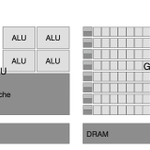
The CPU is generally better suited for sequential, general-purpose tasks and coordinating workloads.
The GPU excels when a problem can be broken down into huge numbers of operations that can run in parallel.
So rather than:
CPU vs GPU
the more interesting architecture is:
CPU + GPU
And this combination eventually led to another major development:
CUDA — Compute Unified Device Architecture.
NVIDIA introduced CUDA as a platform/programming model that enables CPU and GPU execution to work together, making it possible to leverage GPU acceleration for workloads beyond traditional graphics.
I also started getting familiar with some terminology that I'll be seeing A LOT during this journey:
• CPU
• GPU
• Streaming Multiprocessor (SM)
• CUDA Core
• Tensor Core
• VRAM
• HBM
• Memory Bandwidth
• PCIe
I also came across some of the factors that matter when evaluating processors, including:
→ Performance
→ Marketplace presence
→ Accessibility
→ Support for IEEE floating-point standards
What I'm realizing already is that learning AI infrastructure isn't just about learning how to deploy an AI model.
There is an entire hardware and software stack underneath it.
And I want to understand that stack.
Day 1 complete.
we go deeper. 🚀
#GPU #AIInfrastructure #CUDA #NVIDIA #MLOps #DevOps #Cloud #LearningInPublic

Azure & AWS Boy👨🏾💻 (ScriptureToServer) retweeted

I’m starting a new 12-month learning journey: GPUs + AI Infrastructure.
For years I have been involved in deploying apps to kubernetes, building cicd pipelines, managing infra with terraform, setting up monitoring with prometheus and grafana and many other toolings that support my daily operations as a DevOps.
Now it's time to move into GPUs infra and I will be learning in public starting today!
Inspired by @BobTechies
Drop a comment or follow along if you are also interested in learning this space! 🤝
#BuildInPublic #AIInfra #DevOps #GPU #MLOps #Cloud #Kubernetes


Day 1/365 of learning GPU & AI Infrastructure (Let's see if I can be consistent enough to post for 1 year, y'all need to hold me accountable🥲)
For years, I’ve worked with CPUs, Servers. Kubernetes. Containers. Databases. Networking. Cloud infrastructure.
Today was less about GPUs themselves and more about understanding why GPUs became necessary in the first place.
I started with something fundamental:
How do we increase the processing power of a chip?
One approach was increasing the number of processor cores.
As the industry moved from single-core to multi-core processors, we were able to execute more tasks concurrently.
But then something bigger happened:
Parallelism became increasingly important.
The semiconductor industry began moving toward two broad directions:
→ Multi-core processors
→ Many-core processors
And this is where GPUs became particularly interesting.
The gaming industry became one of the biggest forces pushing GPU development.
Graphics workloads require enormous amounts of computation to happen simultaneously.
Rendering millions of pixels, processing textures, lighting, physics, and other visual operations created a demand for massive parallel processing.
And eventually, the same characteristics that made GPUs powerful for graphics became incredibly useful for another field:
AI and scientific computing.
But one thing I found particularly interesting:
The rise of GPUs did NOT mean the death of CPUs.
Instead, CPUs and GPUs became complementary.
The CPU is generally better suited for sequential, general-purpose tasks and coordinating workloads.
The GPU excels when a problem can be broken down into huge numbers of operations that can run in parallel.
So rather than:
CPU vs GPU
the more interesting architecture is:
CPU + GPU
And this combination eventually led to another major development:
CUDA — Compute Unified Device Architecture.
NVIDIA introduced CUDA as a platform/programming model that enables CPU and GPU execution to work together, making it possible to leverage GPU acceleration for workloads beyond traditional graphics.
I also started getting familiar with some terminology that I'll be seeing A LOT during this journey:
• CPU
• GPU
• Streaming Multiprocessor (SM)
• CUDA Core
• Tensor Core
• VRAM
• HBM
• Memory Bandwidth
• PCIe
I also came across some of the factors that matter when evaluating processors, including:
→ Performance
→ Marketplace presence
→ Accessibility
→ Support for IEEE floating-point standards
What I'm realizing already is that learning AI infrastructure isn't just about learning how to deploy an AI model.
There is an entire hardware and software stack underneath it.
And I want to understand that stack.
Day 1 complete.
we go deeper. 🚀
#GPU #AIInfrastructure #CUDA #NVIDIA #MLOps #DevOps #Cloud #LearningInPublic
I’m starting a new 12-month learning journey:
GPUs + AI Infrastructure.
I’ve spent years building and operating cloud infrastructure, Kubernetes platforms, CI/CD pipelines, and production systems.
Now I want to understand the infrastructure underneath modern AI — from GPU architecture and CUDA to distributed training, inference, Kubernetes GPU orchestration, optimization and AI platforms.
For the next 12 months, I’ll be learning in public.
I’ll share:
• What I’m learning
• Labs & experiments
• Architecture decisions
• Things that broke
• Cost/performance lessons
• Projects I build
• Resources that actually helped
No pretending to be an expert.
Just 12 months of consistent learning and building.
If you’re interested in GPUs, AI infrastructure, ML platforms, cloud, Kubernetes or just learning something difficult alongside others:
Join me.
Day 1 starts now. 🚀
#GPU #AIInfrastructure #MLOps #DevOps #Kubernetes #Cloud
Azure & AWS Boy👨🏾💻 (ScriptureToServer) retweeted

Hmm, we can all agree that this age and time seems to come with a lot of pressure😑
People younger than you are achieving bigger things
People older than you are making scary decisions and now you’re stuck with “what do I do right now?”
#logosgeneration #physicalmeeting
Retweet this… need a Senior Security engineer asap!
If you’re a very senior level Cyber security/Security engineer to spearhead a team for $1500.
Familiar with
- Linux
- Kubernetes/OpenShift
- Terraform
- Cloud infrastructure
- AWS/Azure/GCP
- OpenStack
- Networking
- IAM
- Vault
- PKI
- CI/CD
- Infrastructure security
- Detection engineering
- Incident response
- SIEM/observability
- Python/Bash/PowerShell or similar automation
- Vulnerability management
GPU infrastructure
Send me a DM asap!!
Azure & AWS Boy👨🏾💻 (ScriptureToServer) retweeted
If you’re a very senior level Cyber security/Security engineer to spearhead a team for $1500.
Familiar with
- Linux
- Kubernetes/OpenShift
- Terraform
- Cloud infrastructure
- AWS/Azure/GCP
- OpenStack
- Networking
- IAM
- Vault
- PKI
- CI/CD
- Infrastructure security
- Detection engineering
- Incident response
- SIEM/observability
- Python/Bash/PowerShell or similar automation
- Vulnerability management
GPU infrastructure
Send me a DM asap!!
Azure & AWS Boy👨🏾💻 (ScriptureToServer) retweeted
We saw you…looking so at home in your father’s presence
Is this what peace looks like?🥹
#momentsfromphysicalmeeting #righteousnessandriches #youngbelieversinlagos


Can imagine… Patience is really a virtue.
You want to be “smart” by going through one way, now both lanes are blocked.
When you travel out and see how other people go about things,.. you’d understand that majority of the chaos we see is Nigeria is on the back of Impatience. That 1-2 seconds of patience.


Azure & AWS Boy👨🏾💻 (ScriptureToServer) retweeted

What I need is a job please.
It's only work that I use to not think.
Please if you have any Email marketing gigs or lifecycle marketing generally.
Please reach out to me.
My style is direct response, end goal -donations and impact, not just metrics.
Let me know if you'd
