





This will be a great opportunity to interact with the diverse group of technology developers, cognitive and health scientists all wanting to figure out how to measure brain activity in ecologically valid and everyday world settings. I hope to see many of you there.

First Neuroscience in the Everyday World Conference is coming! Aug 29th-30th in Boston. Already a great line up of speakers, more coming. If you are into wearable / naturalistic neuroimaging, learn more under
openfnirs.org/trainings-conf…
@BoasDavid @AphasiaLab @BU_NPC #fnirs #sfnirs

BU BME is searching for a tenure track assistant professor working at the intersection of neurotechnologies, data analytics, and cognitive neuroscience.
academicjobsonline.org/ajo/j…
Please spread the word.
David Boas retweeted

Many thanks to all @SfNIRS members who contributed to this initiative, especially my friend and co-lead @rob__luke!
We are hiring a post-doctoral fellow, maybe two, for helping us advance and utilize #fNIRS for measuring human brain function in ecologically validate settings. If you are interested, please apply
bu.edu/neurophotonics/2022/1…

David Boas retweeted

Do you want to be developing and applying the latest in neurophotonic technologies?
@BU_NPC is recruiting a neurophotonics research scientist and core manager. Apply now bu.edu/neurophotonics/2022/1…
Great work from PhD student Antonio Ortega-Martinez, turning lemons into lemonade, he was able to realize improved #fnirs brain activation with time domain moments by proper noise scaling
spiedigitallibrary.org/journ…
David Boas retweeted
Learning more about one of @BU_NPC's newest faculty, Jeffrey Demas, and his "path to the light side"
bu.edu/neurophotonics/2022/1…


Congratulations to @BU_NPC alum @avolu_neurotech for receiving the SfNIRS 2022 #fNIRS2022 Early Stage Investigator Award!
I am incredibly honored and humbled to have received the #SfNIRS Early Investigator Award at the #fNIRS2022 conference yesterday. Thank you, jury! I am looking forward to continue developing enabling tools for neuroscience in the everyday world using #fNIRS and #ML.

How awesome for fNIRS2022 to start with Joy Hirsch’s keynote showing fNIRS data that our brains activate more with in person face to face interactions (vs video). And we are all in person to see it!!
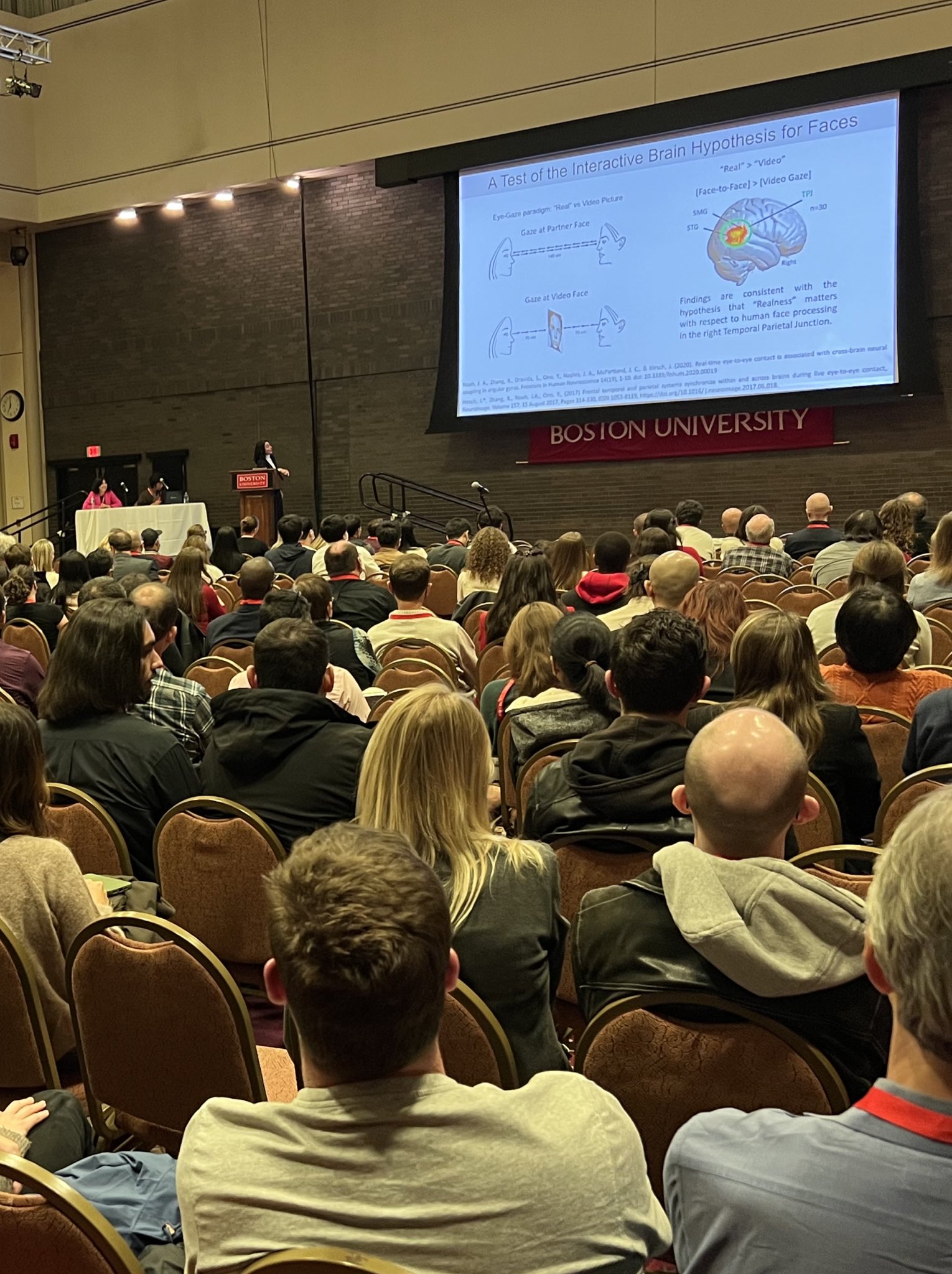
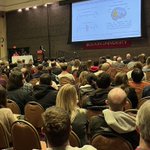
I can't believe the fNIRS 2020 conference in Boston at Boston University is finally happening in 2022! More than 400 fNIRS researchers are arriving this weekend. Thank you to our organizers Mari and Pepe!
This Post is from an account that no longer exists. Learn more
David Boas retweeted

Who submitted their song request for #fNIRS2022 already? 👀

#fNIRS2022 attendees: we need YOUR help!
Please send us your song requests 🎵 to be played during the social event! 🪩 💃🕺We are looking for happy, upbeat music that spans different cultures and age!
👉Check your email for the link to submit your song(s).
I am looking forward to watching this new Center advance important applications for #fnirs.

The BU Neurophotonics Center is excited to be working with the new BU Center for Brain Recovery Aims to Advance Treatments for Stroke, Alzheimer’s, and Parkinson’s bu.edu/articles/2022/new-bu-…

David Boas retweeted
Get the latest Buzz about one of our newest BU Neurophotonics Faculty
bu.edu/neurophotonics/2022/0…

Great to have new faculty joining @BU_NPC

It was a pleasure to help our colleagues from Aarhus utilize our LSCI and OCT tools for this paper.
Microcirculatory dysfunction associates with neurovascular uncoupling in peri-ischemic brain regions after ischemic stroke biorxiv.org/content/10.1101/…


Really happy to see Neurophotonics Impact Factor up to 4.2 now, with more growth expected.
SPIE journals announce increases in 2021 CiteScore and Impact Factor spie.org/news/spie-journals-…

David Boas retweeted
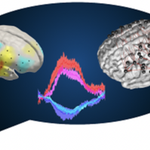
Nice to see PNAS science writer @jill_sakai writing about fNIRS!
Functional near-infrared spectroscopy reveals brain activity on the move | Proceedings of the National Academy of Sciences pnas.org/doi/10.1073/pnas.22…