

Verification layer for digital conformity assessment. Tamper-evident trade documents, independently verifiable. Trusted Trade at Scale.
United States
Joined August 2022
- Tweets1.8K
- Following770
- Followers943
- Likes13.1K



GM ☕️
A product can be authentic and still be compromised.
Recent reports of tampered Ledger devices sold through a third-party reseller highlight a broader supply-chain challenge.
Even genuine products can be vulnerable after leaving the manufacturer.
Who handled them?
What changed?
What was verified?
This is why genealogical traceability matters.
The supply chain has a memory problem.
coindesk.com/tech/2026/10/13…

GM ☀️
There are fewer than 1,000 Very Large Crude Carriers (VLCCs) worldwide, each capable of transporting roughly 2 million barrels of crude oil.
With shipping costs surging and security threats disrupting the Strait of Hormuz, smaller shuttle tankers are moving oil through high-risk waters before transferring it to VLCCs offshore.
Think about what that means for the documentation.
A shipment can change vessels, operators, and custody before ever reaching its destination.
Bills of lading. Certificates of origin. Inspection records. Quantity and quality attestations.
Every handoff introduces another point where information must remain consistent, authentic, and verifiable.
The cargo may change hands. Trust in its documentation shouldn’t have to start over.
This is why standards-based, interoperable verification infrastructure matters to global trade.

GM ☕️
Fascinating research from @NIST
By analyzing 4,563 drug samples across 17 states, researchers are identifying chemical fingerprints, tracking changes in composition, and studying how dangerous fentanyl adulterants emerge across geographic regions.
Using mass spectrometry, compounds can be identified in seconds.
This is an extraordinary example of how analytical science, traceability, and timely data can help reveal patterns that would otherwise remain invisible.
The implications extend well beyond illicit drugs, from public health to supply chain intelligence.
Research: doi.org/10.1002/dta.70164
GM ☕️
Manufacturing Monday 🏭
95% of U.S. semiconductor equipment and materials spending goes to suppliers headquartered in the U.S., Europe, or Japan.
Yet only 68% is tied to production in those regions.
That 27-point gap highlights a critical challenge: knowing who supplies a product isn’t the same as knowing where it was made.
As semiconductor supply chains grow more complex, traceability, provenance, and verifiable documentation become increasingly important.
Source: @SIAAmerica

GM ☕️🐟
Something fishy was happening in the global tuna trade.
@CBP uncovered a scheme where tuna caught by foreign-flagged vessels was shipped to another country for minimal processing, then imported into the U.S. under a different country of origin to avoid applicable tariffs.
The numbers:
🐟 $8.5M in estimated lost revenue identified
💰 $1.3M in additional trade remedies across 789 entries
⚖️ $8.9M in expected penalties
Here’s the catch: Cleaning and repackaging a product doesn’t necessarily change its country of origin.
Traceability matters. Provenance matters. And the integrity of trade documentation matters.

GM! ☕️
While part of our team is in Washington, DC this week for @ASTMIntl meetings, our COO had the opportunity to attend a fantastic lecture yesterday by Dr. Eugene Spafford (@TheRealSpaf) of Purdue University.
“AI: Cybersecurity Panacea or Existential Threat?” is a timely discussion as emerging technologies continue to reshape how we approach security, trust, and digital infrastructure.
A big thank you to Spaf and @cerias for making these important conversations accessible to the broader community!
🔗 cerias.purdue.edu/news_and_e…

Wed. Oct. 7th, 4:30pm ET: "AI: Cybersecurity Panacea or Existential Threat?" - Dr. Eugene Spafford, @TheRealSpaf CERIAS, Purdue University ceri.as/spaf2026

Blockticity retweeted

This is a big deal and urgently needed

In collaboration with @googlecloud we’re announcing Verifiable Agent Arbiter (VAA), an evidence layer enabling enterprises to prove their AI agents acted as authorised, using @SuiNetwork and @WalrusProtocol to anchor that proof 👇

GM from DC 🇺🇸
Back with ASTM International this week for F49, working on the standards behind trusted, verifiable information across global supply chains.
Standards first. Infrastructure follows.
(📸 : Minh Phan)

GM.
It’s a strong ‘Manufacturing Monday’. 🇺🇸
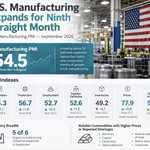
The latest ISM data shows U.S. manufacturing expanding for the ninth consecutive month.
September Manufacturing PMI: 54.5
New Orders: 55.3
Production: 56.7
Employment: 52.7
Backlog of Orders: 51.1
Prices: 77.9
Five of the six largest manufacturing industries expanded during the month.
But more manufacturing also means more materials, suppliers, testing, certifications and documentation moving through increasingly complex supply chains.
As manufacturing scales, so does the need to establish what a product is, where its inputs came from, whether requirements were met and whether the evidence supporting those claims can be trusted.
Manufacturing capacity matters.
So does the integrity of the data behind it.

GM.
Let this sink in… 🥁
In May, @CBP seized 93 ceramic sinks at the Port of Norfolk bearing counterfeit certification marks.
Four months later, officers at the same port seized another 1,000 ceramic sinks bearing counterfeit UPC certification marks.
That’s 1,093 sinks where the mark meant to signal conformity couldn’t be trusted.
Counterfeit certification isn’t just a branding problem. It undermines the trust infrastructure behind global trade.
A mark only works if you can verify who issued it, what it applies to, and that it hasn’t been tampered with.


Blockticity retweeted

September was a busy month at Walrus. Here's everything that shipped:
@matterhornso will make Walrus Memory its default backend. Project context, deployment history, audit results, and agent conversations now persist across sessions and stay shared across team members. Plus, 5,000+ @ASI_Alliance users get decentralized AI models backed by Walrus.
• $7.7B in Real-World Assets: @Blockticity is bringing 1M+ authenticated trade records to Walrus.
• Sui Overflow Winners: Kraterion built by @StatescuRazvan (S3-compatible sealed files), Suize (one-call verified sites), and Carry (verifiable memory receipts).
• Walrus Session 8 is LIVE: Build chatbots that remember, now through October 9.
• Walrus is a presenting sponsor of season four of @chain_ofthought. Catch the latest episodes with @genspark_ai’s @sang_wen on building a second brain for agents, and @chainguard_dev CEO @dlorenc on why time to exploit has gone negative.
Find us in Singapore at Sui Basecamp (Oct 7–8). Stop by the Walrus booth or catch our Head of Product @kimblgn, on stage.

GM.
🇺🇸 🤝 🇨🇳
This is an interesting development in U.S.-China trade.
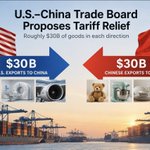
The newly created U.S.-China Board of Trade has released its first “30-for-30” proposal: roughly $30B of goods in each direction that could receive reduced tariff treatment.
On the U.S. export side, the list includes agricultural products, medical devices and other goods and represents roughly 30% of current U.S. exports to China.
Coming the other direction, the U.S. list includes toys, small appliances, tableware, bedding and other consumer goods.
No tariff reductions or implementation dates have been finalized yet. Both countries still have to work through their respective domestic processes.
But the bigger story may be the mechanism itself.
The Board is intended to continuously monitor bilateral trade and potentially expand favorable treatment to additional products over time.
A pretty interesting experiment in managing trade between the world’s two largest economies.

🐴 🪪
This one caught our attention from Dr. John Spink (@FoodFraud) and the Food Fraud Prevention Think Tank.
Europol recently uncovered a suspected horse trafficking scheme involving forged passports and manipulated microchips that effectively gave horses new identities.
More than 1,000 horses were checked across Belgium, France, Ireland and the Netherlands.
Why does this matter for food fraud?
A horse passport isn’t just paperwork. It establishes identity, history and whether an animal is eligible to enter the food chain.
If both the document and the physical identifier can be manipulated, everything can appear to match while the underlying information is false.
A fascinating example of why document authenticity and physical-to-digital identity matter so much in supply chains.
Great write-up from Dr. Spink:
blog.foodfraudpreventionthin…

🔗 CBP notice:
cbp.gov/newsroom/national-me…
GM.
We saw this notice from @CBP today and thought it was worth digging into what actually goes into a Withhold Release Order (WRO).
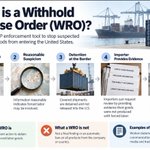
CBP issued WROs involving two Indonesian palm oil producers after finding information that reasonably, but not conclusively, indicated the use of forced labor.
So what goes into a WRO?
CBP can evaluate information from multiple sources, including worker statements, photographs, field notes, communications, NGO reports, academic and media research, and trade and import data.
Once a WRO is issued, covered shipments can be detained at the U.S. border.
Then the question becomes: can the importer provide sufficient evidence to demonstrate that the goods were not produced with forced labor?
That can require establishing where goods came from, who produced them, how they moved through the supply chain, and the records supporting those claims.
It’s a good real-world example of why provenance, traceability and trustworthy supply chain records matter.
When goods reach the border, the ability to verify the evidence behind a claim can become just as important as the claim itself.

GM
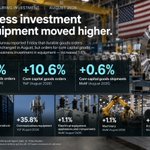
The U.S. Census Bureau reported Friday that durable goods orders were basically flat in August, but underneath the headline, orders for core capital goods jumped 1.6%.
That means more investment in the equipment, machinery and infrastructure behind modern manufacturing.
And every new piece of industrial equipment comes with something else: specifications, test reports, certifications, declarations and other evidence that it meets requirements.
As manufacturing becomes more complex and supply chains more distributed, conformity assessment becomes increasingly important.
The question isn’t just what we’re making.
It’s how we establish trust in what gets made.
Source: U.S. Census Bureau / Reuters


GM
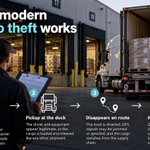
Cargo theft isn’t just someone breaking into a trailer anymore.
A new SmartSense study of U.S. loss prevention leaders found:
• 81% say cargo theft has become more sophisticated
• 78% are concerned about fraudulent pickups and carrier impersonation
• 71% cite GPS jamming and spoofing
• 64% cite double brokering
• 40% report losing at least $1M annually to cargo theft
As supply chains become more connected, criminals are getting better at exploiting identity, data and gaps between handoffs.
Sometimes the cargo isn’t stolen from the carrier. It’s handed directly to someone everyone thought was the carrier.
