

Attorney at law || #Blockchain advocate || #Syscoin Ambassador || Founder of Blockchain Legal Association || Tweets are my own || NFA || Always DYOR!
Metaverse
Joined April 2017
- Tweets33.6K
- Following3.3K
- Followers4.5K
- Likes52.7K









🛡️BlockchainAttorney retweeted

We went with UTXO + EVM because the settlement layer should be purposefully slow and robust. UTXO is merged with @bitcoin and EVM allows for expressive smart contracts so you get shared accounting (something UTXO just cannot do safely or without UX fragmentation risk). Besides this the job of the settlement layer is also DA which should be hash based for PQ safety so that expansion off of the EVM is possible. If your bet is on slow purposeful settlement connected to @bitcoin but expanding and scaling throughput through ZK, then you have @syscoin.
🛡️BlockchainAttorney retweeted

BREAKING: Executives at OpenAI & Anthropic are privately preparing for a potential catastrophic AI incident that could trigger a massive public backlash. — Axios

🛡️BlockchainAttorney retweeted

This is a rabbit hole I think is worth going down.
What happens when energy, computation and value start becoming the same thing?👀
I’ll be leading the vision delivery for Syscoin through the ZKSys launch and beyond — connecting the original design of Syscoin to what comes next


🛡️BlockchainAttorney retweeted
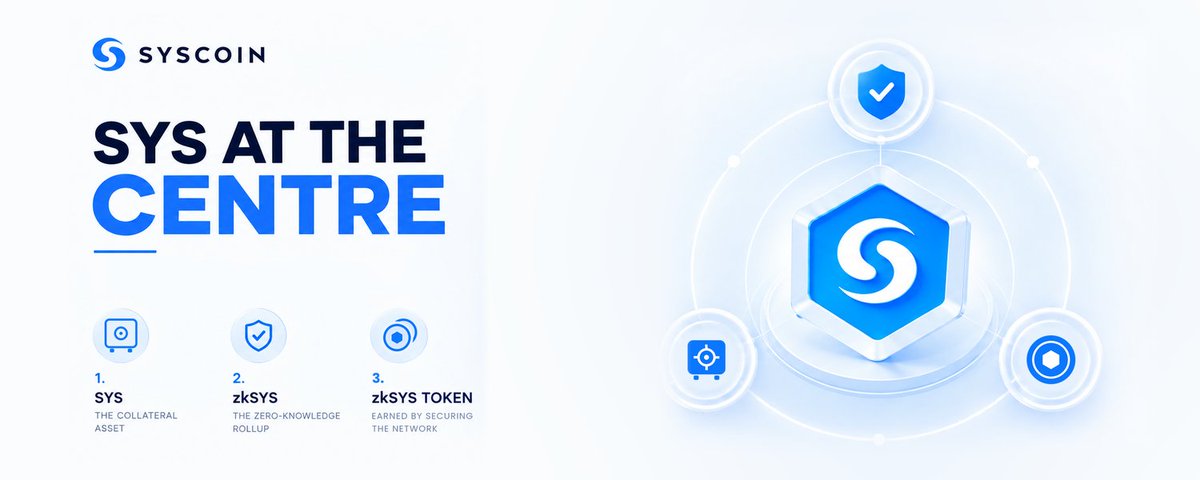
At @Syscoin we have been proposing hash-based future for all major components of the chain, this includes starting with @bitcoin and PoW merge-mining for security, doing the data availability in hash based design to scale the ZK layer which settles on an EVM which has hash based account safety. It is getting close to reality now and not only is it more secure but will also scale much better. It's not only that it should be secure from quantum attacks but AI may also reduce security of lattice's or anything with major algorithmic structure in its construction. We feel hash based safety is the best option and those projects not doing so will be building on shaky foundations. zkSYS will be launching in the "near-term" and will include what is in that roadmap as we felt it was prudent to release something for tomorrow instead of today given the advancements happening with AI. We will also include "horizon" things like post-quantum SLH-DSA smart accounts available in @PaliWallet upon release.



🛡️BlockchainAttorney retweeted

De mai bine de 5 ani ies din casă fără portofel. Așa m-am obișnuit, prefer să nu simt buzunarele pline și mai ales în Bucuresti telefonul e de cele mai multe ori de ajuns. Dar mi s-a întamplat de cateva ori să fiu nevoit să ma legitimez si evident nu aveam actele la mine. Am dat de oameni faini care au acceptat si o poza din telefon, desi nu are acoperire legala.
Intr-un final situatia se poate schimba
România pregătește RO Wallet, un portofel digital în care vei putea avea actul de identitate, permisul, diplome, atestate și alte documente emise din surse oficiale.
Partea care mi se pare cea mai utilă nu e însă că „ai buletinul în telefon”.
E faptul că nu mai trebuie să dai toate datele din buletin de fiecare dată.
Dacă un serviciu are nevoie doar să verifice că ai peste 18 ani, portofelul poate confirma informația necesară fără să trimită automat și adresa, CNP-ul sau restul datelor personale.
Și nu e un sistem gândit doar pentru România. RO Wallet face parte din infrastructura europeană de identitate digitală, astfel încât documentele emise aici să poată fi recunoscute și în celelalte state membre. RO Wallet
Calendarul publicat acum arată așa:
31 octombrie 2026 versiunea TEST
22 decembrie beta restrâns
14 ianuarie 2027 lansarea oficială V1
Actele fizice nu dispar și folosirea RO Wallet este opțională.
Acum, fiind o solutie dezvoltata de statul roman, evident ca ma intreb daca o sa functioneze :)) si cat de repede apar primele probleme
Dar la baza mie imi place.

🛡️BlockchainAttorney retweeted
Consensus first. Execution follows.
Syscoin Liberty v5.1.0 brings Bridge V2, hardened ChainLocks, coordinated Core + NEVM activation and deeper Bitcoin infrastructure to mainnet.
Expected around Monday, 17 August.
Read why this matters for crypto:
syscoin.org/news/syscoin-lib…

🛡️BlockchainAttorney retweeted

We have paused some frontier RL training to ensure that we can meet the appropriate alignment, security and monitoring standards for the new level of capabilities in front of us. Model progress is now extremely rapid, and we always said we would take action if we felt that model capabilities were outstripping the pace of safety and alignment.
We care very deeply about AI safety. We believe the entire field will have to coordinate on shared safety standards, but will act unilaterally in the meantime.
We expect confidence in safety to increasingly set the pace of AI progress. We are optimistic about the alignment work we are doing, and we remain committed to making frontier capabilities widely available.
openai.com/index/pacing-mode…

🛡️BlockchainAttorney retweeted
Reminder to Sentry Node operators: voting is now open.
The Ecosystem Sustainability & Liability Reduction Proposal covers ongoing infrastructure and ecosystem costs, the next funding period, and a plan to begin reducing existing liabilities.
Please read the proposal and cast your vote.
Proposal:
support.syscoin.org/t/syscoi…

🛡️BlockchainAttorney retweeted
This is a good direction. SLH DSA w/ sha256 via SPHINCS+ can be part of a precompile like we did for zkSYS at 45k or less gas. Our blake2s data availability layer in @syscoin (live on Monday!) proves its 3-4x faster than keccak on CPU and parallelizes easily. If SNARK'ing 1.8m hash/sec really is now viable it will have negligible overhead on validator opsec and performance, so I can see how this will allow us to move towards a fully hash based future (except for WE which will likely rely on lattice if it ever becomes plausible)

Goodbye, Poseidon!
An epic 8-year, 8-figure rabbit hole in post-quantum cryptography reaches its dream conclusion. The Ethereum Foundation is abandoning Poseidon for L1, pivoting to SHA or BLAKE. This milestone unlocks ultimate security for lean Ethereum and foreshadows a golden era of hash-based cryptography.
Since 2018, the Ethereum Foundation has invested in magic cryptographic bricks, so-called "SNARK-friendly hashes". In 2019, Poseidon was born. It held strong and became the dominant SNARK-friendly hash, securing billions via zkrollups and zkVMs.
In a stunning reversal, breakthrough SNARK designs show that SNARK-friendly hashes aren't necessary after all. Off-the-shelf traditional hash functions like SHA2 and BLAKE2s can now match Poseidon in a SNARK. In hindsight the key was not SNARK-friendly hashes, but hash-friendly SNARKs.
The secret is doing maths over the smallest prime number: 2. So-called "binary fields" natively speak the language of bits, aligning with the boolean operations inside traditional hashes. This is a stark departure from "prime fields", where awkward large-prime arithmetic makes bit manipulation painfully expensive.
We're talking sci-fi cryptography. 1M traditional hash calls proven per second, on a laptop. Just 100x overhead vs native CPU boolean compute. Nobody predicted such performance, not even the handful of binary-field visionaries. Hat tip to the research geniuses: Jim and Ben with Binius in 2023; Ron, Benedikt and William with Flock in June.
With SHA2, the lean aesthetic of minimal assumptions reaches its climax. The EF's principled stance on pure hash-based cryptography has aged like fine wine. We now enjoy foundations the world can trust for decades and centuries, foundations worthy of the dream of an internet of value.
Speed of deployment is a secondary win. There's no longer a need to wait years for Poseidon cryptanalysis to bake. Emile and Thomas from the EF post-quantum team are moving at breakneck speed with binary fields. The strawmap now points to a production-grade leanVM in 2027, with CL, DL, EL deployments in 2028.
As AI becomes exceptional at cryptanalysis, the contrarian bet to avoid riskier structures like lattices and isogenies is visibly paying off. The past weeks have been brutal. Lattice-based "HAWK" and isogeny-based "SQIsign", both signature schemes in NIST's Round 3, have suffered blows. Sources I trust say more blood is coming.
On AI, the open autoresearch trend kicked off by ECDSA[.]fail is spreading fast, with amazing outcomes from zk[.]golf and SNARK[.]fast. Days ago SNARK[.]fast crossed 1.8M BLAKE3/sec proven on an M3 Max. Stay tuned for fresh autoresearch challenges dropping tomorrow.
Also tomorrow: Ethproofs call #10, dedicated to binary fields. Possibly the most noteworthy Ethproofs call yet. Experts leading the charge will present the future of hash-based SNARKs at 2pm UTC. What an incredible time to be alive. To witness history, DM me for a calendar invite :)
Today I can confidently claim that hash-based cryptography has won out for blockchain post-quantum signatures. SNARK succinctness compresses arbitrarily many signatures into one small proof per block. SNARK flexibility yields k-of-n threshold signatures, complex multisigs, and more.
Ultimate security. Uncompromising performance. Full programmability.
Believe in something. Believe in hashes.
🛡️BlockchainAttorney retweeted
Quantum computers could eventually break the digital signatures most blockchains use today. Syscoin is already designing around that risk.
Think of every Sentry Node having its own quantum-safe digital stamp. Before the network accepts something, it would collect 801 stamps from several independent groups of nodes.
That full proof is only about 3.6MB, roughly the size of a photo, and can be checked in parallel in around 1 millisecond.
Syscoin’s 2.5-minute blocks, Bitcoin merge-mining and finality every five blocks give the network enough room to handle these larger, safer proofs. The same hash-based technology can also support the data layer behind zkSYS.
In simple terms: thousands of independent nodes can prove they agree without relying on one shared key, while staying secure against future quantum computers.
Most blockchains may need to bolt this on later. Syscoin is designing for it now.

Working on SLH DSA based sentry nodes. Removing the DKG and MPC replacing it with direct signatures, and a 3.6mb commitment of 801 signatures which validate in 1ms (parallel). A global key will replace the BLS owner key with a FIPS 205 SLH-DSA-128s (7856 bytes). At around 3k SNs this is less than 24mb. A merklized tree of subkeys are created under C11 (SPHINCS-) which is 3976 bytes and 2^14 signature budget. Much faster to sign, and gives the 3.6mb commitment with 801sigs. Why 801? Because you have 4 quorums of 400 nodes, while each quorum you want 267/400 safety (33% liveness), distributed over 4 quorums and 3 out of 4 need to sign. 267*3=801. This will only work on @syscoin because it is purposefully slow at 2.5m block times, auxpow with @bitcoin and we finalize every 5 blocks. This gives adequate buffer for the bandwidth overhead. The DA layer is also hash based (keccak or blake2s), which feeds zkSYS (zkVM layer) for speed and convenience. Lastly once we figure out which direction BTC is going (likely shrimp/shrinc/sphincs), we can complete utxo PQ, once EOAs on eth figure out which way (hopefully hash based), we will finish EVM PQ. The reason we need the safe large sigs is because we reuse addresses with sentry nodes across validator usages, and although hash based snarks are becoming viable, they still open new games and attacks and I prefer safety first with 128+ bit PQ security at minimum.
🛡️BlockchainAttorney retweeted

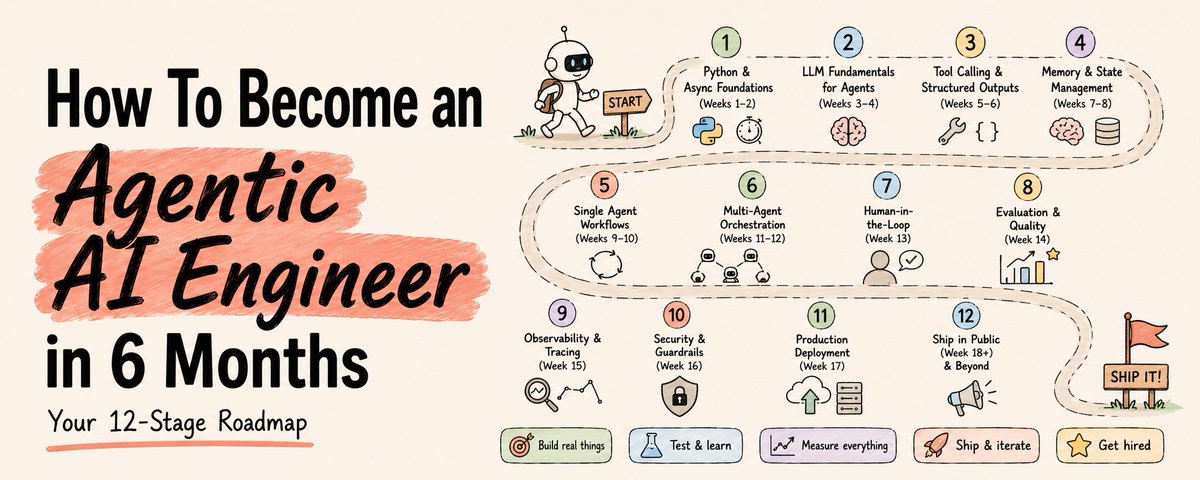
Google just dropped a 1-hour course on agentic engineering from scratch:
00:00 – How to build your first AI agent
08:24 – Build agent memory (short, persistent, long)
28:34 – Agentic loops, long-running AI agents
40:04 – How to build MCP (MCP vs API)
1:00:22 – Multi-agentic systems
This 1-hour watch will replace 10 paid agentic courses on the internet.
Bookmark this. Watch this weekend.

🛡️BlockchainAttorney retweeted
Technical Postmortem: Syscoin Bridge Incident, Recovery, and Remediation
On June 7, 2026, Syscoin identified and responded to an exploit involving the UTXO-to-NEVM bridge.
The incident was caused by a cross-layer interpretation mismatch between Syscoin Core and the NEVM relay.
The funds were traced, returned, and burned to a standard OP_RETURN, restoring the reported coin supply to the expected value.
The bridge remains paused while final review, validation, and remediation steps continue.
Read the full postmortem:
syscoin.org/news/technical-p…
Transparency first. Security always.
#Syscoin #SYS #NEVM

🛡️BlockchainAttorney retweeted

THE BREAKDOWN #727 - SPACEX IPO - LIVE with TRISTAN THOMPSON xitter.cf/i/broadcasts/1DxleeoEb…

Yeah and you guys just sucked the whole crypto business. So yeah, we are enough, but maybe we won’t be anymore, since tides are changing.
🛡️BlockchainAttorney retweeted

Nvidia will now pay you to put a mini AI data center on your house
It looks like a normal AC unit in the yard.
But inside sits 16 Nvidia Blackwell GPUs and Dell servers.
A startup called Span builds them, backed by Nvidia.
They bolt onto your home and you get paid for the power and Wi-Fi.
Some estimates put that around $1,000 a month in your pocket.
That is rent money just for hosting a box outside.
Span says it deploys way faster and cheaper than a real data center.
The AI boom is literally moving into the suburbs.
Save this, the grid is getting rebuilt in real time.

