

United Arab Emirates
Joined April 2010
- Tweets1.3K
- Following2.3K
- Followers2K
- Likes276




Kite AI: Can AI Agents Really Manage Their Own Payments?
The AI agent economy is becoming more interesting, but one important question remains: how can an AI agent pay for services without giving it unlimited control over our money?
Kite is working on this problem through Kite Passport, a system that allows AI agents to pay for digital services using a funded wallet and spending limits approved by the user.
According to its developer documentation, users can set a total budget, a per-transaction limit, and an expiry time. Once the user approves a session with a passkey, the agent can make payments within those limits.
Kite also supports payment integrations using x402 and the Machine Payments Protocol (MPP). This can help service providers accept payments from AI agents for APIs and other digital services.
However, technology alone does not guarantee adoption. Developers need easy integrations, service providers need real customers, and users need confidence that spending limits work as intended.
An independent technical analysis has also highlighted potential compatibility challenges between Kite's payment implementation and standard x402 integrations. These details matter because smooth connections are essential for a growing agent economy.
My view is simple: Kite is addressing a practical problem, but long-term success will depend on real transactions, repeat usage, and reliable integrations—not just attention around AI.
What do you think will matter most for the agent economy: payment infrastructure, security, or developer adoption?
👇👇
app.binance.com/uni-qr/cpos/…
@GoKiteAI #KiteBBW

Binance Earn: 30% Bonus APR for 7 Days, Then 7% Long Term
Starting your crypto journey doesn't have to be complicated. If you're new to Binance, the latest Binance Earn offer gives eligible users a simple way to explore USDT Flexible products and understand how crypto rewards work.
The main highlight is a 30% Bonus Tiered APR for the first 7 days, followed by a potential 7% long-term APR while the available quota lasts.
But how does it work? Let's break it down.
How the Offer Works
Eligible new users can receive a 30% Bonus Tiered APR on their first 200 USDT subscribed to Simple Earn Flexible Products. This bonus lasts for only 7 days and is paid on top of the Real-Time APR, which changes over time.
After those 7 days, the bonus ends. Eligible users may continue earning at a 7% APR under the long-term offer, subject to limited quota and applicable terms. The 7% rate is not guaranteed and may change.
Remember, the 30% bonus applies only to the first 200 USDT. Any amount above that limit earns the applicable Real-Time APR only.
How to Get Started
The process is straightforward:
1. Register for a Binance account after October 8, 2026, at 10:00 UTC.
2. Complete identity verification.
3. Make a qualifying first deposit or purchase of at least $1 through a crypto deposit, P2P purchase, or fiat deposit/Buy Crypto purchase.
4. Open Simple Earn, search for USDT, select Flexible, and subscribe with at least 0.1 USDT.
The promotion runs from October 8 to November 8, 2026 (UTC). Eligible users should check the official product page for availability, current Real-Time APR, and full campaign terms.
A few important things to remember: early redemption stops the bonus accrual on the redeemed amount, regional restrictions may apply, and this offer cannot be combined with other regional new-user bonus APR promotions.
For me, the important part is understanding the conditions rather than focusing only on the headline number. APR is an estimate of rewards, not a promise of fixed returns. Always understand the risks before subscribing.
Digital asset prices can be volatile. The value of your investment may go down or up and you may not get back the amount invested. APR is an estimate and may differ from actual rewards. Not financial advice.
Explore the official Binance Earn product page for eligibility and complete terms:
app.binance.com/earn/simple-…
#BinanceEarn #SimpleEarn #30APR #USDT #Binance #BinanceStarterCarnival #Crypto #cryptocurrency #Blockchain #CryptoForBeginners

Binance Points: Turn Everyday Activity Into Rewards
Have you ever wondered if your everyday activity on Binance could help you unlock rewards?
That is the idea behind Binance Points, a long-term rewards program launched on September 15, 2026. It is designed to recognize users for completing eligible activities across the Binance ecosystem.
The concept is simple: use Binance, complete eligible activities, earn Points, claim them through Rewards Hub, and redeem them for available rewards.
How Can You Earn Binance Points?
Binance Points brings different activities together in one rewards program. Eligible activities include:
- Spot Trading
- Futures Trading
- Convert
- P2P and Fiat Deposits
- bStocks
- Posting on Binance Square
This means users can earn Points through different eligible activities across the platform. More ways to earn are also planned, including Binance Pay, Dual Investment, and Binance Academy activities.
Please remember that available activities may vary depending on your region and eligibility.
What Is the 5-Day Weekly Bonus?
There is another feature worth knowing about: the 5-Day Weekly Bonus.
Users can unlock this bonus by completing qualifying daily tasks on five or more days within a week. These days do not need to be consecutive.
The idea is to recognize consistent activity throughout the week. Make sure you check the available tasks to understand what qualifies.
Don't Forget to Claim Your Points
One important detail is that earning Points is not the final step. You must claim them through the Binance Rewards Hub within 14 days of issue.
If you do not claim your Points within this period, they will expire.
So, checking your Rewards Hub regularly is important if you want to keep track of your available Points.
What Rewards Can You Redeem?
Depending on availability, Binance Points can be redeemed for different rewards, including:
- Trading fee rebates
- Futures free positions
- Earn trial funds
- VIP upgrades
- Binance merchandise
Reward options may vary by region, and more regional rewards are planned for the future.
One Rewards Program, Different Activities
What makes Binance Points interesting is how it brings eligible activities from different parts of Binance into one long-term rewards program.
You can earn Points, claim them through Rewards Hub, and explore the rewards available to you.
Now, I have a question for the community:
Which reward would you like to see more of: Binance merchandise, Amazon vouchers, or Spotify vouchers?
Share your choice in the comments!
#Binance #BinancePoints #Rewards #BinanceSquare #Crypto #Web3 #RewardsHub

I have been looking into Binance Trading Rush, and one thing that caught my attention is how simple the campaign makes it to get started. It is a limited-time campaign made exclusively for eligible users in Pakistan, running from October 1 to October 14, 2026.
The idea is simple. Complete an eligible mission, unlock spins, tap GO and get a chance to win USDT rewards. 🎯
What I like about this campaign is that users can choose from different missions based on their eligibility. Whether someone is new to trading or already active on Binance, the campaign offers different ways to take part.
Here is how it works.
First, visit the Trading Rush campaign page. Then, check the missions available to your account and tap “Do it” on the mission you want to complete. Finish the required task during the campaign period to unlock spins. After that, tap GO and see what reward you receive.
There are several ways to unlock spins.
You can invite friends. When your invited friend signs up, completes KYC, and makes a qualifying trade of $10 or more, you receive two spins, while your friend receives one spin. The limit is 30 successful referrals per person.
Another option is making your first trade on Spot, Convert, or Futures, depending on the requirements shown for your account. Some eligible new users can also unlock a spin by subscribing at least 5 USDT to a supported product for one day or longer. Selected users may qualify through a trade of $100 or more, while qualifying Futures traders can unlock two spins with a Futures trade of $10K or more.
One important thing to understand is that not every user will see the same missions. Eligibility and minimum requirements can differ, so checking the official campaign page is the best way to know which tasks are available.
The prize pool offers USDT rewards, with prizes of up to 500 USDT per spin. However, every result is random, and winning a particular amount is never guaranteed. Rewards are limited and distributed on a first-come, first-served basis.
According to the campaign details, rewards will be distributed by November 15, 2026, as token vouchers that can be redeemed through Profile > Rewards Hub.
For me, the main point is simple. Trading Rush gives eligible users in Pakistan a chance to complete missions, invite friends, and try for USDT rewards during a limited campaign.
Always check the official terms before participating, and never trade more than you can afford to lose.
Digital asset prices can be volatile. You may lose some or all of your investment. This content is not financial or investment advice. Campaign terms apply.
app.binance.com/en/activity/…
#Binance #TradingRush #BinancePakistan #PKExclusive #Crypto #USDT #Web3

From Holding Crypto to Everyday Spending
I wanted to see how crypto can actually fit into something as ordinary as everyday spending, rather than just sitting inside a trading or investing app.
That is where Binance Card becomes interesting.
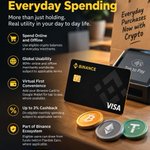
For eligible users in supported markets, Binance Card can be used for online and offline spending with eligible crypto balances. So instead of thinking about crypto only as something you hold or trade, the card gives users another way to use eligible crypto for everyday purchases.
One detail I found particularly interesting is how it connects with the wider Binance ecosystem. Eligible users may be able to draw from funds held in Flexible Earn when using the card, depending on the applicable product terms and availability.
There is also a practical side to the experience. Binance says the card can be used across 90M+ online and offline merchants worldwide, subject to applicable terms. That gives a clearer picture of what crypto utility can look like in everyday situations, rather than keeping the conversation focused only on market prices.
For users who prefer digital payments, eligible users can also add a Binance Card to Google Wallet for tap-to-pay where the feature is available. Product and regional availability can vary, so it is important to check what applies in your location.
Another feature mentioned is cashback of up to 3% on eligible monthly spending, subject to applicable terms. That should be understood as a product feature with conditions, not as a guaranteed benefit for every transaction or user.
What I find most useful about this concept is the simple question it raises: what can digital assets actually be used for beyond buying, selling, or holding them?
At the same time, using crypto for payments does not remove the risks associated with digital assets. Users should understand the product terms, regional availability, transaction conditions, and the risks involved before using any crypto-based financial product.
My takeaway is simple: crypto utility is not only about market activity. Everyday spending is another area where digital assets can have practical use, but understanding the conditions and risks matters just as much as the convenience.
Educational only. Not financial advice. Always do your own research and use official sources.
#BTC
#ETH #Crypto #Binance #Stake #Staking #cryptocurrency #Blockchain #Bitcoin
#Binance #BinanceAcademy #LearnWithBinance

BitcoinBNB1 retweeted

Beyond Trading: Putting Crypto to Work in Everyday Life
I used to think the interesting part of crypto was mostly buying, selling and watching charts.
Then I actually used crypto to pay for something ordinary.
That changed the way I looked at it.
Instead of moving crypto to another service first, the Binance Card handled the payment from my selected crypto balance. The card automatically converts the selected asset when the payment is made, based on the payment priority I set.
That sounds like a small thing.
It isn't.
The interesting part is that the crypto balance starts behaving more like a spending balance.
Online purchase?
Possible where supported.
Subscriptions?
Same idea, subject to the merchant and applicable terms.
Tap-to-pay?
Google Pay support is available where the Card and service are supported.
I also like the fact that eligible users can potentially use their Binance Earn Flexible balance as a source of payment. But there’s an important trade-off: using that balance for a card transaction means the corresponding amount is redeemed and no longer earns rewards.
And yes, cashback exists, but I wouldn't look at it as the main reason to use the card. The current program can offer up to 3% on eligible monthly spending in applicable markets, with specific tiers, caps and exclusions.
For me, the bigger takeaway was simpler:
Crypto becomes more interesting when it stops being something you only watch on a chart and starts becoming usable for normal things.
Availability, eligibility, fees and terms can vary by market, so always check the applicable Card terms before using it.
Digital assets carry risk. This is my experience and observation, not financial advice. Do your own research.
#Binance #BinanceAcademy #LearnWithBinance #BTC #ETH #Crypto #Binance #Stake #Staking #cryptocurrency #Blockchain #Bitcoin #Cryptopayment #Binancecard

BitcoinBNB1 retweeted
Simple Earn: Flexible vs Locked Which Fits Your Crypto Strategy?
Your crypto doesn’t have to sit idle.
But earning rewards comes with a trade-off: access vs commitment.
With Binance Simple Earn, the basic choice is pretty straightforward:
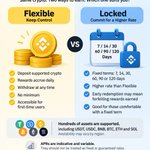
Flexible
• Rewards accrue daily
• Withdraw when you want
• No minimum deposit
• Useful when you want to keep liquidity available
Locked
• Choose a fixed term: 7, 14, 30, 60, 90 or 120 days
• Typically offers a higher indicative APR than Flexible
• Your crypto is committed for the selected term
• Early redemption may mean giving up rewards already earned
And one detail matters: APR is variable/indicative, not guaranteed. Rates can change.
Simple Earn supports a broad range of assets, including BTC, ETH, BNB, SOL, USDT and USDC, although availability depends on the specific product and region.
So the real question isn’t simply “which pays more?”
It’s:
Do you value liquidity more, or are you comfortable committing your crypto for a defined period?
Which would you choose: Flexible or Locked?
Crypto products carry risk, and terms, availability and rates can change. Informational and educational purposes only, not financial advice.
#Binance #BinanceAcademy #LearnWithBinance
#BTC #ETH #Crypto #Binance #Stake #Staking #cryptocurrency #Blockchain #Bitcoin

BitcoinBNB1 retweeted
From Holding Crypto to Spending It: My Real Binance Card Experience
I used to think of crypto cards as one of those products that sounded useful on paper but didn’t necessarily fit into normal life.
Then I actually started using one.
The interesting part isn’t the card itself. It’s what happens when crypto stops being something you only hold, trade or move around and starts becoming a payment balance you can use for ordinary purchases.
I checked my Binance Card history and the experience is pretty straightforward.
There are regular card transactions in PKR, just like you’d expect from a normal payment card. The difference is that the spending can be connected to eligible crypto balances within the Binance ecosystem.
That’s where the idea becomes more practical.
You don’t necessarily need to think of crypto as something that has to stay untouched in your account. For eligible users in supported markets, Binance Card can be used for everyday online and offline spending, subject to the applicable terms.
And there’s another part I found interesting.
Eligible users may be able to spend using funds held in Flexible Earn. So the ecosystem isn’t only about buying an asset and watching its price move. There can be a bridge between holding eligible assets and actually using them for something in the real world.
My own card history gives a simple example.
The transactions shown are ordinary purchases, including several payments in PKR. Then there’s the cashback entry sitting at the top:
+10.43 USD cashback
That makes the concept much easier to understand than any marketing graphic could.
You spend.
The transaction appears in your card history.
And eligible cashback can be credited according to the program rules.
Binance states that users can receive up to 3% cashback on eligible monthly spending, subject to applicable terms.
There are also some convenience features worth knowing about.
Where available, eligible users can add their Binance Card to Google Wallet and use it for tap-to-pay.
And Binance says the card can be used across 90M+ online and offline merchants worldwide, subject to applicable terms and availability.
So the bigger story for me is not:
“Crypto is replacing your bank card.”
That’s too simplistic.
The more interesting development is that the boundary between crypto and everyday payments is becoming less rigid.
For years, crypto adoption was mostly discussed around trading, investing, DeFi, and transferring value.
But real-world utility is a different test.
Can I use it when I’m buying something online?
Can I pay at a physical store?
Can the balance I already hold become useful outside a trading screen?
Crypto cards are one attempt at answering those questions.
Of course, there are trade-offs.
Crypto assets are volatile. The value of what you hold can change significantly, and spending a volatile asset can have different implications from spending fiat. Card availability, supported assets, fees, conversion mechanics, cashback eligibility and regional restrictions can also vary.
So I wouldn’t look at a crypto card as a reason to take additional investment risk.
I see it more simply:
If you already use crypto, does having a practical way to spend eligible balances make the ecosystem more useful?
For me, seeing actual everyday transactions in the card history makes that question much more interesting.
Crypto utility doesn’t always have to mean some complicated DeFi strategy.
Sometimes it’s just paying for something you were going to buy anyway.
I found that pretty interesting.
Would you actually use your crypto for everyday spending, or do you prefer keeping your crypto completely separate from your daily expenses?
Informational and educational purposes only, not financial advice.Availability and terms for Binance Card features vary by market and eligibility.
#Binance #BinanceAcademy #LearnWithBinance #BTC #ETH #Crypto #Binance #Stake #Staking #cryptocurrency #Blockchain #Bitcoin


From Cash in Your Pocket to Crypto at the Checkout
Think about how often we still use cash when shopping, eating at restaurants, paying bills, or travelling.
Cash is simple, but carrying it everywhere can be inconvenient. If your wallet is lost or stolen, recovering physical cash can be difficult.
This is where digital payment options become useful.
One option available to eligible users is Binance Card.
The basic idea is simple:
Hold supported crypto → Use Binance Card → Pay → Merchant receives applicable local currency
Instead of carrying large amounts of cash, eligible users can use supported crypto from their Binance account for everyday purchases where Binance Card is accepted and available.
The payment experience is similar to using a traditional card. You use the card at a store, restaurant, or for an eligible online purchase, while the applicable crypto balance is handled through Binance's conversion process according to the card's payment settings and current rules.
Shopping
If you're at a shopping mall and need something, you can use the card where accepted instead of first finding an ATM and withdrawing cash.
The same applies to eligible online purchases using your card details.
Restaurants
After finishing a meal, you can pay with Binance Card where supported. The merchant doesn't necessarily need to accept crypto directly—the payment works through the card network.
Travelling
A card-based payment option can also be convenient while travelling. Instead of carrying large amounts of foreign cash, you may be able to pay in the local currency where the service is supported.
However, availability can vary by country and user eligibility. Supported assets, fees, conversion rates, and card features may also change according to Binance's current terms.
From Holding to Using Crypto
For years, crypto was mainly about:
Buy. Hold. Trade. Sell.
Services such as Binance Card add another possibility: using supported crypto for everyday payments.
You don't need every merchant to understand blockchain or accept cryptocurrency directly. The merchant can receive the applicable local currency while the crypto side is handled through the card system.
That makes the concept interesting—not because crypto suddenly replaces cash or traditional cards, but because it creates another bridge between digital assets and everyday spending.
Crypto doesn't have to stay inside a trading screen. Where available, it can also become part of your everyday payment experience.
#Binance #BinanceAcademy #LearnWithBinance

BitcoinBNB1 retweeted

Good night CT
Been watching @PlayOnMint more closely lately.
What stands out to me is how MINT is building attention around its ecosystem while giving the community different ways to stay involved.
The upcoming 4,444 free mint on Robinhood is another interesting step.
For me, the bigger picture is simple:
Don’t just watch the project.
Understand the ecosystem.
Track the updates.
Stay consistent.
Still early in my MINT journey.
Good night everyone.
🤝 Paid partnership · 🤖 Made with AI

BitcoinBNB1 retweeted
When Payment Gets Complicated, Binance Card Keeps It Simple
When you’re worried about how you’ll pay for something you actually need, having another payment option can make things simpler.
That’s the idea behind Binance Card.
Instead of treating crypto only as something you trade or hold, eligible users can use supported crypto for everyday purchases where Binance Card is available.
The basic flow is straightforward:
• You hold supported crypto in your Binance account
• You set your preferred payment priority
• When you make an eligible purchase, the relevant crypto balance can be used for the payment
• The transaction is processed through the card network, subject to availability and applicable conditions
For me, the interesting part isn’t the card itself.
It’s the bridge between holding digital assets and using them for something as ordinary as paying for a purchase.
Of course, crypto spending still comes with risks and practical considerations, including asset price volatility, fees, eligibility, merchant acceptance, and regional availability.
So the value here is really about utility, not a promise that crypto is always the best way to pay.
Would you actually use crypto for everyday purchases, or would you still prefer traditional payment methods?
Informational and educational purposes only, not financial advice.
#Binance #BinanceAcademy #LearnWithBinance #BTC #ETH #Crypto #Binance #Stake #Staking #cryptocurrency #Blockchain #Bitcoin
#BinanceCard #CryptoPayment

BitcoinBNB1 retweeted

Can Crypto Actually Pay for Everyday Things?
I wanted to see if crypto could actually fit into a normal spending moment, instead of just sitting there as something I hold or trade. So I started looking at how Binance Card can be used for everyday purchases.
The interesting part for me is the practical side. Eligible users in supported markets can use eligible crypto balances for online and offline spending through the Binance Card. That makes the experience feel less about simply owning digital assets and more about understanding where they can have everyday utility.
Another detail I found interesting is that eligible users may be able to draw from funds held in Flexible Earn. There is also a virtual-first option in supported locations, where eligible users can add the Binance Card to Google Wallet for tap-to-pay.
The card can be used across a large network of online and offline merchants worldwide, with 90M+ merchants mentioned, subject to applicable terms and regional availability.
There is also a cashback feature, but the wording matters: eligible users can receive up to 3% cashback on eligible monthly spending, subject to applicable terms. It is not something to treat as a guaranteed benefit for every transaction or every user.
What stood out to me is that using crypto for spending still requires understanding the details. Availability varies by region, eligibility requirements apply, and digital assets themselves carry risks. No platform removes all risk, so checking the applicable terms and using official information is important.
For me, the bigger lesson is simple: crypto utility is not only about prices. Understanding how eligible crypto balances can be used in real-world situations is also part of becoming financially literate in digital assets.
Educational only. Not financial advice. Always do your own research and use official sources.
#Binance #BinanceAcademy #LearnWithBinance
#payment #cardtransaction
#cryptopaymet

Using Crypto in Everyday Spending!
I wanted to see if crypto could actually fit into a normal spending moment, not just sit inside an account waiting for the next trade. So I started looking at how Binance Card can be used for everyday purchases.
The interesting part for me is the practical side. Eligible users in supported markets can use eligible crypto balances for online and offline spending. That makes the experience feel less like simply holding digital assets and more like understanding where crypto can have everyday utility.
For example, imagine ordering something online and thinking, “What if I pay for this with crypto?” With eligible Binance Card features, spending can be connected with funds held within the Binance ecosystem, including funds held in Flexible Earn, where applicable.
There is also a virtual-first option for eligible users. Where available, Binance Card can be added to Google Wallet for tap-to-pay. The stated merchant reach is 90M+ online and offline merchants worldwide, although availability and applicable terms can vary.
Another detail worth understanding is cashback. The offer is up to 3% cashback on eligible monthly spending, subject to applicable terms. It is important not to treat cashback as guaranteed profit or overlook the conditions attached to it.
What I find most useful here is the shift in perspective. Crypto is often discussed around trading and market movements, but everyday spending is another part of the conversation. At the same time, digital assets still carry risks, and no platform removes all risk.
My takeaway is simple: before using any crypto payment product, understand how the spending works, what assets and features are eligible, and what terms apply in your region. Product availability varies by region, so checking official information matters.
Educational only. Not financial advice. Always do your own research and use official sources.
#Binance #BinanceAcademy #LearnWithBinance
#Binancecard
#criptotransaction

Not All Yield Carries the Same Risk
I’ve noticed that when people see a yield figure, the first question is often “How much can I earn?” But there’s another question that deserves just as much attention: “What kind of risk comes with it?”
Binance Earn covers a range of products with different risk profiles. Flexible savings are designed around keeping funds liquid, while staking sits further along the range. Advanced Earn products such as Dual Investment, Smart Arbitrage, and On-Chain Yields involve additional risks that shouldn’t be overlooked.
Take Dual Investment, for example. It’s a market-linked product, so the outcome depends on the price movement of two assets. Returns are not guaranteed.
Smart Arbitrage uses an automated strategy that seeks price differences across markets and is aimed at experienced users. That doesn’t make the risk disappear; it simply means the product works differently from a straightforward savings product.
Then there are On-Chain Yields, which provide access to DeFi opportunities through Binance. Here, users should understand that both smart contract risk and market risk are involved.
The important point is that “yield” alone doesn’t tell the whole story.
As you move toward more advanced products, understanding the underlying risks becomes increasingly important. Advanced Earn products carry higher risk and should never be presented as if they were simple savings options.
There also isn’t one risk level that fits everyone. The right way to think about it is personal: understand how the product works, identify the risks involved, and decide where your own comfort line sits.
Product availability and eligibility can also vary by region, so always check what applies where you live.
Educational takeaway: Don’t compare Earn products by yield alone. Understand the risk behind the yield first.
Educational only. Not financial advice. Always do your own research and use official sources.
Link to earn product page👇👇
binance.com/en/earn?utm_sour…
#BTC
#ETH #Crypto #Binance #Stake #Staking #cryptocurrency #Blockchain #Bitcoin
#Binance #BinanceAcademy #LearnWithBinance

Simple Earn: Flexibility vs. Commitment
I’ve noticed that when it comes to crypto, the decision isn’t always about earning more. Sometimes, having access to your funds matters just as much.
That’s what makes the Flexible vs Locked choice in Binance Simple Earn interesting.
Simple Earn is designed as an entry point for putting crypto you already hold to work. With Flexible, supported crypto can earn daily rewards while keeping the ability to withdraw at any time. There’s no minimum, which can make it an accessible option for someone trying to understand how the product works.
Locked takes a different approach. You commit your crypto for a fixed period, with available terms of 7, 14, 30, 60, 90, or 120 days. The rate is higher than Flexible, but the trade-off is access: your crypto is committed for that selected term.
There’s also an important detail to understand before choosing Locked. Early redemption may mean forfeiting the rewards earned. So the question isn’t simply, “Which rate is higher?”
It’s also about asking yourself how much flexibility you need.
binance.com/en/earn?utm_sour…
If access to your crypto could become important before a fixed term ends, that difference matters. If you’re considering a Locked product, understanding the commitment period and early redemption conditions is part of making an informed decision.
Simple Earn supports hundreds of assets, including USDT, USDC, BNB, BTC, ETH and SOL, although availability can vary by region.
And one more point that’s easy to overlook: APRs are indicative and variable. They should not be treated as fixed or guaranteed rates.
For me, the bigger lesson is that “Flexible” and “Locked” are not just product labels. They represent two different trade-offs between access and commitment.
Would you rather stay flexible, or lock in for a longer term?
Educational only. Not financial advice. Always do your own research and use official sources.
#BTC
#ETH #Crypto #Binance #Stake #Staking #cryptocurrency #Blockchain #Bitcoin
#Binance #BinanceAcademy #LearnWithBinance

BitcoinBNB1 retweeted
Not All Yield Carries the Same Risk!
I’ve noticed something in crypto: people often look at the yield first and the risk second.
But not all yield carries the same level of risk.
Binance Earn covers a range of products, starting with Flexible savings, where funds stay liquid, moving through staking, and then into Advanced Earn products such as Dual Investment, Smart Arbitrage, and On-Chain Yields.
The important part is understanding what changes as you move across that range.
Dual Investment is market-linked. Your returns depend on the price movement of two assets, so returns are not guaranteed.
Smart Arbitrage is an automated strategy designed to seek price differences across markets. It is aimed at experienced users, which is an important distinction when thinking about whether a product matches your understanding of risk.
Then there’s On-Chain Yields, which provides access to DeFi opportunities through Binance. Along with the potential opportunity comes smart contract risk and market risk.
binance.com/en/earn?utm_sour…
That’s why Advanced Earn products should not be viewed or described as simple savings products. Higher potential complexity comes with higher risk considerations, and those risks deserve to be explained clearly rather than minimised.
For me, the bigger lesson is that choosing an Earn product isn’t just about asking, “What yield does it offer?”
A better starting point is:
“What risks am I actually taking, and do I understand them?”
Everyone may draw the line at a different point on the risk range. Some may prefer keeping things simple and liquid, while others may be comfortable understanding more complex products and their associated risks.
There is no one risk tier that automatically fits everyone.
Product availability and eligibility can also vary by region, so always check the official information to understand what applies where you live.
Educational takeaway: understand the risk before focusing on the yield. Knowing what you’re getting into is an important part of financial literacy.
Educational only. Not financial advice. Always do your own research and use official sources.
#BTC
#ETH #Crypto #Binance #Stake #Staking #cryptocurrency #Blockchain #Bitcoin
#Binance #BinanceAcademy #LearnWithBinance

Liquid Staking: Earn Staking Rewards While Keeping ETH & SOL Usable
I’ve always found staking more interesting when you look beyond the reward and ask one simple question: “Can I still use my assets while they’re earning staking rewards?”
That’s where liquid staking comes in.
When supported ETH or SOL is staked through Binance, the process returns liquid staking tokens called WBETH for ETH and BNSOL for SOL. The important idea is that these tokens can remain usable in DeFi while the underlying staking rewards continue to accrue.
For a long-term holder, this creates a different way to think about staking. Instead of viewing staking only as locking an asset away, liquid staking separates the idea of earning staking rewards from completely giving up usability.
But there are details worth understanding before using any product.
binance.com/en/earn?utm_sour…
WBETH and BNSOL are not simply the same thing as holding ETH or SOL directly. Their specific use, availability, and applicable terms matter. Product availability can also vary by region, so it’s important to check the official information that applies to you.
It’s also useful to distinguish liquid staking from Simple Earn options. Simple Earn Flexible allows supported crypto to accrue rewards daily while keeping the ability to withdraw at any time. Locked products use fixed terms, with early redemption potentially meaning forfeiting rewards earned. APRs are indicative and variable, not fixed or guaranteed.
The bigger lesson is that “earning rewards” and “keeping flexibility” can involve different product structures.
Before staking, understand what you receive, how it can be used, what restrictions apply, and what risks are involved.
Educational takeaway: always understand the mechanics and terms of a staking product before using it.
Educational only. Not financial advice. Always do your own research and use official sources.
#BTC
#ETH #Crypto #Binance #Stake #Staking #cryptocurrency #Blockchain #Bitcoin
#Binance #BinanceAcademy #LearnWithBinance

BitcoinBNB1 retweeted
Liquid Staking Explained: How ETH & SOL Stay Usable While Staking
I used to think staking meant making a simple choice: earn staking rewards, but accept that my assets were no longer as usable. Liquid staking makes that idea a little more interesting.
With Binance liquid staking, staking ETH returns WBETH, while staking SOL returns BNSOL. These are liquid staking tokens designed to remain usable in DeFi while the underlying staking rewards continue to accrue.
In simple terms, instead of the conversation being only about “stake or don’t stake,” liquid staking introduces another layer: what happens to the token you receive after staking?
binance.com/en/earn?utm_sour…
For ETH, the staking process returns WBETH. For SOL, it returns BNSOL. Both can remain composable in DeFi, which means they can still be used within supported DeFi applications while staking rewards continue to accrue.
The important part is understanding what this does not mean.
Liquid staking does not remove the normal price movement associated with ETH or SOL. The information provided describes both as carrying medium risk because their value remains subject to the price movement of the underlying assets.
That makes the concept particularly relevant to long-term holders who are exploring how staking and asset usability can work together.
There is also another detail worth understanding: participating through Simple Earn can unlock access to Launchpool and Megadrop. Availability and applicable features can vary, so checking the official information for your region is important.
For me, the main lesson is that liquid staking is less about making assets “do everything” and more about understanding the trade-off between staking rewards and keeping a token usable.
Before using any staking product, understand what you receive, how it can be used, and what risks remain.
Educational takeaway: liquid staking can keep staking-related tokens usable in DeFi while rewards continue to accrue, but it does not eliminate exposure to ETH or SOL price movements.
Educational only. Not financial advice. Always do your own research and use official sources.
#BTC
#ETH #Crypto #Binance #Stake #Staking #cryptocurrency #Blockchain #Bitcoin
#Binance #BinanceAcademy #LearnWithBinance

Binance Card: From Holding Crypto to Everyday Spending
I recently caught myself wondering something pretty simple: what can I actually use crypto for beyond holding or trading it?
That question becomes more interesting when you look at crypto cards in a real everyday situation.
Binance Card is designed to let eligible users in supported markets spend eligible crypto balances on everyday purchases, both online and offline. So instead of thinking about crypto only as something visible inside an exchange account, you can look at how eligible balances may connect with normal spending.
One detail I found interesting is the connection with Flexible Earn. Eligible users can potentially draw from funds held there, bringing another part of the Binance ecosystem into the spending experience.
The card also has a broader usability angle. Binance states that it can be used across 90M+ online and offline merchants worldwide, subject to applicable terms. For eligible users, Binance Card can also be added to Google Wallet for tap-to-pay where available.
Then there is the cashback feature. The important wording is “up to 3% cashback on eligible monthly spending, subject to applicable terms.” That means it should be understood as a conditional feature rather than something everyone automatically receives.
What interests me most is the practical side of the idea. Seeing crypto used for an ordinary purchase makes the conversation about digital asset utility easier to understand.
At the same time, product availability varies by region, and not every feature will necessarily apply to every user. That makes checking official information and applicable terms an important part of understanding the product.
And, of course, digital assets come with risks. No platform removes all risk, so everyday convenience should not replace careful research.
My takeaway: understanding where and how crypto can actually be used is an important part of financial literacy. Utility becomes much clearer when we look beyond the screen and consider real-world spending.
Educational only. Not financial advice. Always do your own research and use official sources.
#BTC
#ETH #Crypto #Binance #Stake #Staking #cryptocurrency #Blockchain #Bitcoin
#Binancecard
#Cryptopaymet
#Binance #BinanceAcademy #LearnWithBinance


BitcoinBNB1 retweeted
Binance Card: Turning Crypto Into Everyday Spending
I wanted to see if crypto could actually fit into something as ordinary as everyday spending, so I started looking at how a crypto card works in a real situation.
That’s where Binance Card gets interesting. For eligible users in supported markets, it can be used to spend eligible crypto balances on everyday purchases, both online and offline. Instead of crypto simply sitting in an account, the card is designed to connect those eligible balances with normal spending.
One detail that caught my attention is that eligible users may be able to spend from funds held in Flexible Earn, bringing another part of the Binance ecosystem into the spending experience.
There’s also the convenience factor. Binance says the card can be used across 90M+ online and offline merchants worldwide, subject to applicable terms. Eligible users can also add a Binance Card to Google Wallet for tap-to-pay where available.
Then there’s cashback. The wording matters here: users can receive up to 3% cashback on eligible monthly spending, subject to applicable terms. That isn’t something to treat as guaranteed, because eligibility and terms can apply.
For me, the bigger question isn’t whether a crypto card sounds interesting. It’s whether people can understand when, where, and how their eligible crypto balances can actually be used.
That’s the educational side worth exploring: crypto utility isn’t only about holding or trading. Products like this show one way eligible users can connect digital assets with everyday payments, while availability varies by region.
Digital assets also carry risks, and no platform removes all risk. Always check the official terms and what applies in your region.
The takeaway: understanding how crypto can be used in everyday situations is just as important as understanding how it works.
Educational only. Not financial advice. Always do your own research and use official sources.
#Binance #BinanceAcademy #LearnWithBinance
#Binancecard #cryptopaymet

