

Protect your time. Build your wealth. Bitcoin, sound money, and financial sovereignty. Founder of Bitcoin Wealth. "Money should store time, not steal it"
Bitcoin L1, Stacks L2, Apps L3
Joined February 2009
- Tweets3.4K
- Following488
- Followers1.2K
- Likes6K

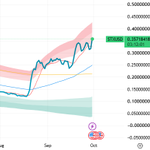

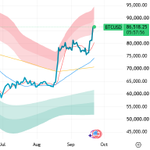






Wall Street wants Bitcoin’s upside.
It also wants protection from the downside.
BlackRock just filed for a product designed to give people exposure while limiting losses.

When you lose half your savings, you don’t just lose money.
You lose years of work, early mornings, and sacrifices.
Recovering from that costs the one thing you can’t get more of: time.
The wealthy buy assets. Most workers sell their time to afford them.
That difference can shape the rest of your financial life.
Most of us are taught the same path. Go to school. Get a job. Work hard. Earn a paycheck. Save what you can.
There’s nothing wrong with working hard. Almost everything we enjoy exists because someone put in the time to create it.
But relying entirely on a paycheck has a limit.
You can only sell so many hours of your life.
Whether you earn $20 an hour or $200 an hour, your income is still tied to something you have a limited supply of.
Time.
There are only 24 hours in a day. Once they’re gone, they’re gone.
People who build lasting wealth eventually do something different. Instead of relying only on their own labor, they gradually acquire assets.
Businesses. Investments. Real estate. Ownership in productive enterprises that keep creating value long after the original investment.
These assets carry risk, and not every investment works. But successful ownership creates something wages alone can’t.
The chance to earn income and build wealth without continually trading another hour of your life.
Most people already understand the importance of working hard.
What they aren’t always taught is how to turn the results of that hard work into lasting ownership.
A paycheck pays for today. Savings help protect tomorrow. Productive assets can help fund the years when you no longer want, or are no longer able, to keep working.
Building wealth isn’t simply about earning a bigger salary.
It’s about what you do with the money after you’ve earned it.
Every dollar you spend is a little piece of your life you’ve already traded away.
The question is whether that dollar buys something you’ll consume today or something that could help support your future.
The goal isn’t to stop working hard. It’s to reach a point where your financial future doesn’t depend entirely on how many more years you can keep working.
Your labor creates income. Your discipline creates savings. Your ownership can create wealth.
And wealth, used wisely, can create something even more valuable.
Freedom over your time.
Don’t just work for money your entire life. Work toward owning something that can work for you.
Your savings account has a hidden expense nobody puts on the statement.
You work hard. You pay the bills. You save what you can.
You watch the balance grow and feel like you’re building security.
But the statement doesn’t show how much purchasing power that money lost while it sat there.
Say you’ve saved $50,000.
It earns 1% interest. That’s $500. Your statement shows $50,500.
Looks like progress.
If the cost of living rises 3% that year, the things that cost $50,000 now cost $51,500.
Your savings grew by $500. The price of the same stuff went up by $1,500.
You’re about $1,000 behind in real buying power, even though the number went up. And that’s before taxes on the interest.
Your balance increased. Your buying power decreased.
That money is time you’ve already spent. Years of setting a little aside. Overtime instead of weekends with your family. Things you skipped so you’d have something later.
You can’t earn those years back.
Saving still matters. Cash for emergencies is important.
But money meant for the future needs a different kind of planning.
The goal isn’t just to accumulate more dollars.
It’s to preserve the value of the work those dollars represent.
Your bank statement tells you how much money you have.
It doesn’t tell you how much of your past labor that money can still buy back.
A million dollars isn’t what it used to be.
There was a time when that number meant you’d made it. A solid house. A comfortable retirement. The ability to stop worrying about money.
Today it can disappear faster than people expect once you account for housing, healthcare, insurance, taxes, and everything else that keeps getting more expensive.
The number hasn’t changed. What it can actually buy has.
Think about someone who spent 30 or 40 years working, saving, and skipping things to hit that goal. Older cars. Fewer vacations. Extra hours.
They did what they were supposed to do.
Then they reached the million-dollar mark and found it didn’t deliver the security or freedom they pictured. Not because they failed to save. Because the purchasing power of money changed while they were earning it.
You can watch your account balance grow and still end up with less real buying power if the cost of living rises faster than your savings.
Money represents time already spent. Hours away from family. Years building a career. Things postponed so life might get easier later.
When the purchasing power of those savings declines, the value of that past effort shrinks. You can’t go back and work those years again.
Becoming a millionaire and becoming financially independent aren’t the same thing.
One is a number. The other is freedom.
The real measure of wealth isn’t how many dollars you’ve stacked. It’s how much life those dollars let you live.
Your time is the real asset. Protect it.
We spend decades working toward retirement.
Wake up early. Put in the hours. Pay the bills. Raise the family. Save what we can.
We tell ourselves that someday we’ll finally have freedom.
But we’re not just saving money. We’re spending years of our lives trying to afford it.
Someone who starts at 20 and retires at 67 has spent nearly half a century earning the right to stop. That’s 47 years that don’t come back.
And retirement still isn’t guaranteed to be comfortable. Costs rise. Healthcare gets more expensive. Inflation quietly reduces what decades of work are worth.
So people keep going. One more year. Then another.
We can always try to earn more money. We can’t earn back the years we’ve already lived.
A retirement account shows how much you’ve accumulated. It doesn’t show how many healthy years you’ll have left to enjoy it.
Maybe wealth isn’t just about the money you have when you stop working.
Maybe it’s about the freedom you have while you’re still living.
Time with family. Something that matters. An ordinary Tuesday without the next paycheck hanging over you.
Saving for the future matters. So does remembering that life is happening now.
Don’t spend the whole thing preparing to enjoy whatever years are left. Build security, but make room to live along the way.
The most valuable thing retirement can give you isn’t money.
It’s time.
And time is the one thing you can never buy back.
You can make more money every year and still fall further behind.
You do everything right. Work hard. Get better. Earn the raise. Save what you can.
Then prices rise faster anyway.
Your paycheck grows. Your grocery bill grows faster. Rent, insurance, utilities, and healthcare take a bigger cut.
You’re earning more. You’re not freer.
Earning more money and becoming wealthier are not the same thing.
If your income rises 4% and the cost of living rises 6%, you lost ground. The hours you already worked now buy less.
That’s a time problem, not just a money problem.
Every dollar is a piece of your life you already spent. You can’t work those hours again. When that dollar buys less tomorrow, part of your past labor disappears.
Money should preserve the value of the work you’ve already done.
When costs rise faster than income, you spend more of your future just to keep the life you already built. That’s the trap.
The goal isn’t to chase a moving target forever. It’s to get enough security that you and your family have real choices.
A raise should move you forward, not just slow down how fast you’re falling behind.
Your time is the asset. Protect it.
Your boss gives you a raise.
You should be getting ahead.
But somehow, you’re falling further behind.
That’s because earning more dollars and gaining purchasing power aren’t the same thing.
If your income rises 3% but your cost of living rises 5%, you didn’t get richer.
You lost ground.
Every paycheck represents hours of your life.
If the money you earned buys less over time, you’re losing part of the value of the time you already worked.
That’s why scarce assets matter.
And it’s one reason Bitcoin matters.
Your paycheck is measured in dollars.
Your life is measured in hours.
Money should store time, not steal it.
— Bitcoin James
Something is happening to the middle class that a bigger paycheck won’t fix.
People are working harder, earning more, and still falling behind.
Why?
Because we trade hours of our lives for money.
If that money loses purchasing power, we’re not just losing dollars.
We’re losing the value of time we already worked.
That’s why the wealth gap is becoming a time gap.
One person stores years of labor in currency.
Another stores years of labor in scarce assets.
Ten years later, those same hours can have very different purchasing power.
Money should preserve your past work.
Bitcoin gives us a way to store that value in an asset that can’t simply be printed.
Money should store time, not steal it.
— Bitcoin James
Wall Street spent years questioning Bitcoin. Now major banks are discussing how much their clients should own.
Corporations are accumulating it. Institutional adoption is growing. And regulators are reconsidering rules around self-custody.
But Bitcoin wasn't created just to become another Wall Street investment product.
It was created to give people an alternative monetary system with predictable supply and direct ownership.
Every dollar you earn represents hours of your life. When money loses purchasing power, the value of that labor erodes.
Bitcoin offers a different way to store that value, though its price remains volatile.
Owning a Bitcoin ETF isn't the same as controlling your own keys.
And adoption isn't the same as financial sovereignty.
Wall Street is discovering Bitcoin's value. The rest of us should understand its purpose.
Your time is the real asset. Protect it.
— Bitcoin James
The CFTC is moving toward new rules for certain leveraged and financed crypto transactions.
But when someone says “Bitcoin is regulated,” ask:
What exactly is being regulated?
Bitcoin? An exchange? A leveraged product? A custodian?
Those aren't the same thing.
You can own Bitcoin directly. You can leave it with an exchange. Or you can buy a financial product that gives you price exposure without owning Bitcoin at all.
Know what you own. Know who controls it.
Your money represents your labor and your time.
Protect all three.
— Bitcoin James
The government seized 127,271 Bitcoin. But what about the people who lost their life savings?
A federal judge recently rejected nine claims because the victims couldn't establish a legal connection to the seized Bitcoin.
Recovering stolen Bitcoin doesn't guarantee victims will get their money back.
Every dollar lost represents hours of someone's life they'll never recover.
Financial sovereignty isn't just about owning Bitcoin. It's about protecting your labor, securing your assets, and preserving your future.
Your money represents your time. Protect both.
— Bitcoin James
Why Bitcoin Layer 2 Stacks Is on Fire
Something important is happening on top of Bitcoin.
For years, the strategy was simple: buy Bitcoin, protect it, and hold it.
Now @Stacks is building toward something bigger: making Bitcoin productive capital.
Bitcoin Staking recently went live. Institutional players are participating. Anchorage Digital is supporting custody for Bitcoin Staking. BitGo added sBTC support. And Bitcoin DeFi continues growing around lending, borrowing, and liquidity.
This isn't just about $STX going up or down.
It's about Bitcoin developing a financial economy around itself.
Human labor creates value.
Bitcoin can store that value across time.
#Stacks could help put some of that stored value to work.
There are risks, and self-custody still matters. But this is a development worth watching.
Bitcoin proved scarce digital money could exist.
Now we're discovering what can be built around it.
Bitcoin James

Wall Street owns billions in Bitcoin.
But one of the most important adoption stories may be happening in a small coffee shop in Missouri.
ColJac Artisan Cafe accepts Bitcoin over Lightning, and Bitcoin reportedly makes up about 5% of its annual sales. During local Bitcoin meetups, it can reach as much as half of morning sales.
Every dollar starts with someone’s time and labor.
A farmer grows food. A mechanic fixes a car. A cafe owner makes breakfast. A worker trades hours of life for something that can be saved and spent later.
That’s stored human effort.
Bitcoin becomes much more interesting when it moves beyond the investment account and back into everyday exchange.
The real revolution may not arrive with a giant Wall Street announcement.
It may happen quietly.
One business. One customer. One cup of coffee at a time.
Money should store time, not steal it.
Bitcoin James

Bitcoin fell back toward $83,000.
Meanwhile, U.S. spot Bitcoin ETFs pulled in roughly $2.39 billion last week, their strongest week of 2026. Strategy also bought another 1,665 Bitcoin.
That doesn’t mean price can’t fall further.
It means price and conviction aren’t the same thing.
Markets can change Bitcoin’s price.
The Fed can change rates.
Governments can change regulations.
Wall Street can change its appetite.
But none of them can change Bitcoin’s 21 million supply.
When you save money, you’re really saving hours of your life.
Watch the price.
Understand the scarcity.
Money should store time, not steal it.
For years, they told us Bitcoin was unnecessary.
Now America’s largest banks are building infrastructure for 24/7 on-chain money.
That’s progress. But making dollars move more like Bitcoin doesn’t make dollars Bitcoin.
You can modernize the rails without changing the money.
A dollar that moves instantly can still lose purchasing power. Faster settlement doesn’t protect the hours of your life you traded to earn it.
Bitcoin changed both the rails AND the rules.
Don’t just watch the price. Watch the direction.
Money should store time, not steal it.
Bitcoin James