

Chemistry Professor at McGill. Our group believes nature has something to teach humans about how to produce advanced materials in a more sustainable way.
Joined March 2020
- Tweets133
- Following373
- Followers550
- Likes334





Matthew J. Harrington retweeted

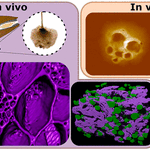
#DYK that sea cucumber-inspired science may help decrease tissue and organ failure?
With #FRQ and @frsFNRS funding, Matthew Harrington and Patrick Flammang are investigating tissue regeneration using sea cucumbers due to their regenerative abilities: t.ly/dxgjn

Matthew J. Harrington retweeted

🚨New paper alert!🚨Are you interested in bio-inspired materials? 🌊 Our recent publication discusses the importance of pH in the formation of mussel byssus and mussel-inspired hydrogels using microelectrodes! @Changyue5058 @BioinspiredMatt doi.org/10.1002/adfm.2024094…
Matthew J. Harrington retweeted

Come here Sergey Gasilov describe the fascinating work being done at the Canadian Light Source (CLS). Monday, May 13 at 10 am. More information at mcgill.ca/miam/channels/even…

Was an honor to have our work with @marcotteisabel2 on velvet worm slime featured on Découverte last weekend. @ChloeBourquin and the rest of the crew did an amazing job! Fantastic shots of these cool little creatures!!
ici.radio-canada.ca/tele/dec…

So proud of this amazing scientist Dr. Mostafa Rammal who expertly defended his thesis on Friday. Mostafa epitomizes resourcefulness and perseverance - two of the most important characteristics in science - and always with a big smile. Such a pleasure to be able to work with him!

Was an absolute pleasure to work on this review on fluid protein condensates in biological and bio-inspired materials fabrication with Ali @bbmlntu and Raffaele @MezzengaRaf !

Fluid #protein #condensates for
#bioinspired applications. Check out our latest review on #LLPS and #LLCPS on Nature Reviews Bioengineering @natrevbioeng with @BbmlNtu and @BioinspiredMatt - nature.com/articles/s44222-0…
Matthew J. Harrington retweeted

Why does @BioinspiredMatt of @mcgillu study zebra mussels? ‘Because we can just go to the St Lawrence River and pull them out’!
His group dug into the unique chemistry of their byssal threads using spectroscopy, x-ray diffraction and proteomics.
chemistryworld.com/news/inva…
Just promoted to full prof! So grateful to the amazing lab members past and present and to all my amazing colleagues. A university is only as good as the people that make it up and McGill is a special place. I feel so lucky to work in such a great environment! @McGillChemistry
So many cool findings here… Apparently one time at least 12MYA one bacterium gave genetic material to one mussel that gave it the ability to make strong attachment fibres. Now we’re dealing with the aftermath as quagga mussels invade and decimate freshwater habitats. So wild!

In a new study, researchers uncovered insights into Zebra mussel attachment fibers, offering potential solutions to combat one of Canada's most damaging invasive species.
➡️mcgill.ca/x/UD5
@BioinspiredMatt @McGillScience @McGilluMedia @mcgillbse

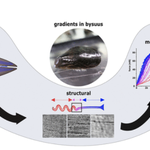
How do you create a strong yet quick release biointerface between soft living tissue and a non-living material? Turns out the mussel can teach us something! Check out our latest work led by Jenaes and Lucia. science.org/doi/10.1126/scie…

If you’re short on time to read the paper , this short video by @lgroskin and @ScienceMagazine does a fantastic job highlighting the key points. Amazing visuals! Will definitely be borrowing from this video for presentations. youtube.com/watch?v=63ge4qvz…
Matthew J. Harrington retweeted

The same bundle of non-living filaments that mussels use to anchor themselves can also be jettisoned on demand.
Mussels create this quick-release interface, a new Science study finds, by way of a neurochemically-mediated junction. scim.ag/4UI
Such a fantastic collaboration on such a cool little creature with a great group of researchers - @AlexPoulhazan @DNPFred @CCRCUGA @marcotteisabel2 as well as Alex Baer and Georg Mayer at Uni Kassel and Darren Browne at UWI Cave Hill.
A new cross-continental study, co-authored by Prof. Matthew Harrington, discovers Velvet Worm slime's potential to inspire sustainable synthetic materials
mcgill.ca/newsroom/channels/…
cc. @BioinspiredMatt @Mcgillscience @McGill_Eng #McgillMIAM #advancedmaterials

Matthew J. Harrington retweeted
A new cross-continental study, co-authored by Prof. Matthew Harrington, discovers Velvet Worm slime's potential to inspire sustainable synthetic materials
mcgill.ca/newsroom/channels/…
cc. @BioinspiredMatt @Mcgillscience @McGill_Eng #McgillMIAM #advancedmaterials
Check out our latest work on mistletoe glue just in time for the holidays! Together with @BokuBionami and @CCRCUGA we discovered what gives mistletoe its sticky kiss, demonstrating that the mistletoe adhesive extract can be used for various applications. onlinelibrary.wiley.com/doi/…

Matthew J. Harrington retweeted

Very proud to share this ACS Headline Science about our work on velvet worm slime containing phosphonates.
Amazing collaboration work using #NMR at #UQAM with @BioinspiredMatt from #McGill, @DNPFred from @NationalMagLab .
acs.org/pressroom/headline-s…
#NMRchat
DOI:10.1021/jacs.3c06798

Matthew J. Harrington retweeted

"KILLING MACHINE:" The velvet worm sprays and traps its prey. MagLab research uncovers new details on how its sticky slime works. bit.ly/3RRkH2X
@mcgillu @uqam @uni_kassel
Matthew J. Harrington retweeted

A year after playing with insect wings, let me introduce the other fun samples I had the pleasure to characterize with DNP! @AlexPoulhazan @marcotteisabel2 @BioinspiredMatt
pubs.acs.org/doi/10.1021/jac…

Velvet worms capture prey with a projectile slime that offers a model for sustainable polymer design. Together with folks from Germany, Barbados, the US and down the street at UQAM, we've uncovered a rare protein modification that may determine the slime's desirable properties.

Phosphonate Modifications of Velvet Worm Slime Revealed by NMR and Mass Spectrometry | JACS @UQAM @sciencesUQAM @marcotteisabel2 @BioinspiredMatt @mcgillu @McGillScience #Sustainability #VelvetWormSlime @nmr900 #Bioomaterials @sciam @TheEconomist
pubs.acs.org/doi/10.1021/jac…
Matthew J. Harrington retweeted

After recently starting my new job as postdoctoral researcher @VignoliniLab , I’m looking for two motivated students to help me with my research on plant-based adhesives. Please share and when interested apply here:
jobs.mpikg.mpg.de/jobposting…
jobs.mpikg.mpg.de/jobposting…

