

Biological Invasions publishes research and synthesis papers on biological invasions - This account is not active due to the current state of Twitter
Global
Joined October 2016
- Tweets849
- Following181
- Followers2.2K
- Likes40



Pinned Tweet
Wondering what we have been up to for the last 5 years? Check out our new publication! :)
doi.org/10.1007/s10530-022-0…
@ananovoaperez @SuzyCanavan @drdeahlieurance @DSimberloff @lameyerson

Biological Invasions retweeted

A little teaser: Responses are currently more diverse than I would have expected 🤓
If you work #invasionscience, pls take part (& retweet 🙂) in my survey on defining an #alienspecies where uncertainty remains on how it arrived in its new habitat 🐟🇮🇸
#invasivespecies
link ⬇️


At #NeoBiota2022 I started a survey among #invasionscience community about defining a 🐟 in 🇮🇸 under uncertainty whether it arrived naturally or was introduced
If you work with #invasivespecies & have ~5min, take part! PLS retweet 🙂🇮🇸🐟
forms.office.com/r/dBSzVfsGv…
🧵for more info

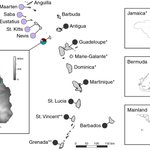
The widespread and commonly introduced Caribbean frog Eleutherodactylus Johnstone, with a previously unknown native range, is endemic to Montserrat: buff.ly/3IG14UD
@MichaelLYuan

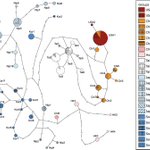
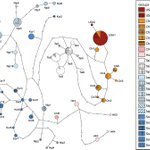
Haplotype data and niche modeling point to the origins of Roseau cane scale in the United States and focus the search for biocontrol agents: buff.ly/3uNxUgz
@USDA_ARS

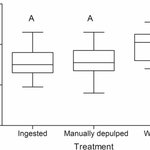
Decreased abundance of top predators due to invasive toads, unexpectedly, does not facilitate prey, due to niche takeover by other predators:buff.ly/3c7G50R
@NikiTeunissen

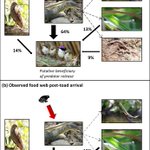
Bird dispersers contribute substantially to the invasion of Pyracantha angustifolia in the Grassland biome in South Africa: buff.ly/3ObugUx

Did you already see the complete checklist of the Calabria region? You can find it here! :) buff.ly/3Pns3al
@dottormus

A widespread and commonly introduced Caribbean frog with a previously unknown native range is endemic to Montserrat: buff.ly/3IG14UD
@MichaelLYuan

Haplotype data and niche modelling point to the origins of Roseau cane scale in the United States and focus the search for biocontrol agents: buff.ly/3uNxUgz
@USDA_ARS

The abundance of top predators can decrease as a response to toad invasions. But this does not necessarily facilitate prey, due to niche takeover by other predators: buff.ly/3c7G50R
@NikiTeunissen

Bird dispersers contribute substantially to the invasion of Pyracantha angustifolia in the Grassland biome in South Africa: buff.ly/3ObugUx

You can find here the latest update on the checklist of the invasive species of the Calabria region! buff.ly/3Pns3al
@dottormus

Removing an invasive tree isn't enough to promote a native tree: buff.ly/3ug65xf
@Dr_AnnaSher, @DrAnnaSher

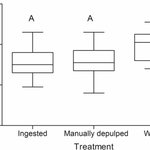
Glyphosate-sprayed plants may release glyphosate into the environment: buff.ly/3AfRwgU
@spargeline

Distinct leaf morphological and physiological traits compared to co-occurring native species may increase the chances of invasion success: buff.ly/3abeJpQ
@Mohamad_IPS

Most people know that invasive ants have dramatic ecological impacts. But did you know they also cost billions of dollars? buff.ly/3NwI7EP
@franckcourchamp, @ChrisDiagne, @Celine_Bellard, @Lilibamej

The Asian common myna started to spread in Kruger National Park! buff.ly/3nqvDE3

Pathways to invasions: Stowaways and contaminants cause the greatest economic impact! buff.ly/3OCfY0o
@ajturbelin

Invasive grey squirrels in Ireland show low genetic diversity: buff.ly/3ueqJhi
@ryaninstitute

Using national monitoring schemes to investigate impacts of invasive species - what are the main considerations and limitations? buff.ly/3ywphta
@HenPringle; @_BTO