

BioID offers #LivenessDetection, #DeepfakeDetection, #Biometric #Authentication & #IdentityVerification as a Service. 25 years of experience. Made in Germany.
- Tweets589
- Following269
- Followers194
- Likes518

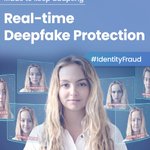




ALT Deepfake Detection - From the basic idea to the multi-layer concept. You believe you can detect deepfakes with your bare eyes? Maybe. But in most cases, a deepfake doesn't need to fool a human. It only needs to fool a process. That's the uncomfortable truth behind remote identity verification. Your system doesn't "look someone in the eye" - it receives a video stream and trusts it. If that stream is manipulated, the process has no way of knowing. Don't trust the image. Verify it. With deepfake detection. Liveness detection. AND Injection attack detection. One API, multiple layers of protection.

ALT Deepfakes affect more than identity. They affect participation. AI-generated deepfakes are not just a technology challenge. They can enable harassment, intimidation and digital violence, with real consequences for people’s freedom to participate online. The impact goes beyond individual incidents. When people feel unsafe, they share less, withdraw from digital spaces and lose opportunities to connect and participate. At BioID, we cannot stop every deepfake or prevent every act of online abuse with biometrics alone. But we can help restore digital trust to everyday life and therefore make some digital interactions more secure.

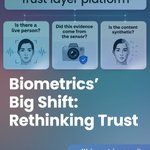
ALT A face can match. And the identity verification can still be wrong. As AI-generated faces and real-time face swaps become more sophisticated, liveness detection has moved from an optional add-on to an essential defence. Organisations need to distinguish between the following: - Face matching: does the face correspond to the claimed identity? - Liveness detection: is there evidence that a real person is present rather than a photo, replay, or other spoof? - Injection-attack detection: has manipulated biometric data been inserted into the digital capture or verification pipeline? These controls address different risks. Treating them as interchangeable can leave important gaps in remote onboarding. For banks, fintechs, and digital service providers, the challenge is combining strong security with a smooth customer experience.

ALT BioID's Bingo Check for this year, 2026. Today's theme is the EU AI Act, Art. 50, which sets legal requirements for AI systems, including transparency obligations and restrictions on certain biometric identification practices, and applies from 2 August 2026. If you, as a biometric vendor, application developer or client of biometric services, use the 1:N Face Matching API to search across enrolled face templates, this AI Act is particularly relevant to you: Here in a nutshell, what these legal requirements entail: 1. Use only for legitimate, defined purposes, such as identification within an authorised user group, duplicate detection, or account recovery. It is not intended for indiscriminate identification or surveillance. 2. Customers and application providers remain responsible for their deployment. 3. Search API – Tagging is mandatory for Search API queries. 4. Transaction logs must be auditable.


