
Patriot Red Sox Huskers Jesus Estate and Business planning lawyer husband Dad to 4 great kids
Joined February 2019
- Tweets25.1K
- Following4.9K
- Followers3.9K
- Likes76.9K


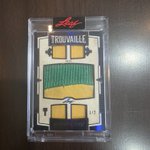


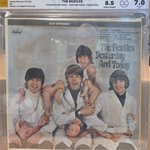



Bigpapi34 retweeted

I'm running a PLAYER AUCTION for the first time in two years!
If you know anyone who collects or just watches the NWSL, let them know


Bigpapi34 retweeted

"Das Pferd wird es immer geben, aber das Automobil ist nur eine Modeerscheinung – ein Spielzeug für Reiche."
Michigan Savings Bank, 1903
"Ich denke, es gibt weltweit einen Markt für vielleicht fünf Computer."
Thomas Watson, 1943
"No chance that the iPhone is going to get any significant market share."
Steve Ballmer, 2007
"Das Internet hat für die Wirtschaft kaum wichtigere Auswirkungen als das Faxgerät."
Paul Krugman, 1998
"Flugmaschinen, die schwerer sind als Luft, sind physikalisch unmöglich."
Lord Kelvin, 1895
"Das Spam-Problem bei E-Mails wird in spätestens zwei Jahren gelöst sein"
Bill Gates, 2004
"Der Fernseher wird sich auf dem Markt nicht halten. Die Menschen werden es bald leid sein, jeden Abend auf eine Sperrholzkiste zu starren."
Darryl F. Zanuck, 1946
"Es gibt keinen Grund, warum jemand einen Computer in seinem Haus haben wollte."
Ken Olson, 1977
"Wenn die Pariser Weltausstellung schließt, wird das elektrische Licht ausgehen und man wird nie wieder davon hören."
Erasmus Wilson, 1878
"Die Amerikaner brauchen das Telefon vielleicht, wir aber nicht. Wir haben genug Laufburschen."
William Preece, 1876
"Egal wie die Wissenschaft in Zukunft fortschreitet, der Mensch wird den Mond niemals erreichen."
Lee De Forest, 1957
"Reisen mit hoher Geschwindigkeit ist nicht möglich, weil die Passagiere keine Luft mehr bekommen und an Erstickung sterben würden."
Dionysius Lardner, 1830
"Mit Wechselstrom herumzuspielen ist reine Zeitverschwendung. Niemand wird ihn jemals nutzen."
Thomas Edison, 1889
"Mobiltelefone werden die Drahttelefone absolut nicht ersetzen."
Marty Cooper, 1981
#TeslaRoadster
#Tesla


Bigpapi34 retweeted

Bernie Sanders says the top 1% owns more than the bottom 93%, that fewer than a thousand billionaires got $2.2 trillion richer last year, and that it's "obscene."
It's the most seductive and most wrong economic argument of our time. Let me explain why.
First, wealth distribution follows a power law. Always. Everywhere. Books, music, startups, followers on X, goals in soccer. A small minority captures most of the value. That's not a bug of capitalism. It's the mathematical signature of every system where value gets created.
So the only question that matters isn't "how big is the rich's slice?" It's "is the cake growing, and is the slice of the poorest growing with it?"
And the answer is yes. In 1990, more than one human in three lived in extreme poverty. Today it's about one in ten. During exactly the period when billionaires multiplied.
Bernie shows you the slice. He never shows you the cake.
Second thing he won't tell you: past a certain level, wealth stops being consumption. It becomes capital allocation.
Elon Musk isn't sleeping on a pile of cash. He owns stakes in Tesla, SpaceX, xAI. Jeff Bezos owns Amazon stock. That "$2.2 trillion" isn't sitting in a checking account. It's factories, rockets, data centers, millions of jobs. Nobody can eat $100 billion. You can only decide where to invest it.
Once you understand that, the whole debate changes. The real question becomes: who allocates capital better?
The people who built Amazon, SpaceX and Nvidia? Or politicians?
A 5% wealth tax isn't "taking money from the rich." It's taking investment decisions away from people who proved they can create value and handing them to people who proved the opposite.
Because the fundamental difference between an entrepreneur and a politician is consequences.
The entrepreneur invests his own money. If he allocates badly, he loses everything. The market corrects him brutally, no appeal. That's why most startups die: the system kills bad decisions.
The politician invests other people's money. If he allocates badly, nothing happens. Worse, he gets a bigger budget to "fix the problem."
Milton Friedman put it better than anyone. There are four ways to spend money. Your money on yourself: you care about price and quality. Your money on others: you care about price. Others' money on yourself: you care about quality. Others' money on others: you care about nothing.
Government is the fourth box. By design.
Perfect example: California high-speed rail. Approved in 2008 for about $33 billion. Current estimated cost: over $100 billion. Passengers carried: zero. No entrepreneur would have survived that. The politicians who pushed it built careers on it.
And when allocation has no consequences, it eventually finds a buyer. A politician who controls billions without accountability becomes the most profitable target in the world for anyone who wants to steer that money.
The irony is that the left that rails against billionaires is itself funded by billionaires. George Soros is one of the biggest Democratic donors in history. The Gates Foundation shapes public health policy across the planet.
Politicians don't fight billionaires. They pick their own. The ones who fund the state over the ones who compete with it.
So if we actually want fewer poor people, we have to stop judging ideas by their intentions and start judging them by their results. And the results are brutally clear.
China, 1978: Deng Xiaoping opens the economy to markets. More than 800 million people escape extreme poverty. The largest retreat of misery in human history. Not through redistribution. Through the freedom to build.
India, 1991: liberalization. Same movie.
South Korea and North Korea: same people, same language, same starting point in 1953. One became one of the most advanced economies on earth. The other has famines.
Poland and Ukraine: comparable living standards in 1990. Today the average Pole is more than three times richer than the average Ukrainian.
Argentina: a year and a half of liberalization, and the poverty rate falls from over 50% to around 30%.
No country in history escaped poverty by punishing the people who build. Every single one did it by letting them build.
And if you want to see what Bernie's program looks like in real life, you don't have to imagine it. It exists. It's called France. We've been running it for 45 years.
Mass nationalizations in 1981. Two years later, Socialist president Mitterrand has to reverse course into austerity.
Retirement at 60. The 35-hour workweek.
A wealth tax for 35 years. Hundreds of wealthy households left every year for Belgium, Switzerland, London, taking their capital, their companies and their future taxes with them. Macron finally scrapped it in 2018.
Hollande's 75% tax: raised a few hundred million, drove talent out, abandoned after two years.
One of the highest tax burdens in the OECD. Public spending around 57% of GDP, a record in the developed world.
Last balanced budget: 1974. Public debt: over €3.4 trillion. Mass unemployment for four decades.
If taxing the rich and growing the state made people prosperous, France would be the richest country on the planet.
It isn't. GDP per capita in France is barely more than half of America's. It's lower than Mississippi, the poorest state in the US. Not a single global tech giant. Our best engineers build Silicon Valley instead. I've been going back and forth between Paris and San Francisco for years. I see it every week.
And California is about to replay the movie. Prop 40, on the ballot November 3rd, would take 5% of billionaires' net worth. Even Gavin Newsom, a Democratic governor, opposes it. The state's own nonpartisan budget analyst warns that income tax revenue could drop every year if the wealthy leave. Larry Page, Sergey Brin and Peter Thiel have reportedly already started moving their assets out.
You don't fight poverty by shrinking the top. You fight it by growing the cake.
Bernie wants a society where nobody has too much. I want a society where nobody has too little.
The first has been tried everywhere and produces equality in stagnation. The second lifted a billion people out of misery.
Choose.

The top 1% owns more wealth than the bottom 93%.
1 man owns more wealth than the bottom 53% of households.
Less than a thousand billionaires got $2.2 trillion richer in the last year.
Obscene.
Yes. We need a 5% billionaire wealth tax in California and throughout America.
Bigpapi34 retweeted

INXS released their fifth studio album, "Listen Like Thieves," on October 14, 1985. The record helped propel the Australian band toward international superstardom.
BITE-SIZED FACT | "What You Need" became their first U.S. Top 5 hit on the Billboard Hot 100, paving the way for the massive success of "Kick" two years later. #80s

Bigpapi34 retweeted

THIRTEEN YEARS AGO 🗓️
Big Papi's EPIC GRAND SLAM ties it late in Game 2 of the ALCS 💣💥
NO HITTER IS MORE CLUTCH THAN DAVID ORTIZ 🐐
@davidortiz / @mlbonfox
Bigpapi34 retweeted
INXS released their sixth studio album, "Kick," on this date in 1987.
BITE-SIZED FACT | The multi-platinum album spawned four U.S. Top 10 hits, including "Need You Tonight," "Devil Inside," "New Sensation" and "Never Tear Us Apart." #80s

Bigpapi34 retweeted

They called 911 about a "dangerous pack of dogs." This is what police found when they showed up. 😊


And the Artbox autos and prop cards. How these didn't make the list is mind boggling


Top 8 Harry Potter collectibles with a 10X in 10 year potential! I’m looking at Harry Potter through the same lens I use for any great collectible… cultural importance, rarity, condition, the age of the collector, the recently of value creation, what new content is driving the opportunity, and how many serious collectors may want to own the best examples 10 years from now.
If I were building a list of categories with the potential to deliver 10x returns, I’d start with (1) the 1997 Philosopher’s Stone the first edition, first printing; (2) the first edition, second printing; and (3) the softcover first edition, first printing. I’d also look hard at (4) first edition, first printing copies of Books 2 through 7 signed by J.K. Rowling. The rarest early books may be (5) the uncorrected proofs: the four known styles across Books 1, 2, and 3, especially the exceptionally rare Chamber of Secrets proof cover.
Then there are the pieces that take you inside the making of the world: (6) original scripts, (7) storyboards, and (8) screen-used movie props with clear provenance and a strong connection to an iconic scene. I’d add the (9) original Wizards of the Coast trading cards and (10) original Harry Potter art, especially important book-cover art.
The best Harry Potter collectibles connect to a franchise that has shaped generations of readers and moviegoers. That doesn’t make 10x a sure thing; it makes these categories worth studying closely, with rarity, authenticity, condition, and entry price doing a lot of the work.
Sincerely,
Jeremy Padawer
#harrypotter #collection #books #art #fyp
Good stuff

NEW LONG FORM VIDEO: Why nobody eats Crumbl Cookies anymore
Crumbl Cookies went from a single store in Utah to more than 1,000 locations in less than seven years, becoming one of the fastest-growing restaurant chains in America. At its peak, the average store was generating more than $1.8 million a year.
But by 2026, the story had changed dramatically. More than 20 locations closed in a single week, and some franchisees who had put their homes and savings on the line were facing serious financial losses.
Just a year ago, Crumbl seemed unstoppable. After all, selling cookies to Americans sounds like a business that should be almost impossible to mess up. So how did one of the fastest-growing food chains in the country suddenly start falling apart?
This is the rise and fall of Crumbl Cookies.
Hey @bigbridealguy were these cards from a jersey? Any addt info would be great. Thanks


Just amazing. Year over year growth is just insane

first numbers from september indicate a ~$945m monthly volume on card ladder's industry tab
as we've seen for many months over the last two years, that's a new record high
i expected september's number to dip, as it did in 2025 following august's peak, but no retreat (yet?)


Bigpapi34 retweeted

Sept 28, 1981: 45 years ago, Namco released the Galaga arcade game in Japan. #80s Sequel to 1979's Galaxian.
