

PhD student at NYU. Researching human/AI co-creative generative models for PCG
Brooklyn, NY
Joined March 2016
- Tweets138
- Following174
- Followers189
- Likes5.7K




Saying nothing about the content, but it's funny that I see these "Yann's shocking latest talk" posts every few months and it's been the literal exact same slides for ~3 years now.

Yann LeCun's latest talk at ETH Zürich
"You should not work on LLM. At least if you're in academia, you should absolutely not work on LLMs. There is nothing you can bring to the table.
If you're interested in making real progress in AI, in sort of grounded AI for the real world, if you want physical AI, don't work on LLMs, and don't work on generative models either.
So, as you can probably guess, this does not make me very popular in Silicon Valley."
----
From "Perfology Clips" YouTube channel, (link in comment)
Re: Jev, it feels strange that there are 50 "open source jev" repos that sprang up in 2 days. The creators and consumers seem convinced they were able to recreate or even beat this secret recipe with $30 skimmed off their pro subscription.
And maybe they did? I can't say. Have models advanced to the point where years of development gets cloned in a single prompt? Is open source now a race to be the first one to copy paste a new model description into codex?

First author here! Super happy to finally share this with the world.
We do a lot of very cool things with controllable diffusion in Minecraft, including large scale map generation conditioned on individual voxel details.
Very grateful to @SakanaAILabs, both for the amazing people and for the opportunity to explore a research domain that's dear to me. Check out our blog post to see some cool interactive examples, and paper for more details!

We are excited to share our latest work, together with @nyuniversity: "Dream-Cubed: Controllable Generative Modeling in Minecraft by Training on Billions of Cubes."
Blog: pub.sakana.ai/dream-cubed
Paper: arxiv.org/abs/2604.22847
Code: github.com/SakanaAI/DreamCub…
Generative AI has made incredible progress in language modeling, far beyond other modalities, where words and tokens offer a natural compositional unit for scalable training. This is similar to Minecraft and many other popular video games, where developers rely on cubes, tiles, and other discrete primitives to build rich, interactive worlds.
In this work, we show that using cubes as tokens allows large transformers to do the same. Our contribution is two-fold:
1/ We release Dream-Cubed to the research community, a large-scale dataset of Minecraft worlds designed for generative modeling. Our data comprises tens of billions of carefully-balanced cubes from procedurally generated Minecraft terrain and high-quality human-authored maps (obtained with the authors' consent).
2/ We use our data to train a family of powerful transformers for efficient generation of interactive 3D environments at cube resolution. We show how our models allow players to mold the world around them by generating structures, terrain, and maps that are immediately editable and playable.
Using high-quality data, we demonstrate that these models can be successfully trained with different training objectives, including both continuous and discrete diffusion, unlocking targeted inpainting, large-scale outpainting, and user-conditioned generation of infinitely sized worlds with fine-grained block-level control.
Tim Merino retweeted

New paradigm alert! 🎮
AgenticPCG
We combine classic PCG (Procedural Content Generation) algorithms with large language models for generating game levels. LLMs on their own are not good at level generation, but when given the right tools from our PCG toolbox they're killing it!
So with some pretty crude prompt injection, having it write text using blocks, I able to get a bit of its system prompt.
It reports being Gemini 1.5, using some tool calls to create structures.
What I was able to get of the system prompt:
"You are in control of a bot in a flat minecraft world. You are an expert architect and designer. You will be asked to produce a minecraft structure, being sure to consider accents, block variety, symmetry and asymmetry, overall aesthetics and most critically adherence to the platonic ideal of the requested creation. You will be provided with helper functions that are listed in the primitives. You should use the tools to choose any blocks you need. A list of available block ids are provided in the BLOCKIDS. You will be provided with helper functions that are listed in the . The following variables are already defined and available:
Center_X
Center_Z
Ground_Y
..."
Helper functions include things like: place_block, place_round_line, place_solid_cuboid, place_shollow_cuboid, place_plane, place_four_walls, place_cylinder, place_sphere, place_pitched_roof, place_stairs.
Pretty impressed with the output for gemini 1.5, would love to know more technical details on how they put this together.

Tim Merino retweeted

Hey! Wanna role-play as a fantasy NPC? Or talk to some other "players"? Who's human? Who's AI? We don't even know anymore. Check it out! 🧙♂️🧝♂️🐤
http://18.188.51.215/
And if you've got 5 minutes and want to help us with SCIENCE™️, fill out our survey!
tinyurl.com/club-npc-tt
I'm at Neurips! Hit me up if you'd like to talk discrete diffusion, Minecraft, AI in Games, or anything else! #NeurIPS2025
Featured above is unconditional discrete latent diffusion to generate chunks of a Minecraft world. We can also use this model to generate "super-resolution" chunks, we aren't just limited to the size of our training data.
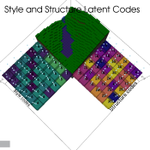
This lets us do some pretty cool stuff by just messing with the latent code representations. For example, style-swapping a certain section of the map by cycling through style codes.
Super proud to be the focus of the first video in Game Innovation, a series giving some very intuitive explanations of work going on in AI for Games. This reports on my in-progress research on Discrete Diffusion in Minecraft (pictured)
Check out the video here, read on for some more details and pretty gifs youtube.com/watch?v=JaD3b24n…
Tim Merino retweeted

Two faculty members of the NYU Tandon, Professor Farshad Khorrami (ECE) & Associate Professor @togelius (CSE), have been elevated to Fellows of @IEEEorg , the world's largest technical professional association.
#NYUTandonMade
engineering.nyu.edu/news/far…
walking into a poster session hungry and my feet hurt:
This Post is from an account that no longer exists. Learn more