

neuroscientist, artist, dad🇨🇦🇿🇼🏳️🌈 color, art, vision, cognition, & intrigued by social forces shaping science (he), views mine. [email protected]
Joined July 2019
- Tweets1.8K
- Following304
- Followers1.8K
- Likes7K






Pinned Tweet
A few postdocs asked me to read over their job applications. Here’s a few bits of advice: 🧵 /10
1. If any advice doesn’t ring true for you, discard it (including this!)
2. People on the search committee are keen to welcome a colleague, they aren’t looking to take you down
Congratulations on the book Nicole, and thanks for giving us a new and hopeful narrative for science today.


The recent paper pertaining to the binding problem implies that there is no functional specialization in the visual system. I am agnostic about whether there is a binding problem, but there is no denying that neurons are typically not both direction selective and color selective

There is no binding problem because vision—and cortex more broadly—is not modular. Phrenological theories create phrenological artifacts.
Beyond binding: from modular to natural vision
doi.org/10.1016/j.tics.2025.…
#neuroscience
Come join us as a postdoc to do some great science, collaboration between my lab and Dan’s, the best of both worlds (theory and neurophys)! See details in Dan’s post.

@BevilConway (NIH) and @NeuralCodeUMD (UMD) are seeking a brilliant postdoc to study high-acuity vision combining large-scale electrophys and deep computational modeling. Prior experience (broadly speaking) is recommended: email Dan Butts with CV and brief research statement.

Bevil Conway retweeted

Great @Nature news article about what is being done to slow, stop, or even reverse geographic atrophy (GA), the advanced form of #AMD. Contributions from @NatEyeInstitute’s @TiarnanKeenan and @Kapilbharti123
nature.com/articles/d41586-0…

ALT Illustration of a photo album showing a family and a doctor holding a syringe. Credit: Nature
Thrilling work with far reaching implications not only for basic knowledge of how the jelly between your ears works but how to intervene when it doesn’t.

Super exciting new work out from the Lee lab at @NIMHgov @IRPatNIH!!! nature.com/articles/s41586-0…

Bevil Conway retweeted

Super exciting new work out from the Lee lab at @NIMHgov @IRPatNIH!!! nature.com/articles/s41586-0…
Bevil Conway retweeted

Know any kids in your life who want to be a doctor or scientist, with ambitions to cure cancer or find a cure for Alzheimer's that's afflicting a loved grandparent?
No exaggeration, what's happening right now means that many, many, many fewer of them will have an opportunity for a summer internship at a hospital or university, be able to do research as a college student, get accepted into a masters program or PhD program.
Pitt made the news, but this is already happening everywhere, and it's not just PhD students. Bright, young researchers being laid off, or having job or internship offers rescinded, job postings being pulled...
There's a reason this country has been in the lead for so long in biomedical sciences - we train our best and brightest who then go on to do what they dreamed of - finding cures, developing new medicines, inventing new technology to make lives better - all the while boosting the local and national economy.
The gutting of NIH will impact everyone in this country, at all income levels, in red/blue states, in all types of jobs - scientists and janitors, food prep workers and lab techs, bus drivers and high school interns.

The sky is rarely green. Why? It was fun confronting this surprising question with the smart folks at the BBC.
This Post is from an account that no longer exists. Learn more
Bevil Conway retweeted

NIH apparently axing the postbac program that was a launchpad for many thousands of future STEM PhD’s — my wife being one of them — that seeded the best academic and biotech/pharma research labs around the world. One of many pointless cuts that will diminish our influence.

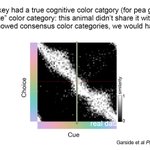
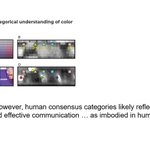
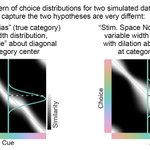
Where do #color categories come from? It's a very old question. Color is a continuous parameter, yet we categorize it. Since ancient times, there have been 4 consensus "basic" color categories: red, yellow, green, & blue. Are these hard-wired in our brains? 1/

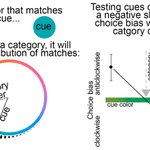
Many studies have used color to study memory or cognition, assuming the color space is uniform. That work must be re-evaluated because the same distortions we observed in the color-matching data from monkeys are also apparent in the data collected in people. /END
