

Directing SphereLab @CUHKofficial. Postdoc @MPI_IS. PhD @Cambridge_Uni & @GeorgiaTech. Previous Intern @Google & @nvidia. All opinions are my own.
Joined May 2009
- Tweets993
- Following799
- Followers2.6K
- Likes3.1K

🔥 Excited to share our new project on generating functional CAD mechanisms!
Our approach integrates CAD generation and physics-based simulation in a closed loop, allowing designs to be iteratively evaluated and refined for real-world functionality.
The goal is to move beyond CAD models that merely look plausible toward mechanisms that are 3D-printable, physically functional, and ready for practical use.
Check out our project page for more details: thegenlab.ai/funcad


Introducing FunCAD: Designing functional, working CAD mechanical mechanisms from a single line of text ⚙️
Everyone is hyped about GPT-6 Astra’s 3D demos, but building real mechanical assemblies from scratch tells a different story:
❌ Astra’s edge is just an interface — 3D fluency ≠ spatial & physical understanding. Fable beats Astra in physics, and blindfolding Astra barely matters.
❌ Not 3D reconstruction — zero reference images, just a text goal (e.g., "bring a back-row cup to the front") to invent CAD mechanisms that actually work.
To test this, we built FunCADBench (46 mechanism families, from clamps and transmissions to mechanical counters, alarm clocks, and coin sorters) and FunCAD-Harness, which translates abstract requirements into candidate-specific physical tests and uses simulation diagnostics to guide revisions.
What we found:
🙈 Blindfolding Astra barely matters: Agents spend 75–85% of their tool runtime in simulation and rarely inspect renders. Completely blinding Astra to build purely from code + physics logs still solves 20/46 tasks (vs. 22/46 with vision).
🏆 Fable beats Astra at 1/4 the cost: Because visual fluency ≠ physical reasoning, Fable solves 32/46 out of the box (vs. Astra's 22/46), leading on complex mechanisms.
💸 Cheaper models + retries win: Running Grok for a few extra attempts (with retained history) pushes it from 19/46 to 36/46—beating Astra at ~half the cost.
📉 Pass/fail isn't enough: With full diagnostic feedback—catching blocked steering, jammed clock hands, or tipping—Astra jumps from 8/46 to 22/46, but collapses to 0/46 under binary pass/fail.
🖨️ Sim-to-Real: We 3D-printed and assembled the AI-designed locks, counters, timers, and cup-fetching machines—they work in the real world! ✅
For more details, please check below👇
🌐 Demo & Page: thegenlab.ai/funcad/
📄 Paper: arxiv.org/abs/2610.26861
💻 Code: github.com/thegenlab/fun-CAD…
Work with Wenqian Zhang, @yangyi_huang_cn, Zigeng Xu, @Besteuler
Weiyang Liu retweeted

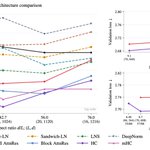
mHC, iHC, oHC, xHC, and a zoo of AttnRes variants... An LLM architect with FOMO from the daily explosion of new papers? 🫠
Fear not! You can't afford to miss ScalingDepth — our community hub for keeping up with the ever-evolving world of residual connections!
We'll keep tracking and sharing the latest research, methods, and papers from the community 🚀
And it's an OPEN community! Missed something? PRs and DMs are always welcome! Got a cool blog, post, idea, or unexpected finding? We'd love to hear it! ScalingDepth hosts a dedicated space to showcase community insights and discoveries.🌍
Built by the community. Driven by curiosity. Pushing the limits of depth! 🔥
🌐 keyu-wang-2002.github.io/Sca…

Weiyang Liu retweeted

Spent the past three weeks on this idea.
A sampler on a different precision or accelerator is just off-policy, like stale samples in fully async RL, and off-policy correction doesn't care why the sampler differs from the trainer. Meanwhile, inference keeps diversifying across precisions(MXFP8, MXFP4, NVFP4) and accelerators outside RL. So why not use all of that compute for RL rollout?
The sampler and the trainer are two systems built for different purposes. Hope this opens up new possibilities for RL algorithms and systems, and leads to cleaner system designs. Enjoy the blog, and stay tuned for the next one on our infra :)

Training large models with RL typically runs on a fixed homogeneous cluster of the latest accelerators for numerical stability and faster throughput. This throws away inference optimization work done for other vendors and generations, limits the capacity you can utilize, and is unnecessarily expensive.
So we trained a model on agentic coding tasks using fully asynchronous RL and mixed-precision, mixed-accelerator samplers. With off-policy correction, training stayed stable through convergence, on par with homogeneous samplers, at a lower cost.


Insane…

We’re releasing a broad range of new mathematical results produced by an internal frontier model.
We’ve been consulting with the independent Advisory Group on Mathematics and Artificial Intelligence at the Institute for Advanced Study, and we have drawn on their advice and public recommendations to inform how we release these results.
github.com/openai/math

🎊 Excited that BesiegeField is accepted to EMNLP 2026 as an oral. Congrats to the team: Wenqian, Yangyi @yangyi_huang_cn and Zhen @ItsTheZhen. Our team has worked on this direction for quite a while (we have a follow-up work coming soon). Glad to be a part of it! :)
Can LLMs design real machines — from 🚗 cars to 🏹 catapults?
Can they engineer through both 🧠 agentic workflows and 🌀 reinforcement learning (RL) — learning from physical simulation instead of text alone?
We treat machine design as “machine code writing”, where LLMs assemble mechanisms from standard parts.
To explore this, we built 🧩 BesiegeField — a real-time, physics-based sandbox where LLMs can build, test, and evolve machines through agentic planning or RL-based self-improvement.
Our findings:
1️⃣ Even top LLMs fail to build working catapults — easy for humans but highly dynamic ⚙️ and nonlinear.
2️⃣ RL helps — working designs emerge through interaction.
3️⃣ Aligning reasoning 🧩 with construction 🔩 remains a key challenge.
This marks the first step toward LLMs that learn to design through action — bridging reasoning, physics, and embodiment. 🛠️🤖
🌐 Project Website: besiegefield.github.io/
💻 GitHub (RL & Agentic Workflow): github.com/Godheritage/Besie…
👥 Joint work w/ @Besteuler & Wenqian Zhang

🤔 Do more loops actually make a language model better? If so, for what tasks? Can a looped language model keep benefiting from additional loops beyond the recurrence depth it was trained on?
🔥 In our new paper, we systematically study what makes recurrence effective in looped language models, across inference depths both within and beyond the training horizon. We find that:
✨ Recurrence can scale beyond the training horizon, but not universally. Additional loops can improve reasoning, while knowledge performance may degrade.
✨ Effective depth alone does not determine performance. Even with the same training effective depth, different allocations of physical layers and recurrent iterations can lead to very different scaling behaviors.
✨ How recurrence is conditioned matters. Conventional initial-state injection provides limited robustness. Conditioning on history-state changes and timestep makes recurrence substantially more robust across inference depths, improving deep extrapolation while better preserving knowledge performance.
👇 More details:
📄 paper: arxiv.org/pdf/2609.36636
🌐 project page: spherelab.ai/looplm/
