

Our team searches for intelligent life beyond Earth using telescopes across the globe. We're the science leads for @brkthroughprize Listen.
Planet Earth
Joined May 2009
- Tweets2.6K
- Following1.8K
- Followers16.1K
- Likes2K






UC Berkeley SETI retweeted
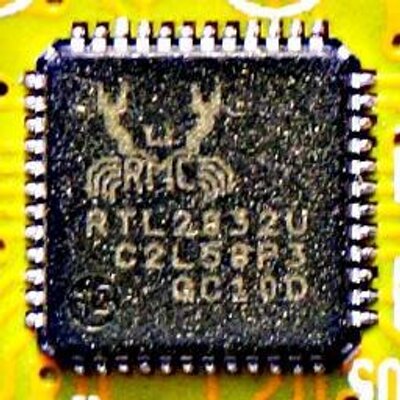
BirriaSDR: 2.4 / 5 GHz SDR Discovery on a Mass-Produced USB3.0 Wi-Fi Dongle rtl-sdr.com/birriasdr-2-4-5-…

UC Berkeley SETI retweeted

The answer is an SDR that you already own!
Let me introduce you to the BirriaSDR! A dual-band 40 Msps SDR (2.4 GHz/5 GHz) based on a mass-produced USB 3.0 Wi-Fi dongle that can export RAW I/Q for under 30 USD.
Apologies, I finished the birria long ago... but only got around to writing this now.
The idea was to use a chip as cheap as the RTL-SDR (<50 USD), with transport already built in (USB 3.0). Not something that costs four times as much or needs to be paired with an FPGA to export any real amount of data.
Now, think for a bit: what kind of mass-produced device fits the bill? Yes, every single USB Wi-Fi dongle!!!
It has been clear for a while that a lot of models have internal firmware that can be modified to export RAW I/Q data via their DMA engines. Most units can even run ASM payloads to modify the data.
Historically, it would be a pain in the ass to reverse engineer the internal mechanisms of every single chipset in each Wi-Fi dongle (there are many!). But with AI, I can do that from my phone while eating birria at my local restaurant.
Before leaving, I connected my MT7921A Wi-Fi dongle to my Raspberry Pi 5 and gave GPT-6 Astra the goal of getting it to export RAW I/Q over USB. Don’t be fooled: this wasn’t a “turn this into an SDR, make no mistakes” prompt. I had to give it leads on how to do this properly. By the way, this is the same chipset that the notorious ALFA AWUS036AXML has.
At first, it created a burst exporter that could only record a short snapshot of RAW I/Q. This is an ancient feature that has been known for a long time and is even present in DD-WRT, but it was useless for our purposes.
Then, after a couple of hours, it improved it to use the internal packetizing engine to create a stream of four consecutive complex samples per 16-byte block, with I and Q each occupying a 16-bit slot and retaining 14-bit precision. These blocks can be moved out of the device via the DMA engine. The RF front end can tune to both the 2.4 GHz and 5 GHz bands. The tested 40 MHz, 80 MHz, and 160 MHz sample rates work, but with a very prominent filter shape, as expected.
The end result was a very capable SDR with dual-band 2.4 GHz/5 GHz reception, 14-bit I/Q resolution, and a nominal complex sample rate of 40 MSps over USB 3.0. Higher sample rates and wider bandwidths are still experimental.
That said, I think this is a good proof of concept that needs to be further refined. Using a Wi-Fi dongle as an SDR solves the data interconnect problem and makes it easy to connect an external antenna with RP-SMA.
I expect it won't take long for manufacturers to start mass-producing devices with the architecture I'm proposing, with a proper USB port, a tunable RF front end, and heat dissipation.
I also want to make the point that you don't need to write a whole new SDR client every time you reverse engineer a Wi-Fi device to be used as an SDR. All you need is a small library that exports the I/Q. To prove this, the whole driver is a single Python script inside a CyberEther flowgraph file.
Want to try it? First, buy an MT7921-based Wi-Fi dongle. They’re widely available and cost less than $30. Then, install CyberEther and download the flowgraph from the repository below. Connect the dongle and open the flowgraph in CyberEther to start streaming I/Q data, as shown in the video below.
This will be available as a built-in block in CyberEther after some refinement.
Download CyberEther: cyberether.org/
BirriaSDR Repo: github.com/luigifcruz/Birria…
P.S. This is the same chipset many laptops come with!

UC Berkeley SETI retweeted
CyberEther is so ahead of the curve that it is not even funny anymore.
We just autonomously phase calibrated an entire 8+ antenna radio-telescope beam-former with nothing but CyberEther and an agent. ✨
UC Berkeley SETI retweeted

Where would another civilization expect us to look?
SETI Institute researchers are using the Allen Telescope Array to survey the anti-solar point—the location opposite the Sun—which could serve as a shared “Schelling point” for sending or searching for a signal.
The multi-year campaign is the largest survey ever conducted with the ATA and is expected to generate more than 11 petabytes of data as researchers search for narrowband, Doppler-drifting technosignatures along Earth’s ecliptic.
Read more: arxiv.org/abs/2610.07065

Today the @brkthroughprize Listen team presented 7 new papers at the @iafastro #IAC2026 in Antalya, Türkiye: docs.google.com/document/d/1…

UC Berkeley SETI retweeted
I'll be attending the @OpenAI's DevDay tomorrow. Let me know if you’ll be there! I can show you some unreleased CyberEther features.
UC Berkeley SETI retweeted
We used GPT-6 Astra to recreate the Allen Telescope Array in Three.js and animated all the antennas’ elevation and azimuth with real-time data provided by Nexus. The time of day and positions of the Sun and Moon are also accurate. Quite a useful tool for debugging the array.
UC Berkeley SETI retweeted
Yesterday, as a downlink capabilities test, we validated the reception, demodulation, decoding, and display of GOES-18 imagery with the Allen Telescope Array. This was done using an end-to-end pipeline within CyberEther, with no intermediate file writing. Next: interplanetary!

UC Berkeley SETI retweeted
Just in time for the weekend: CyberEther v1.10.0 is out with fresh new beautiful graphics!
Here is the ADS-B flowgraph with the new offline 3D map and the refreshed spectrum analyzer on the browser (WebGPU and WebUSB).
It's also available natively: cyberether.org/web
UC Berkeley SETI retweeted

We are deeply saddened to share the news of the passing of radio astronomer Chris Salter, a longtime and valued member of the Arecibo Observatory community. Chris taught me how to operate the Arecibo Observatory, and I will always be grateful for everything I learned from him.

UC Berkeley SETI retweeted
#Astronomy Community: The NSF National Radio Astronomy Observatory invites applications for the 2027 Jansky Fellowship Program.
➡️ for early career scientists
➡️ independent research with NSF NRAO facilities
Application Deadline: October 28, 2026
🔗 science.nrao.edu/opportuniti…

ALT Promotional graphic for the 2027 Jansky Fellowship Program. Background: Very Large Array radio telescopes under a deep blue sky. Text: Application deadline October 28.
UC Berkeley SETI retweeted
Turns out there is a lot of interest. I'll start planning it! More information soon...
Any interest in a SETI-themed hackathon at UC Berkeley later this year?
We could allocate the entire Allen Telescope Array, a few dozen RTX 6000 Blackwell GPUs, and a fleet of DGX Sparks for a week to CyberEther-powered tracks like:
CUDA kernel optimization, accelerated DSP, AI-powered search, DMA/network stacks, and more.
Would you join?
UC Berkeley SETI retweeted

University of Manchester: Astronomers Use MeerKAT to Directly Detect Faint Hydrogen Signal from the Distant Universe manchester.ac.uk/about/news/…

UC Berkeley SETI retweeted

New radio telescope, the Lunar Farside Transients and Technology Telescope (LFT3). This proposed mission would deploy a sophisticated radio antenna to the far side of the Moon by the end of the decade - and plans to do it for only $150M, by utilizing NASA’s Commercial Lunar Payload Services (CLPS) program.

UC Berkeley SETI retweeted

Our founder believed that there is still far more to learn about the universe—including forms of intelligence that we cannot yet see, measure, or fully understand.

UC Berkeley SETI retweeted
What do cosmic cookies, giant space spectrometers, and artificial intelligence in deep space have in common? They're all part of the daily work of Dr. Chenoa Tremblay, project scientist with the SETI Institute, Breakthrough Listen, and the National Radio Astronomy Observatory (NRAO).
In this episode of The Star River Podcast, host @AstroPotamus sits down with Dr. Tremblay to explore the cutting edge of astrochemistry and the modern search for extraterrestrial intelligence (SETI). From her unconventional journey starting out in laboratory chemistry testing dirt samples to hunting for complex molecules and technosignatures with world-class radio telescopes, Chenoa shares a mind-bending look at how we listen to the universe.
Listen here: astropotamus.com/star-river/…
.@UCBerkeley @brkthroughprize Listen grad student Ben Jacobson-Bell analyzed @TheNRAO GBT scans of LHS 1140b - a habitable-zone rocky planet with a newly-detected atmosphere. Artist's impression: @gillislowry
iopscience.iop.org/article/1…
